• Fri frakt över 249 kr
  • •
  • Snabba leveranser
  • •
  • Billiga böcker
Kundservice

Du är på sajten för privatpersoner.

Företag, bibliotek eller offentlig verksamhet?

Du handlar på classic.bokus.com, där alla dina funktioner finns intakta.
Till classic.bokus.com
Bokus logotyp. Gå till startsidan.
  • Erbjudanden
  • Nyheter
  • Student
  • Topplistor
  • Barn & ungdom
  • Bokus Play
  • E-böcker
  • Pocketböcker
  • Spel & pussel

10% rabatt på allt med kod: NYSTART10 →

Sidfot

Mina sidor

    Hjälp

    • Kundservice
    • Vanliga frågor och svar
    • Frakt och leverans
    • Retur vid ångerrätt
    • Reklamera vara
    • Betalning
    • Köpvillkor
    • Allmänna villkor
    • Information om webbplatsens tillgänglighet

    Om Bokus

    • Om oss
    • Pressrum
    • För studenter
    • För företag
    • För bibliotek och offentlig verksamhet
    • För leverantörer
    • Hållbarhet

    Populärt

    • Aktuella erbjudanden
    • Presentkort
    • Studentlitteratur
    • Nya böcker
    • Topplistor
    • Signerade böcker
    • Engelska böcker

    Inspiration

    • Boktips
    • BookTok
    • Populära bokserier
    • Barnbokskaraktärer
    • Populära författare
    Logotyp för Bokus
    Följ oss på Facebook (extern länk)Följ oss på Instagram (extern länk)Följ oss på YouTube (extern länk)Följ oss på TikTok (extern länk)
    bokus @ CookiesAnpassa cookiesIntegritetspolicyKöpvillkor
    Till Citymail hemsida (extern länk)Till Budbee hemsida (extern länk)Till Postnord hemsida (extern länk)Till Schenker hemsida (extern länk)Till Early Bird hemsida (extern länk)Till Walleys hemsida (extern länk)
    1. Samhälle och politik
    2. Sociologi och antropologi

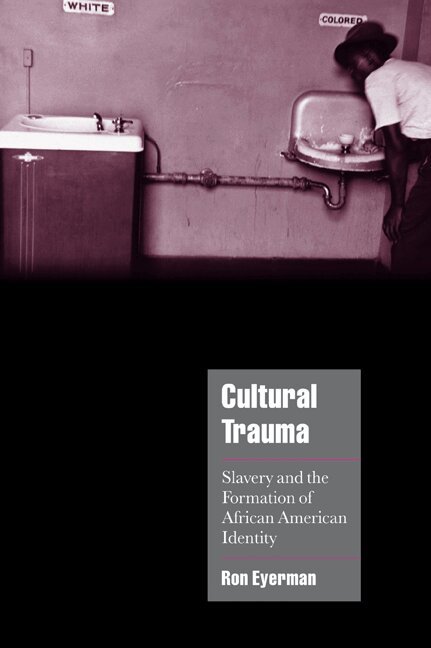
    Cultural Trauma

    Slavery and the Formation of African American Identity

    AvRon Eyerman,Steven Seidman

    Häftad, Engelska, 2001

    Del i serien Cambridge Cultural Social Studies

    353 kr

    Beställningsvara. Skickas inom 10-15 vardagar. Fri frakt över 249 kr.

    Fler format och utgåvor

    Inbunden

    1 335 kr

    Beskrivning

    In this book, Ron Eyerman explores the formation of the African-American identity through the theory of cultural trauma. The trauma in question is slavery, not as an institution or as personal experience, but as collective memory: a pervasive remembrance that grounded a people's sense of itself. Combining a broad narrative sweep with more detailed studies of important events and individuals, Eyerman reaches from Emancipation through the Harlem Renaissance, the Depression, the New Deal and the Second World War to the Civil Rights movement and beyond. He offers insights into the intellectual and generational conflicts of identity-formation which have a truly universal significance, as well as providing a compelling account of the birth of African-American identity. Anyone interested in questions of assimilation, multiculturalism and postcolonialism will find this book indispensable.

    Produktinformation

    • Utgivningsdatum:2001-12-13
    • Mått:154 x 227 x 20 mm
    • Vikt:507 g
    • Format:Häftad
    • Språk:Engelska
    • Serie:Cambridge Cultural Social Studies
    • Antal sidor:316
    • Förlag:Cambridge University Press
    • ISBN:9780521004374

    Utforska kategorier

    • Sociologi och antropologi inom Samhälle och politik

    Mer om författaren

    Ronald Eyerman is the holder of the Segerstedt Chair of Sociology, and a fellow of the Center for Advanced Study in the Behavioural Sciences at Stanford University (1900–2000). His recent publications include Music and Social Movements (Cambridge, 1998).

    Recensioner i media

    'The international social-scientific readership is by now trained to expect from Ron Eyerman research of the highest calibre and an above average quantity of insights and original observations … and the reader won't be disappointed … In this book, as in previous books, Eyerman explores a well-travelled ground but brings from his expedition findings which make it not seem to have been familiar at all. Eyerman has chosen to investigate trauma as a factor of identity formation and for that reason the importance of his findings reaches far beyond the challenging task of understanding African-American history. Trauma, genuine or retrospectively construed, processed by the sieve of intellectually recycled memo, acquires in the age of brand new and newly reawakened nationalisms, a truly universal significance.' Zygmuunt Baumann, Leeds University

    Innehållsförteckning

    • 1. Cultural trauma and collective memory; 2. Remembering and forgetting; 3. Out of Africa; 4. The black public sphere and the heritage of slavery; 5. Memory and representation; 6. Civil rights and black nationalism; References; Index.