• Fri frakt över 249 kr
  • •
  • Snabba leveranser
  • •
  • Billiga böcker
Kundservice

Du är på sajten för privatpersoner.

Företag, bibliotek eller offentlig verksamhet?

Du handlar på classic.bokus.com, där alla dina funktioner finns intakta.
Till classic.bokus.com
Bokus logotyp. Gå till startsidan.
  • Erbjudanden
  • Nyheter
  • Student
  • Topplistor
  • Barn & ungdom
  • Bokus Play
  • E-böcker
  • Pocketböcker
  • Spel & pussel

10% rabatt på allt med kod: NYSTART10 →

Sidfot

Mina sidor

    Hjälp

    • Kundservice
    • Vanliga frågor och svar
    • Frakt och leverans
    • Retur vid ångerrätt
    • Reklamera vara
    • Betalning
    • Köpvillkor
    • Allmänna villkor
    • Information om webbplatsens tillgänglighet

    Om Bokus

    • Om oss
    • Pressrum
    • För studenter
    • För företag
    • För bibliotek och offentlig verksamhet
    • För leverantörer
    • Hållbarhet

    Populärt

    • Aktuella erbjudanden
    • Presentkort
    • Studentlitteratur
    • Nya böcker
    • Topplistor
    • Signerade böcker
    • Engelska böcker

    Inspiration

    • Boktips
    • BookTok
    • Populära bokserier
    • Barnbokskaraktärer
    • Populära författare
    Logotyp för Bokus
    Följ oss på Facebook (extern länk)Följ oss på Instagram (extern länk)Följ oss på YouTube (extern länk)Följ oss på TikTok (extern länk)
    bokus @ CookiesAnpassa cookiesIntegritetspolicyKöpvillkor
    Till Citymail hemsida (extern länk)Till Budbee hemsida (extern länk)Till Postnord hemsida (extern länk)Till Schenker hemsida (extern länk)Till Early Bird hemsida (extern länk)Till Walleys hemsida (extern länk)
    1. Filosofi och religion
    2. Religion och tro
    3. Religion: allmänt

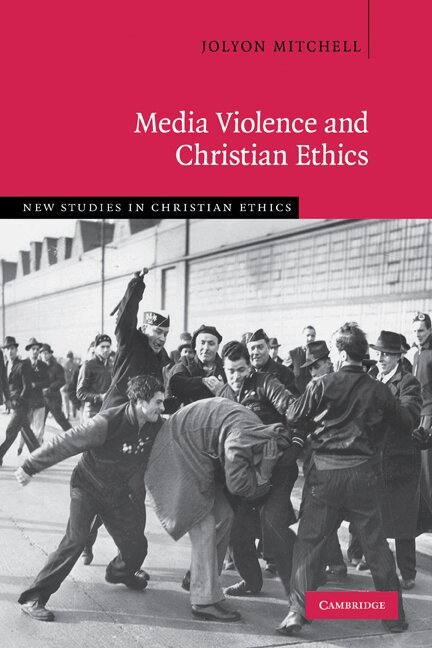
    Media Violence and Christian Ethics

    AvJolyon Mitchell

    Häftad, Engelska, 2010

    Del 30 i serien New Studies in Christian Ethics

    507 kr

    Beställningsvara. Skickas inom 10-15 vardagar. Fri frakt över 249 kr.

    Fler format och utgåvor

    Inbunden

    1 067 kr

    Beskrivning

    How can audiences interact creatively, wisely and peaceably with the many different forms of violence found throughout today's media? Suicide attacks, graphic executions and the horrors of war appear in news reports, films, websites, and even on mobile phones. One approach towards media violence is to attempt to protect viewers; another is to criticise journalists, editors, film-makers and their stories. In this book Jolyon Mitchell highlights Christianity's ambiguous relationship with media violence. He goes beyond debates about the effects of watching mediated violence to examine how audiences, producers and critics interact with news images, films, video-games and advertising. He argues that practices such as hospitality, friendship, witness and worship can provide the context where both spectacular and hidden violence can be remembered and reframed. This can help audiences to imagine how their own identities and communities can be based not upon violence, but upon a more lasting foundation of peace.

    Produktinformation

    • Utgivningsdatum:2010-02-18
    • Mått:152 x 229 x 20 mm
    • Vikt:510 g
    • Format:Häftad
    • Språk:Engelska
    • Serie:New Studies in Christian Ethics
    • Antal sidor:348
    • Förlag:Cambridge University Press
    • ISBN:9780521011860

    Utforska kategorier

    • Religion: allmänt inom Filosofi och religion

    Mer om författaren

    Jolyon Mitchell is Senior Lecturer, School of Divinity, University of Edinburgh and a former World Service producer and journalist.

    Recensioner i media

    Review of the hardback: 'Jolyon Mitchell has written a genuinely important and ground-breaking book. Using a wide variety of evidence, and ranging widely across time and space, he explores the immensely complex relationship between Christianity and media violence. The result is a book rich in original insights, and one that combines great erudition with relentlessly probing discussion. The book deserves a very wide readership embracing, among others, theologians, sociologists, historians, and anyone interested in the contemporary media.' Dr David Smith, Faculty of History, University of Cambridge

    Innehållsförteckning

    • Introduction: regarding media violence; Part I. Media Realities?: 1. Remembering violent news; 2. Reframing news; 3. Re-envisaging photojournalism; Part II. Media Fantasies?: 4. Reviewing violent films; 5. Reinterpreting films and video games; 6. Reappraising advertisements; 7. Redescribing media violence.