• Fri frakt över 249 kr
  • •
  • Snabba leveranser
  • •
  • Billiga böcker
Kundservice

Du är på sajten för privatpersoner.

Företag, bibliotek eller offentlig verksamhet?

Du handlar på classic.bokus.com, där alla dina funktioner finns intakta.
Till classic.bokus.com
Bokus logotyp. Gå till startsidan.
  • Erbjudanden
  • Nyheter
  • Student
  • Topplistor
  • Barn & ungdom
  • Bokus Play
  • E-böcker
  • Pocketböcker
  • Spel & pussel

Må bättre, för mindre! Upp till 50% rabatt på hälsoböcker

Sidfot

Mina sidor

    Hjälp

    • Kundservice
    • Vanliga frågor och svar
    • Frakt och leverans
    • Retur vid ångerrätt
    • Reklamera vara
    • Betalning
    • Köpvillkor
    • Allmänna villkor
    • Information om webbplatsens tillgänglighet

    Om Bokus

    • Om oss
    • Pressrum
    • För studenter
    • För företag
    • För bibliotek och offentlig verksamhet
    • För leverantörer
    • Hållbarhet

    Populärt

    • Aktuella erbjudanden
    • Presentkort
    • Studentlitteratur
    • Nya böcker
    • Topplistor
    • Signerade böcker
    • Engelska böcker

    Inspiration

    • Boktips
    • BookTok
    • Populära bokserier
    • Barnbokskaraktärer
    • Populära författare
    Logotyp för Bokus
    Följ oss på Facebook (extern länk)Följ oss på Instagram (extern länk)Följ oss på YouTube (extern länk)Följ oss på TikTok (extern länk)
    bokus @ CookiesAnpassa cookiesIntegritetspolicyKöpvillkor
    Till Citymail hemsida (extern länk)Till Budbee hemsida (extern länk)Till Postnord hemsida (extern länk)Till Schenker hemsida (extern länk)Till Early Bird hemsida (extern länk)Till Walleys hemsida (extern länk)
    1. Skönlitteratur
    2. Litteraturvetenskap
    3. Litteraturvetenskap

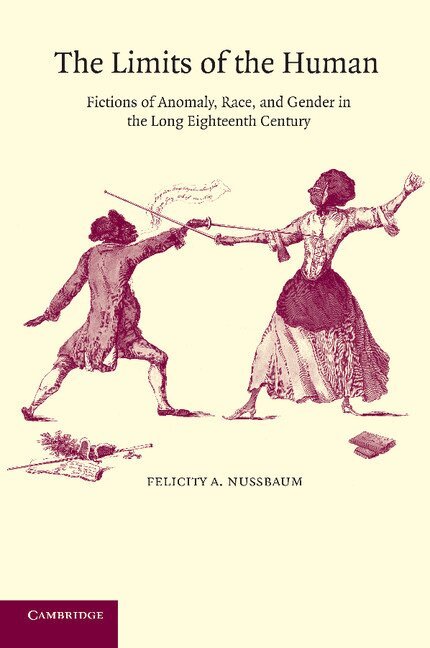
    The Limits of the Human

    Fictions of Anomaly, Race and Gender in the Long Eighteenth Century

    AvFelicity A. Nussbaum

    Häftad, Engelska, 2003

    687 kr

    Beställningsvara. Skickas inom 10-15 vardagar. Fri frakt över 249 kr.

    Fler format och utgåvor

    Inbunden

    1 643 kr

    Beskrivning

    In this book, Felicity Nussbaum examines literary and cultural representations of human difference in England and its empire during the long eighteenth century. With a special focus on women's writing, Nussbaum analyzes canonical and lesser-known novels and plays from the Restoration to abolition. She considers a range of anomalies (defects, disease, and disability) as they intermingle with ideas of femininity, masculinity, and race to define 'normalcy' as national identity. Incorporating writings by Behn, Burney, and the Bluestockings, as well as Southerne, Shaftesbury, Johnson, Sterne, and Equiano, Nussbaum treats a range of disabilities - being mute, blind, lame - and physical oddities such as eunuchism and giantism as they are inflected by emerging notions of a racial femininity and masculinity. She shows that these corporeal features, perceived as aberrant and extraordinary, combine in the popular imagination to reveal a repertory of differences located between the extremes of splendid and horrid novelty.

    Produktinformation

    • Utgivningsdatum:2003-05-15
    • Mått:153 x 229 x 22 mm
    • Vikt:456 g
    • Format:Häftad
    • Språk:Engelska
    • Antal sidor:350
    • Förlag:Cambridge University Press
    • ISBN:9780521016421

    Utforska kategorier

    • Litteraturvetenskap inom Skönlitteratur

    Mer om författaren

    Felicity Nussbaum is Professor of English at the University of California, Los Angeles. She is the author of Torrid Zones: Maternity, Sexuality and Empire in Eighteenth-Century English Narratives (1995).

    Recensioner i media

    "The moral impetus and humane sensibility of The Limits of the Human are evident . . ." Studies in English Literature 1500-1900

    Innehållsförteckning

    • List of illustrations; Acknowledgments; Introduction: monstrous tales; Part I. Anomaly and Gender: 1. Fictions of defect: Aphra Behn and Eliza Haywood; 2. Effeminacy and femininity: Sarah Fielding, Elizabeth Montagu, and Johnson; 3. Odd women, mangled men: the bluestockings and Sterne; 4. Scarred women: Frances Burney and smallpox; Part II. Race and Gender: 5. Racial femininity: 'Our British Fair'; 6. Black women: why Imoinda turns white; 7. Black men: Equiano, Sancho, and being a man; 8. Black parts: racial counterfeit on stage; Coda: between races.