• Fri frakt över 249 kr
  • •
  • Snabba leveranser
  • •
  • Billiga böcker
Kundservice

Du är på sajten för privatpersoner.

Företag, bibliotek eller offentlig verksamhet?

Du handlar på classic.bokus.com, där alla dina funktioner finns intakta.
Till classic.bokus.com
Bokus logotyp. Gå till startsidan.
  • Erbjudanden
  • Nyheter
  • Student
  • Topplistor
  • Barn & ungdom
  • Bokus Play
  • E-böcker
  • Pocketböcker
  • Spel & pussel

10% rabatt på allt med kod: NYSTART10 →

Sidfot

Mina sidor

    Hjälp

    • Kundservice
    • Vanliga frågor och svar
    • Frakt och leverans
    • Retur vid ångerrätt
    • Reklamera vara
    • Betalning
    • Köpvillkor
    • Allmänna villkor
    • Information om webbplatsens tillgänglighet

    Om Bokus

    • Om oss
    • Pressrum
    • För studenter
    • För företag
    • För bibliotek och offentlig verksamhet
    • För leverantörer
    • Hållbarhet

    Populärt

    • Aktuella erbjudanden
    • Presentkort
    • Studentlitteratur
    • Nya böcker
    • Topplistor
    • Signerade böcker
    • Engelska böcker

    Inspiration

    • Boktips
    • BookTok
    • Populära bokserier
    • Barnbokskaraktärer
    • Populära författare
    Logotyp för Bokus
    Följ oss på Facebook (extern länk)Följ oss på Instagram (extern länk)Följ oss på YouTube (extern länk)Följ oss på TikTok (extern länk)
    bokus @ CookiesAnpassa cookiesIntegritetspolicyKöpvillkor
    Till Citymail hemsida (extern länk)Till Budbee hemsida (extern länk)Till Postnord hemsida (extern länk)Till Schenker hemsida (extern länk)Till Early Bird hemsida (extern länk)Till Walleys hemsida (extern länk)
    1. Skönlitteratur
    2. Litteraturvetenskap
    3. Litteraturvetenskap

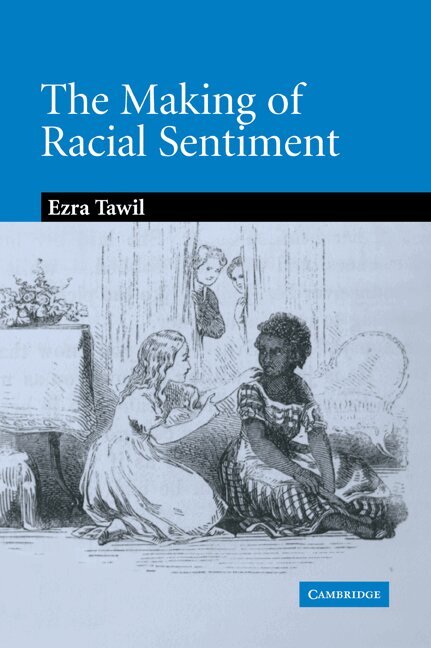
    The Making of Racial Sentiment

    Slavery and the Birth of The Frontier Romance

    AvEzra Tawil

    Häftad, Engelska, 2008

    Del 151 i serien Cambridge Studies in American Literature and Culture

    594 kr

    Beställningsvara. Skickas inom 10-15 vardagar. Fri frakt över 249 kr.

    Fler format och utgåvor

    Inbunden

    1 566 kr

    Beskrivning

    The frontier romance, an enormously popular genre of American fiction born in the 1820s, helped redefine 'race' for an emerging national culture. The novels of James Fenimore Cooper, Lydia Maria Child, Catharine Maria Sedgwick and others described the 'races' in terms of emotional rather than physical characteristics. By doing so they produced the idea of 'racial sentiment': the notion that different races feel different things, and feel things differently. Ezra Tawil argues that the novel of white-Indian conflict provided authors and readers with an apt analogy for the problem of slavery. By uncovering the sentimental aspects of the frontier romance, Tawil redraws the lines of influence between the 'Indian novel' of the 1820s and the sentimental novel of slavery, demonstrating how Harriet Beecher Stowe's Uncle Tom's Cabin ought to be reconsidered in this light. This study reveals how American literature of the 1820s helped form modern ideas about racial differences.

    Produktinformation

    • Utgivningsdatum:2008-09-04
    • Mått:152 x 229 x 14 mm
    • Vikt:350 g
    • Format:Häftad
    • Språk:Engelska
    • Serie:Cambridge Studies in American Literature and Culture
    • Antal sidor:256
    • Förlag:Cambridge University Press
    • ISBN:9780521073042

    Utforska kategorier

    • Litteraturvetenskap inom Skönlitteratur

    Mer om författaren

    Ezra F. Tawil is Assistant Professor of English at Columbia University.

    Recensioner i media

    '…I thoroughly applaud his broader theoretical claim…' Journal of American Studies

    Innehållsförteckning

    • Introduction: toward a literary history of racial sentiment; 1. The politics of slavery and the discourse of race, 1787–1840; 2. Remaking natural rights: race and slavery in James Fenimore Cooper's early writings; 3. Domestic frontier romance, or, how the sentimental heroine became white; 4. 'Homely legends': the uses of sentiment in Cooper's Wept of Wish-Ton-Wish; 5. Stowe's vanishing Americans: 'Negro' inferiority, captivity, and homecoming in Uncle Tom's Cabin; 6. Captain Babo's cabin: racial sentiment and the politics of misreading in Benito Cereno; Index.