• Fri frakt över 249 kr
  • •
  • Snabba leveranser
  • •
  • Billiga böcker
Kundservice

Du är på sajten för privatpersoner.

Företag, bibliotek eller offentlig verksamhet?

Du handlar på classic.bokus.com, där alla dina funktioner finns intakta.
Till classic.bokus.com
Bokus logotyp. Gå till startsidan.
  • Erbjudanden
  • Nyheter
  • Student
  • Topplistor
  • Barn & ungdom
  • Bokus Play
  • E-böcker
  • Pocketböcker
  • Spel & pussel

10% rabatt på allt med kod: NYSTART10 →

Sidfot

Mina sidor

    Hjälp

    • Kundservice
    • Vanliga frågor och svar
    • Frakt och leverans
    • Retur vid ångerrätt
    • Reklamera vara
    • Betalning
    • Köpvillkor
    • Allmänna villkor
    • Information om webbplatsens tillgänglighet

    Om Bokus

    • Om oss
    • Pressrum
    • För studenter
    • För företag
    • För bibliotek och offentlig verksamhet
    • För leverantörer
    • Hållbarhet

    Populärt

    • Aktuella erbjudanden
    • Presentkort
    • Studentlitteratur
    • Nya böcker
    • Topplistor
    • Signerade böcker
    • Engelska böcker

    Inspiration

    • Boktips
    • BookTok
    • Populära bokserier
    • Barnbokskaraktärer
    • Populära författare
    Logotyp för Bokus
    Följ oss på Facebook (extern länk)Följ oss på Instagram (extern länk)Följ oss på YouTube (extern länk)Följ oss på TikTok (extern länk)
    bokus @ CookiesAnpassa cookiesIntegritetspolicyKöpvillkor
    Till Citymail hemsida (extern länk)Till Budbee hemsida (extern länk)Till Postnord hemsida (extern länk)Till Schenker hemsida (extern länk)Till Early Bird hemsida (extern länk)Till Walleys hemsida (extern länk)
    1. Filosofi och religion
    2. Filosofi
    3. Filosofiska discipliner

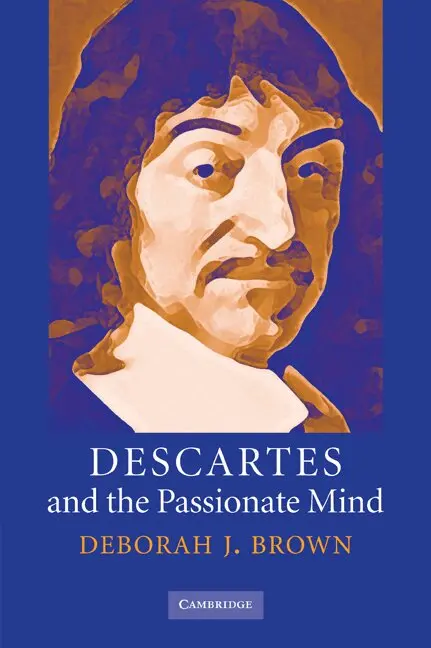
    Descartes and the Passionate Mind

    AvDeborah J. Brown

    Häftad, Engelska, 2008

    597 kr

    Beställningsvara. Skickas inom 10-15 vardagar. Fri frakt över 249 kr.

    Fler format och utgåvor

    Inbunden

    1 335 kr

    Beskrivning

    Descartes is often accused of having fragmented the human being into two independent substances, mind and body, with no clear strategy for explaining the apparent unity of human experience. Deborah Brown argues that, contrary to this view, Descartes did in fact have a conception of a single, integrated human being, and that in his view this conception is crucial to the success of human beings as rational and moral agents and as practitioners of science. The passions are pivotal in this, and in a rich and wide-ranging discussion she examines Descartes' place in the tradition of thought about the passions, the metaphysics of actions and passions, sensory representation, and Descartes' account of self-mastery and virtue. Her study is an important and original reading not only of Descartes' account of mind-body unity but also of his theory of mind.

    Produktinformation

    • Utgivningsdatum:2008-12-11
    • Mått:151 x 210 x 14 mm
    • Vikt:360 g
    • Format:Häftad
    • Språk:Engelska
    • Antal sidor:244
    • Förlag:Cambridge University Press
    • ISBN:9780521088091

    Utforska kategorier

    • Filosofiska discipliner inom Filosofi och religion

    Mer om författaren

    Deborah J. Brown is Senior Lecturer in Philosophy at the School of History, Philosophy, Religion and Classics, University of Queensland.

    Recensioner i media

    "Brown's book is historically and philosophically rich and provocative. Her discussion in chapters 3-5 deftly illustrates the way in which attention to the Passions helps to shed a new light on long-standing questions in the interpretation of Descartes, and she also elaborates a challenging approach to understanding the Passions as a whole. Descartes scholars, philosophers interested in early modern conceptions of the passions, and philosophers interested in the history of theories of the passions will all profit from engaging with Brown's book." - Sean Greenberg, University of California, Irvine

    Innehållsförteckning

    • Acknowledgements; Note on references; Introduction; 1. Volo ergo sum: the unity and significance of Les Passions de l'âme; 2. Perturbations or sweet pleasures? Descartes' place in two traditions regarding the passions; 3. The natural integration of reason and passion; 4. Representing and referring; 5. Action and passion: metaphysical integrationism; 6. Wonder and love: extending the boundaries of the Cartesian knower and the Cartesian self; 7. Several strange passages on desire and fortune; 8. Generosity breeds content: self-mastery through self-esteem; Bibliography; Index.