• Fri frakt över 249 kr
  • •
  • Snabba leveranser
  • •
  • Billiga böcker
Kundservice

Du är på sajten för privatpersoner.

Företag, bibliotek eller offentlig verksamhet?

Du handlar på classic.bokus.com, där alla dina funktioner finns intakta.
Till classic.bokus.com
Bokus logotyp. Gå till startsidan.
  • Erbjudanden
  • Nyheter
  • Student
  • Topplistor
  • Barn & ungdom
  • Bokus Play
  • E-böcker
  • Pocketböcker
  • Spel & pussel

10% rabatt på allt med kod: NYSTART10 →

Sidfot

Mina sidor

    Hjälp

    • Kundservice
    • Vanliga frågor och svar
    • Frakt och leverans
    • Retur vid ångerrätt
    • Reklamera vara
    • Betalning
    • Köpvillkor
    • Allmänna villkor
    • Information om webbplatsens tillgänglighet

    Om Bokus

    • Om oss
    • Pressrum
    • För studenter
    • För företag
    • För bibliotek och offentlig verksamhet
    • För leverantörer
    • Hållbarhet

    Populärt

    • Aktuella erbjudanden
    • Presentkort
    • Studentlitteratur
    • Nya böcker
    • Topplistor
    • Signerade böcker
    • Engelska böcker

    Inspiration

    • Boktips
    • BookTok
    • Populära bokserier
    • Barnbokskaraktärer
    • Populära författare
    Logotyp för Bokus
    Följ oss på Facebook (extern länk)Följ oss på Instagram (extern länk)Följ oss på YouTube (extern länk)Följ oss på TikTok (extern länk)
    bokus @ CookiesAnpassa cookiesIntegritetspolicyKöpvillkor
    Till Citymail hemsida (extern länk)Till Budbee hemsida (extern länk)Till Postnord hemsida (extern länk)Till Schenker hemsida (extern länk)Till Early Bird hemsida (extern länk)Till Walleys hemsida (extern länk)
    1. Ekonomi och Ledarskap
    2. Nationalekonomi
    3. Ekonomisk politik

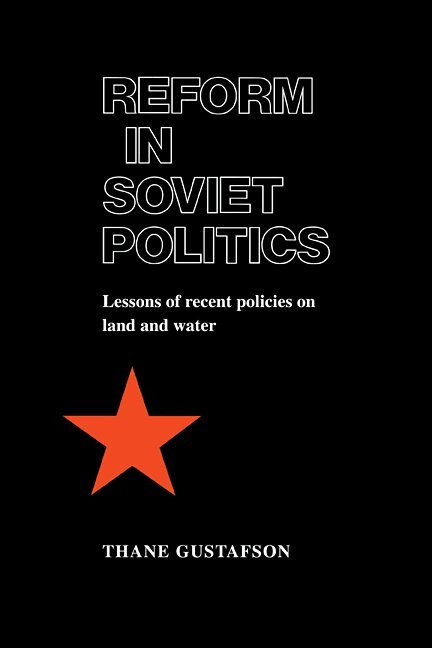
    Reform in Soviet Politics

    The Lessons of Recent Policies on Land and Water

    AvThane Gustafson

    Häftad, Engelska, 2009

    477 kr

    Beställningsvara. Skickas inom 10-15 vardagar. Fri frakt över 249 kr.

    Beskrivning

    This book examines the record of the Brezhnev regime in its only major domestic innovation: the attempt to modernise Soviet agriculture. Under Brezhnev, the Soviets have invested more than half a trillion dollars in the countryside, but the Kremlin has remarkably little to show for the effort. The reason for the poor return, Gustafson argues is that it is fundamentally flawed because it has been conducted along traditional Soviet lines. For all its innovative features the agricultural programme resembles nothing so much as the Stalinist industrialising campaigns of the fifties. The Soviets cannot afford another such 'reform'. Consequently the agricultural programme cannot stand as a model for meeting the complex problems the Soviets will have to deal with in the next twenty years. Gustafson asserts that whatever solution they devise will depend on whether the Soviet political elite can develop resources and instruments of power more appropriate to the needs of a mature industrial economy. But whether such changes are possible rests on fundamental questions about the essence of power in the Soviet regime.

    Produktinformation

    • Utgivningsdatum:2009-01-08
    • Mått:152 x 229 x 14 mm
    • Vikt:360 g
    • Format:Häftad
    • Språk:Engelska
    • Antal sidor:236
    • Förlag:Cambridge University Press
    • ISBN:9780521101875

    Utforska kategorier

    • Ekonomisk politik inom Ekonomi och Ledarskap

    Innehållsförteckning

    • Preface; 1. Challenge of the third generation of Soviet power; 2. Building authority around a new agricultural policy; Part I. Advice and dissent in the shaping of Brezhnev's agricultural and environmental programs: 3. Environmental issues rise to official legitimacy; 4. Displacing Stalinist dogma on the price of capital; 5. Technology assessment Soviet style; 6. Bringing new ideas into Soviet politics; Part II. Implementation of the Brezhnev programs: 7. Loosening the grip of old priorities: the long struggle against hydropower; 8. The new environmental program: do the Soviets really mean business?; 9. Slow gains at a high price: the frustrations of reclamation; 10. Carrying out a third-generation program with second-generation methods; 11. Conclusion: lessons of the Brezhnev policies and the future of reform; Notes; Index.