• Fri frakt över 249 kr
  • •
  • Snabba leveranser
  • •
  • Billiga böcker
Kundservice

Du är på sajten för privatpersoner.

Företag, bibliotek eller offentlig verksamhet?

Du handlar på classic.bokus.com, där alla dina funktioner finns intakta.
Till classic.bokus.com
Bokus logotyp. Gå till startsidan.
  • Erbjudanden
  • Nyheter
  • Student
  • Topplistor
  • Barn & ungdom
  • Bokus Play
  • E-böcker
  • Pocketböcker
  • Spel & pussel

10% rabatt på allt med kod: NYSTART10 →

Sidfot

Mina sidor

    Hjälp

    • Kundservice
    • Vanliga frågor och svar
    • Frakt och leverans
    • Retur vid ångerrätt
    • Reklamera vara
    • Betalning
    • Köpvillkor
    • Allmänna villkor
    • Information om webbplatsens tillgänglighet

    Om Bokus

    • Om oss
    • Pressrum
    • För studenter
    • För företag
    • För bibliotek och offentlig verksamhet
    • För leverantörer
    • Hållbarhet

    Populärt

    • Aktuella erbjudanden
    • Presentkort
    • Studentlitteratur
    • Nya böcker
    • Topplistor
    • Signerade böcker
    • Engelska böcker

    Inspiration

    • Boktips
    • BookTok
    • Populära bokserier
    • Barnbokskaraktärer
    • Populära författare
    Logotyp för Bokus
    Följ oss på Facebook (extern länk)Följ oss på Instagram (extern länk)Följ oss på YouTube (extern länk)Följ oss på TikTok (extern länk)
    bokus @ CookiesAnpassa cookiesIntegritetspolicyKöpvillkor
    Till Citymail hemsida (extern länk)Till Budbee hemsida (extern länk)Till Postnord hemsida (extern länk)Till Schenker hemsida (extern länk)Till Early Bird hemsida (extern länk)Till Walleys hemsida (extern länk)
    1. Juridik
    2. Internationell rätt
    3. Folkrätt

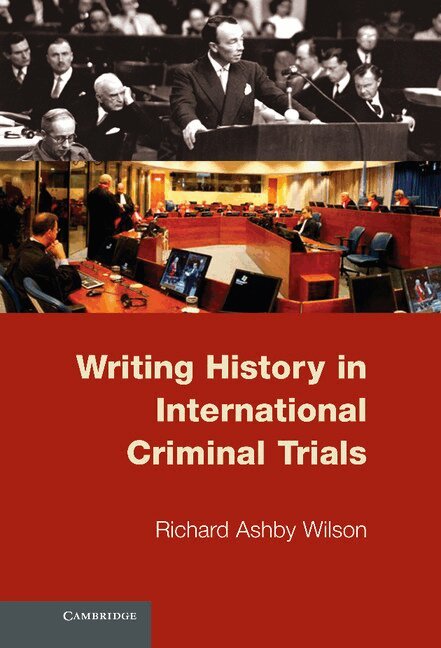
    Writing History in International Criminal Trials

    AvRichard Ashby Wilson

    Häftad, Engelska, 2011

    384 kr

    Beställningsvara. Skickas inom 10-15 vardagar. Fri frakt över 249 kr.

    Fler format och utgåvor

    Inbunden

    969 kr

    Beskrivning

    Why do international criminal tribunals write histories of the origins and causes of armed conflicts? Richard Ashby Wilson conducted research with judges, prosecutors, defense attorneys and expert witnesses in three international criminal tribunals to understand how law and history are combined in the courtroom. Historical testimony is now an integral part of international trials, with prosecutors and defense teams using background testimony to pursue decidedly legal objectives. In the Slobodan Milošević trial, the prosecution sought to demonstrate special intent to commit genocide by reference to a long-standing animus, nurtured within a nationalist mindset. For their part, the defense called historical witnesses to undermine charges of superior responsibility, and to mitigate the sentence by representing crimes as reprisals. Although legal ways of knowing are distinct from those of history, the two are effectively combined in international trials in a way that challenges us to rethink the relationship between law and history.
    Produktinformation

    • Utgivningsdatum:2011-03-07
    • Mått:152 x 229 x 15 mm
    • Vikt:490 g
    • Format:Häftad
    • Språk:Engelska
    • Antal sidor:272
    • Förlag:Cambridge University Press
    • ISBN:9780521138314

    Utforska kategorier

    • Folkrätt inom Juridik

    Mer om författaren

    Richard Ashby Wilson is Gladstein Distinguished Chair of Human Rights, Professor of Anthropology and Law, and Director of the Human Rights Institute, at the University of Connecticut. He is the author of The Politics of Truth and Reconciliation in South Africa (2001) and editor or co-editor of six books, including Culture and Rights, Human Rights and the 'War on Terror' and Humanitarianism and Suffering. He has held a fellowship from the National Endowment for the Humanities (2009–10) and has been a Visiting Professor at the University of Oslo, the New School for Social Research and the University of the Witwatersrand. Presently he serves as Chair of the State Advisory Committee for the US Civil Rights Commission.

    Recensioner i media

    "How well do international criminal courts craft historical understandings of genocide, massacre and other grave violations of human rights? And how well do recent efforts to highlight such traumatic history in international trials promote sound judicial outcomes? These questions not only torment survivors, but should preoccupy everyone concerned with the cause of international criminal justice. Bringing to these issues the skills of a legal anthropologist, a learned appreciation of international humanitarian law and a refined legal sensibility, Richard Wilson provides answers based on path breaking new research. The first full-dress examination of this topic, this is a splendid book that should dominate the discussion of this important topic." Michael R. MarrusChancellor Rose and Ray Wolfe Professor Emeritus of Holocaust Studies, University of Toronto

    Innehållsförteckning

    • 1. Assessing court histories of mass crimes; 2. What does the 'international' actually mean for international criminal trials?; 3. Contrasting evidence: international and common law approaches to expert testimony; 4. Does history have any legal relevance in international criminal trials?; 5. From monumental history to micro-histories; 6. Exoneration and mitigation in defense histories; 7. Misjudging Rwandan society and history at the international criminal tribunal for Rwanda; 8. Permanent justice: the international criminal court; 9. Conclusion: new directions in international criminal trials.