• Fri frakt över 249 kr
  • •
  • Snabba leveranser
  • •
  • Billiga böcker
Kundservice

Du är på sajten för privatpersoner.

Företag, bibliotek eller offentlig verksamhet?

Du handlar på classic.bokus.com, där alla dina funktioner finns intakta.
Till classic.bokus.com
Bokus logotyp. Gå till startsidan.
  • Erbjudanden
  • Nyheter
  • Student
  • Topplistor
  • Barn & ungdom
  • Bokus Play
  • E-böcker
  • Pocketböcker
  • Spel & pussel

Må bättre, för mindre! Upp till 50% rabatt på hälsoböcker

Sidfot

Mina sidor

    Hjälp

    • Kundservice
    • Vanliga frågor och svar
    • Frakt och leverans
    • Retur vid ångerrätt
    • Reklamera vara
    • Betalning
    • Köpvillkor
    • Allmänna villkor
    • Information om webbplatsens tillgänglighet

    Om Bokus

    • Om oss
    • Pressrum
    • För studenter
    • För företag
    • För bibliotek och offentlig verksamhet
    • För leverantörer
    • Hållbarhet

    Populärt

    • Aktuella erbjudanden
    • Presentkort
    • Studentlitteratur
    • Nya böcker
    • Topplistor
    • Signerade böcker
    • Engelska böcker

    Inspiration

    • Boktips
    • BookTok
    • Populära bokserier
    • Barnbokskaraktärer
    • Populära författare
    Logotyp för Bokus
    Följ oss på Facebook (extern länk)Följ oss på Instagram (extern länk)Följ oss på YouTube (extern länk)Följ oss på TikTok (extern länk)
    bokus @ CookiesAnpassa cookiesIntegritetspolicyKöpvillkor
    Till Citymail hemsida (extern länk)Till Budbee hemsida (extern länk)Till Postnord hemsida (extern länk)Till Schenker hemsida (extern länk)Till Early Bird hemsida (extern länk)Till Walleys hemsida (extern länk)
    1. Historia och arkeologi
    2. Historia

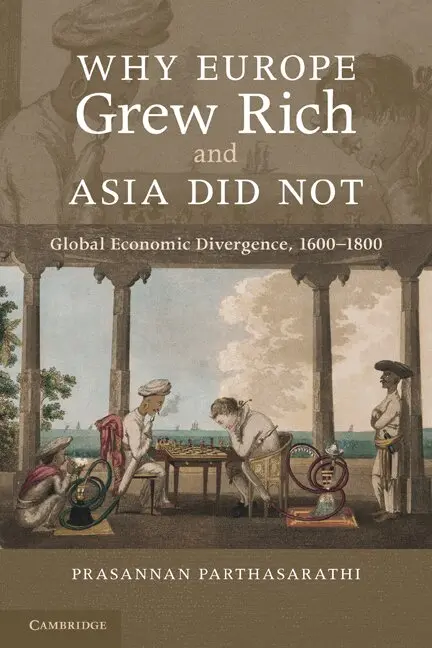
    Why Europe Grew Rich and Asia Did Not

    Global Economic Divergence, 1600-1850

    AvPrasannan Parthasarathi

    Häftad, Engelska, 2011

    390 kr

    . Fri frakt över 249 kr.

    Fler format och utgåvor

    Inbunden

    1 319 kr

    Beskrivning

    Why Europe Grew Rich and Asia Did Not provides a striking new answer to the classic question of why Europe industrialised from the late eighteenth century and Asia did not. Drawing significantly from the case of India, Prasannan Parthasarathi shows that in the seventeenth and eighteenth centuries the advanced regions of Europe and Asia were more alike than different, both characterized by sophisticated and growing economies. Their subsequent divergence can be attributed to different competitive and ecological pressures that in turn produced varied state policies and economic outcomes. This account breaks with conventional views, which hold that divergence occurred because Europe possessed superior markets, rationality, science or institutions. It offers instead a groundbreaking rereading of global economic development that ranges from India, Japan and China to Britain, France and the Ottoman Empire and from the textile and coal industries to the roles of science, technology and the state.

    Produktinformation

    • Utgivningsdatum:2011-08-11
    • Mått:150 x 226 x 18 mm
    • Vikt:613 g
    • Format:Häftad
    • Språk:Engelska
    • Antal sidor:380
    • Förlag:Cambridge University Press
    • ISBN:9780521168243
    • Utmärkelser:World History Association Book Prize 2012

    Utforska kategorier

    • Historia inom Historia och arkeologi

    Mer om författaren

    Prasannan Parthasarathi is Associate Professor in the Department of History at Boston College. His previous publications include The Transition to a Colonial Economy: Weavers, Merchants and Kings in South India, 1720–1800 (Cambridge University Press, 2001) and The Spinning World: A Global History of Cotton Textiles, 1200–1850 (co-edited with Giorgio Riello, 2009).

    Recensioner i media

    'We have been waiting for more than ten years since Pomeranz opened the debate on the Great Divergence between China and the West for the book that brings India into the discourse. This magnum opus comes from a scholar with the credentials in economics, the erudition in history and the literary style required to occupy the intellectual high ground for the decade to come.' Patrick O'Brien, FBA, London School of Economics

    Innehållsförteckning

    • 1. Introduction; Part I. Setting the Stage: Europe and Asia before Divergence: 2. India and the global economy, 1600–1800; 3. Political institutions and economic life; Part II. The Divergence of Britain: 4. The European response to Indian cottons; 5. State and market: Britain, France, and the Ottoman Empire; 6. From cotton to coal; Part III. The Indian Path: 7. Science and technology in India, 1600–1800; 8. Industry in early nineteenth-century India; 9. Conclusion.