• Fri frakt över 249 kr
  • •
  • Snabba leveranser
  • •
  • Billiga böcker
Kundservice

Du är på sajten för privatpersoner.

Företag, bibliotek eller offentlig verksamhet?

Du handlar på classic.bokus.com, där alla dina funktioner finns intakta.
Till classic.bokus.com
Bokus logotyp. Gå till startsidan.
  • Erbjudanden
  • Nyheter
  • Student
  • Topplistor
  • Barn & ungdom
  • Bokus Play
  • E-böcker
  • Pocketböcker
  • Spel & pussel

10% rabatt på allt med kod: NYSTART10 →

Sidfot

Mina sidor

    Hjälp

    • Kundservice
    • Vanliga frågor och svar
    • Frakt och leverans
    • Retur vid ångerrätt
    • Reklamera vara
    • Betalning
    • Köpvillkor
    • Allmänna villkor
    • Information om webbplatsens tillgänglighet

    Om Bokus

    • Om oss
    • Pressrum
    • För studenter
    • För företag
    • För bibliotek och offentlig verksamhet
    • För leverantörer
    • Hållbarhet

    Populärt

    • Aktuella erbjudanden
    • Presentkort
    • Studentlitteratur
    • Nya böcker
    • Topplistor
    • Signerade böcker
    • Engelska böcker

    Inspiration

    • Boktips
    • BookTok
    • Populära bokserier
    • Barnbokskaraktärer
    • Populära författare
    Logotyp för Bokus
    Följ oss på Facebook (extern länk)Följ oss på Instagram (extern länk)Följ oss på YouTube (extern länk)Följ oss på TikTok (extern länk)
    bokus @ CookiesAnpassa cookiesIntegritetspolicyKöpvillkor
    Till Citymail hemsida (extern länk)Till Budbee hemsida (extern länk)Till Postnord hemsida (extern länk)Till Schenker hemsida (extern länk)Till Early Bird hemsida (extern länk)Till Walleys hemsida (extern länk)
    1. Filosofi och religion
    2. Religion och tro
    3. Religion: allmänt

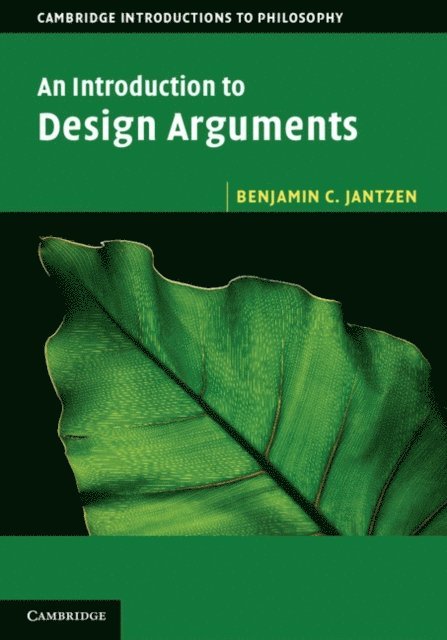
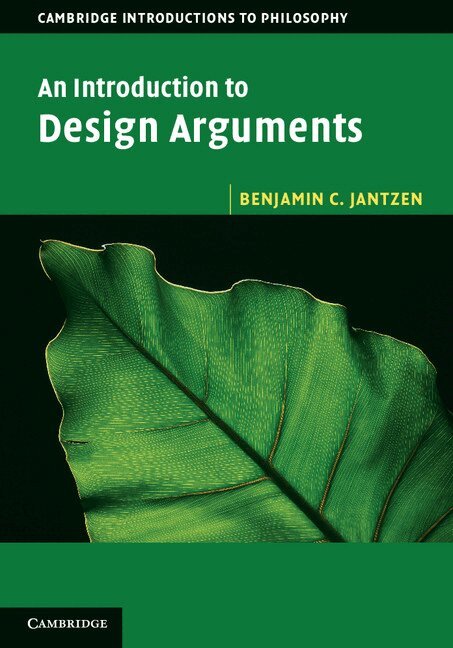
    An Introduction to Design Arguments

    AvBenjamin C. Jantzen

    Häftad, Engelska, 2014

    Del i serien Cambridge Introductions to Philosophy

    338 kr

    Beställningsvara. Skickas inom 10-15 vardagar. Fri frakt över 249 kr.

    Fler format och utgåvor

    Inbunden

    998 kr

    Beskrivning

    The history of design arguments stretches back to before Aquinas, who claimed that things which lack intelligence nevertheless act for an end to achieve the best result. Although science has advanced to discredit this claim, it remains true that many biological systems display remarkable adaptations of means to ends. Versions of design arguments have persisted over the centuries and have culminated in theories that propose an intelligent designer of the universe. This volume is the only comprehensive survey of 2,000 years of debate, drawing on both historical and modern literature to identify, clarify and assess critically the many forms of design argument for the existence of God. It provides a neutral, informative account of the topic from antiquity to Darwin, and includes concise primers on probability and cosmology. It will be of great value to upper-level undergraduates and graduates in philosophy of religion, theology, and philosophy of science.

    Produktinformation

    • Utgivningsdatum:2014-02-27
    • Mått:174 x 247 x 16 mm
    • Vikt:690 g
    • Format:Häftad
    • Språk:Engelska
    • Serie:Cambridge Introductions to Philosophy
    • Antal sidor:347
    • Förlag:Cambridge University Press
    • ISBN:9780521183031

    Utforska kategorier

    • Religion: allmänt inom Filosofi och religion

    Mer om författaren

    Benjamin C. Jantzen is Assistant Professor of Philosophy at Virginia Tech. He has published papers in journals including Proceedings of the National Academy of Sciences, Biophysical Journal, Philosophy of Science, and Synthese. His work on formal methods in the philosophy of religion has been published in Transactions of the Charles S. Peirce Society and in the anthology Probability in the Philosophy of Religion (2012).

    Innehållsförteckning

    • Preface; 1. Introduction; 2. Preliminaries; 3. Arguments from antiquity; 4. Medieval arguments; 5. The golden age of natural theology; 6. Unusual design arguments; 7. Hume; 8. Paley; 9. Darwin; 10. Loose ends; 11. The modern likelihood argument; 12. Intelligent design I: irreducible complexity; 13. Intelligent design II: specified complexity; 14. What is complexity?; 15. Supernatural agents and the role of laws; 16. A brief survey of physical law; 17. Fine-tuning I: positive arguments; 18. Fine-tuning II: objections; 19. Conclusion.