• Fri frakt över 249 kr
  • •
  • Snabba leveranser
  • •
  • Billiga böcker
Kundservice

Du är på sajten för privatpersoner.

Företag, bibliotek eller offentlig verksamhet?

Du handlar på classic.bokus.com, där alla dina funktioner finns intakta.
Till classic.bokus.com
Bokus logotyp. Gå till startsidan.
  • Erbjudanden
  • Nyheter
  • Student
  • Topplistor
  • Barn & ungdom
  • Bokus Play
  • E-böcker
  • Pocketböcker
  • Spel & pussel

10% rabatt på allt med kod: NYSTART10 →

Sidfot

Mina sidor

    Hjälp

    • Kundservice
    • Vanliga frågor och svar
    • Frakt och leverans
    • Retur vid ångerrätt
    • Reklamera vara
    • Betalning
    • Köpvillkor
    • Allmänna villkor
    • Information om webbplatsens tillgänglighet

    Om Bokus

    • Om oss
    • Pressrum
    • För studenter
    • För företag
    • För bibliotek och offentlig verksamhet
    • För leverantörer
    • Hållbarhet

    Populärt

    • Aktuella erbjudanden
    • Presentkort
    • Studentlitteratur
    • Nya böcker
    • Topplistor
    • Signerade böcker
    • Engelska böcker

    Inspiration

    • Boktips
    • BookTok
    • Populära bokserier
    • Barnbokskaraktärer
    • Populära författare
    Logotyp för Bokus
    Följ oss på Facebook (extern länk)Följ oss på Instagram (extern länk)Följ oss på YouTube (extern länk)Följ oss på TikTok (extern länk)
    bokus @ CookiesAnpassa cookiesIntegritetspolicyKöpvillkor
    Till Citymail hemsida (extern länk)Till Budbee hemsida (extern länk)Till Postnord hemsida (extern länk)Till Schenker hemsida (extern länk)Till Early Bird hemsida (extern länk)Till Walleys hemsida (extern länk)
    1. Historia och arkeologi
    2. Historia
    3. Europas historia

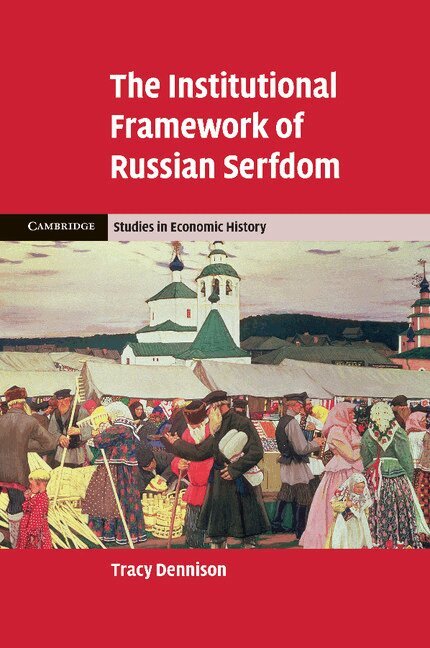
    The Institutional Framework of Russian Serfdom

    AvTracy Dennison

    Inbunden, Engelska, 2011

    Del i serien Cambridge Studies in Economic History - Second Series

    1 375 kr

    Beställningsvara. Skickas inom 10-15 vardagar. Fri frakt över 249 kr.

    Fler format och utgåvor

    Häftad

    477 kr

    Beskrivning

    Russian rural history has long been based on a 'Peasant Myth', originating with nineteenth-century Romantics and still accepted by many historians today. In this book, Tracy Dennison shows how Russian society looked from below, and finds nothing like the collective, redistributive and market-averse behaviour often attributed to Russian peasants. On the contrary, the Russian rural population was as integrated into regional and even national markets as many of its west European counterparts. Serfdom was a loose garment that enabled different landlords to shape economic institutions, especially property rights, in widely diverse ways. Highly coercive and backward regimes on some landlords' estates existed side-by-side with surprisingly liberal approximations to a rule of law. This book paints a vivid and colourful picture of the everyday reality of rural Russia before the 1861 abolition of serfdom.
    Produktinformation

    • Utgivningsdatum:2011-04-28
    • Mått:152 x 229 x 17 mm
    • Vikt:540 g
    • Format:Inbunden
    • Språk:Engelska
    • Serie:Cambridge Studies in Economic History - Second Series
    • Antal sidor:276
    • Förlag:Cambridge University Press
    • ISBN:9780521194488
    • Utmärkelser:Agricultural History Society Henry A. Wallace Award 2011

    Utforska kategorier

    • Europas historia inom Historia och arkeologi

    Mer om författaren

    Tracy Dennison is Associate Professor of Social Science History at the California Institute of Technology. Her work has received numerous prizes, including the Pollard Prize awarded by the Institute for Historical Research at the University of London, and the Economic History Association's Alexander Gerschenkron Prize.

    Recensioner i media

    "An excellent monograph on a topic of major significance. Highly recommended." -Choice

    Innehållsförteckning

    • 1. Why is Russia different? Culture, geography, institutions; 2. Voshchazhnikovo: a microcosm of nineteenth-century Russia; 3. Household structure and family economy; 4. The rural commune; 5. Land and property markets; 6. Labour markets; 7. Credit and savings; 8. Retail markets and consumption; 9. The institutional framework of Russian serfdom.