• Fri frakt över 249 kr
  • •
  • Snabba leveranser
  • •
  • Billiga böcker
Kundservice

Du är på sajten för privatpersoner.

Företag, bibliotek eller offentlig verksamhet?

Du handlar på classic.bokus.com, där alla dina funktioner finns intakta.
Till classic.bokus.com
Bokus logotyp. Gå till startsidan.
  • Erbjudanden
  • Student
  • Topplistor
  • Barn & ungdom
  • Bokus Play
  • E-böcker
  • Ljudböcker
  • Pocketböcker
  • Spel och pussel

Pocketfynda! Hundratals böcker för 49 kr/st →

Sidfot

Mina sidor

    Hjälp

    • Kundservice
    • Vanliga frågor och svar
    • Frakt och leverans
    • Retur vid ångerrätt
    • Reklamera vara
    • Betalning
    • Köpvillkor
    • Allmänna villkor
    • Information om webbplatsens tillgänglighet

    Om Bokus

    • Om oss
    • Pressrum
    • För studenter
    • För företag
    • För bibliotek och offentlig verksamhet
    • För leverantörer
    • Hållbarhet

    Populärt

    • Aktuella erbjudanden
    • Presentkort
    • Studentlitteratur
    • Nya böcker
    • Topplistor
    • Signerade böcker
    • Engelska böcker

    Inspiration

    • Boktips
    • BookTok
    • Barnbokskaraktärer
    • Populära författare
    Logotyp för Bokus
    Följ oss på Facebook (extern länk)Följ oss på Instagram (extern länk)Följ oss på YouTube (extern länk)Följ oss på TikTok (extern länk)
    bokus @ CookiesAnpassa cookiesIntegritetspolicyKöpvillkor
    Till Citymail hemsida (extern länk)Till Budbee hemsida (extern länk)Till Postnord hemsida (extern länk)Till Schenker hemsida (extern länk)Till Early Bird hemsida (extern länk)Till Walleys hemsida (extern länk)
    1. Filosofi och religion
    2. Filosofi
    3. Filosofiska discipliner

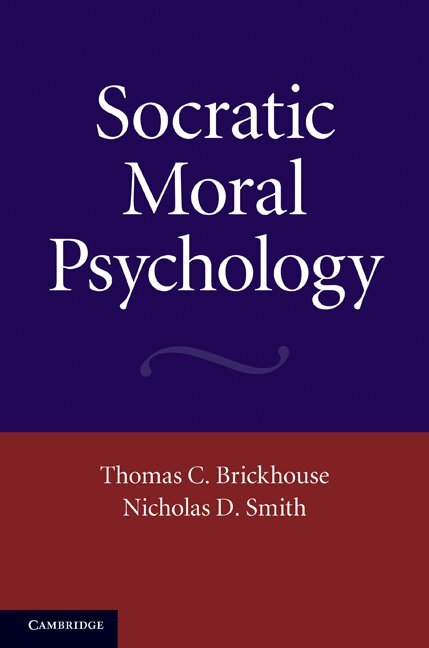
    Socratic Moral Psychology

    AvThomas C. Brickhouse,Nicholas D. Smith

    Inbunden, Engelska, 2010

    1 214 kr

    Beställningsvara. Skickas inom 7-10 vardagar. Fri frakt över 249 kr.

    Fler format och utgåvor

    Häftad

    597 kr

    Beskrivning

    Socrates' moral psychology is widely thought to be 'intellectualist' in the sense that, for Socrates, every ethical failure to do what is best is exclusively the result of some cognitive failure to apprehend what is best. Until publication of this book, the view that, for Socrates, emotions and desires have no role to play in causing such failure went unchallenged. This book argues against the orthodox view of Socratic intellectualism and offers in its place a comprehensive alternative account that explains why Socrates believed that emotions, desires and appetites can influence human motivation and lead to error. Thomas C. Brickhouse and Nicholas D. Smith defend the study of Socrates' philosophy and offer an alternative interpretation of Socratic moral psychology. Their novel account of Socrates' conception of virtue and how it is acquired shows that Socratic moral psychology is considerably more sophisticated than scholars have supposed.

    Produktinformation

    • Utgivningsdatum:2010-05-06
    • Mått:152 x 229 x 21 mm
    • Vikt:590 g
    • Format:Inbunden
    • Språk:Engelska
    • Antal sidor:286
    • Förlag:Cambridge University Press
    • ISBN:9780521198431

    Utforska kategorier

    • Filosofiska discipliner inom Filosofi och religion

    Mer om författaren

    Thomas C. Brickhouse is John Franklin East Professor of Humanities, Department of Philosophy, Lynchburg College, Virginia. He is the co-author (with Nicholas D. Smith) of The Philosophy of Socrates (2000) and the co-editor (with Nicholas D. Smith) of The Trial and Execution of Socrates (2002). Nicholas D. Smith is James F. Miller Professor of Humanities, Department of Philosophy, Lewis and Clark College, Portland. He is the co-author (with Thomas C. Brickhouse) of Plato and the Trial of Socrates (2004) and the author of papers on Plato, Aristotle, and contemporary epistemology.

    Recensioner i media

    "....Overall the book has much to recommend it, not least of which is the lively and engaging style in which the authors have managed to express what is.... provided scholarly and intelligent arguments for what remains a challenging and unorthodox thesis. The book deserves to be widely read." --Scott Carson, Ohio University, Bryn Mawr Classical Review

    Innehållsförteckning

    • Introduction; Acknowledgements; 1. Apology of Socratic studies; 2. Motivational intellectualism; 3. The 'prudential paradox'; 4. Wrongdoing and damage to the soul; 5. Educating the appetites and passions; 6. Virtue intellectualism; 7. Socrates and his intellectual heirs: Plato, Aristotle, and the Stoics; Appendix. Is Plato's Gorgias consistent with the other early or Socratic dialogues?; Bibliography of works cited; Index of passages; General index.