• Fri frakt över 249 kr
  • •
  • Snabba leveranser
  • •
  • Billiga böcker
Kundservice

Du är på sajten för privatpersoner.

Företag, bibliotek eller offentlig verksamhet?

Du handlar på classic.bokus.com, där alla dina funktioner finns intakta.
Till classic.bokus.com
Bokus logotyp. Gå till startsidan.
  • Erbjudanden
  • Nyheter
  • Student
  • Topplistor
  • Barn & ungdom
  • Bokus Play
  • E-böcker
  • Pocketböcker
  • Spel & pussel

10% rabatt på allt med kod: NYSTART10 →

Sidfot

Mina sidor

    Hjälp

    • Kundservice
    • Vanliga frågor och svar
    • Frakt och leverans
    • Retur vid ångerrätt
    • Reklamera vara
    • Betalning
    • Köpvillkor
    • Allmänna villkor
    • Information om webbplatsens tillgänglighet

    Om Bokus

    • Om oss
    • Pressrum
    • För studenter
    • För företag
    • För bibliotek och offentlig verksamhet
    • För leverantörer
    • Hållbarhet

    Populärt

    • Aktuella erbjudanden
    • Presentkort
    • Studentlitteratur
    • Nya böcker
    • Topplistor
    • Signerade böcker
    • Engelska böcker

    Inspiration

    • Boktips
    • BookTok
    • Populära bokserier
    • Barnbokskaraktärer
    • Populära författare
    Logotyp för Bokus
    Följ oss på Facebook (extern länk)Följ oss på Instagram (extern länk)Följ oss på YouTube (extern länk)Följ oss på TikTok (extern länk)
    bokus @ CookiesAnpassa cookiesIntegritetspolicyKöpvillkor
    Till Citymail hemsida (extern länk)Till Budbee hemsida (extern länk)Till Postnord hemsida (extern länk)Till Schenker hemsida (extern länk)Till Early Bird hemsida (extern länk)Till Walleys hemsida (extern länk)
    1. Naturvetenskap och teknik
    2. Matematik och naturvetenskap
    3. Biologi

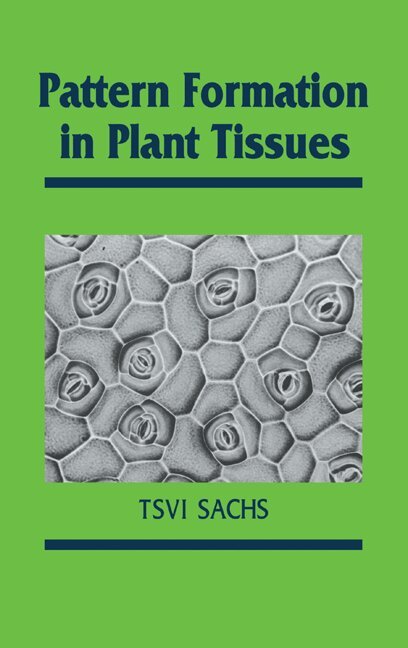
    Pattern Formation in Plant Tissues

    AvTsvi Sachs

    Inbunden, Engelska, 1991

    Del 25 i serien Developmental and Cell Biology Series

    1 616 kr

    Beställningsvara. Skickas inom 10-15 vardagar. Fri frakt över 249 kr.

    Fler format och utgåvor

    Häftad

    731 kr

    Beskrivning

    Plants are an advantageous group for the consideration of the development of biological form. Plants share most aspects of cell biology with other organisms, yet their embryonic development continues throughout their life, their cells do not move relative to each other and their structure is relatively simple. The chapters in this book are centred around the structure of tissues and its purpose is to try and predict what should be looked for at a molecular level so as to account for observable forms. Each chapter deals with a defined problem such as the role of hormones as correlative agents, tissue polarization, apical meristems and cell lineages. The final chapter develops an alternative approach to the problem of the specification of biological form, that of 'epigenetic selection'. The chapters are centred around the structure of tissues, an intermediate and neglected level between overt morphology and biochemistry, and will be of great interest to all those engaged in attempting to understand the principles behind plant development.

    Produktinformation

    • Utgivningsdatum:1991-02-21
    • Mått:157 x 235 x 16 mm
    • Vikt:530 g
    • Format:Inbunden
    • Språk:Engelska
    • Serie:Developmental and Cell Biology Series
    • Antal sidor:248
    • Förlag:Cambridge University Press
    • ISBN:9780521248655

    Utforska kategorier

    • Biologi inom Naturvetenskap och teknik

    Recensioner i media

    "...unusual and refreshing in the way it looks at plants as organised, interacting systems....This is a book of concepts, ideas, and illustrations. Sometimes the author may lead us on to unfamiliar ground and we need to concentrate, but it is worth re-reading any difficult bits to come see the plantscape from the author's perspective instead of our usual view of looking up from the cell or down from the animal." Times Higher Education Supplement

    Innehållsförteckning

    • Preface; 1. Introduction; 2. Interactions of developing organs; 3. Hormones as correlative agents; 4. Callus and tumour development; 5. The polarization of tissues; 6. The canalization of vascular differentiation; 7. Cell lineages; 8. Stomata as an example of meristemoid development; 9. Expressions of cellular interactions; 10. Apical meristems; 11. The localization of new leaves; 12. A temporal control of apical differentiation; 13. Generalizations about pattern formation.