• Fri frakt över 249 kr
  • •
  • Snabba leveranser
  • •
  • Billiga böcker
Kundservice

Du är på sajten för privatpersoner.

Företag, bibliotek eller offentlig verksamhet?

Du handlar på classic.bokus.com, där alla dina funktioner finns intakta.
Till classic.bokus.com
Bokus logotyp. Gå till startsidan.
  • Erbjudanden
  • Nyheter
  • Student
  • Topplistor
  • Barn & ungdom
  • Bokus Play
  • E-böcker
  • Pocketböcker
  • Spel & pussel

10% studentrabatt med kod TERM26

Sidfot

Mina sidor

    Hjälp

    • Kundservice
    • Vanliga frågor och svar
    • Frakt och leverans
    • Retur vid ångerrätt
    • Reklamera vara
    • Betalning
    • Köpvillkor
    • Allmänna villkor
    • Information om webbplatsens tillgänglighet

    Om Bokus

    • Om oss
    • Pressrum
    • För studenter
    • För företag
    • För bibliotek och offentlig verksamhet
    • För leverantörer
    • Hållbarhet

    Populärt

    • Aktuella erbjudanden
    • Presentkort
    • Studentlitteratur
    • Nya böcker
    • Topplistor
    • Signerade böcker
    • Engelska böcker

    Inspiration

    • Boktips
    • BookTok
    • Populära bokserier
    • Barnbokskaraktärer
    • Populära författare
    Logotyp för Bokus
    Följ oss på Facebook (extern länk)Följ oss på Instagram (extern länk)Följ oss på YouTube (extern länk)Följ oss på TikTok (extern länk)
    bokus @ CookiesAnpassa cookiesIntegritetspolicyKöpvillkor
    Till Citymail hemsida (extern länk)Till Budbee hemsida (extern länk)Till Postnord hemsida (extern länk)Till Schenker hemsida (extern länk)Till Early Bird hemsida (extern länk)Till Walleys hemsida (extern länk)
    1. Historia och arkeologi
    2. Historia
    3. Europas historia

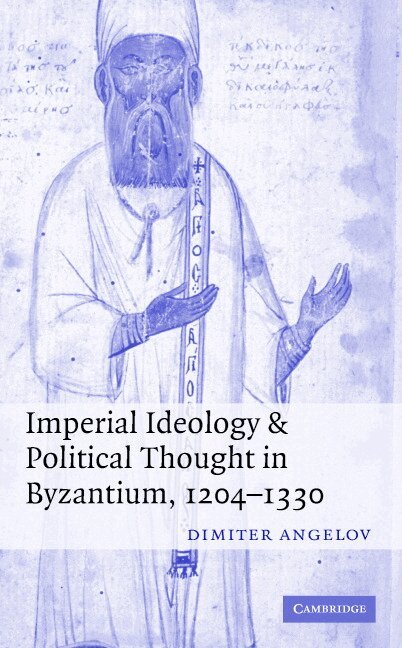
    Imperial Ideology and Political Thought in Byzantium, 1204-1330

    AvDimiter Angelov

    Häftad, Engelska, 2011

    781 kr

    Beställningsvara. Skickas inom 10-15 vardagar. Fri frakt över 249 kr.

    Fler format och utgåvor

    Inbunden

    1 748 kr

    Beskrivning

    This study is the first to systematically investigate Byzantine imperial ideology, court rhetoric and political thought after the Latin conquest of Constantinople in 1204 - in the Nicaean state (1204-61) and during the early period of the restored empire of the Palaiologoi. The book explores Byzantine political imagination at a time of crisis when the Empire ceased to be a first-rate power in the Mediterranean. It investigates the correspondence and fissures between official political rhetoric, on the one hand, and the political ideas of lay thinkers and churchmen, on the other. Through the analysis of a wide body of sources, a picture of Byzantine political thought emerges which differs significantly from the traditional one. The period saw refreshing developments in court rhetoric and political thought, some with interesting parallels in the medieval and Renaissance West, which arose in response to the new historical realities.

    Produktinformation

    • Utgivningsdatum:2011-06-16
    • Mått:152 x 229 x 24 mm
    • Vikt:630 g
    • Format:Häftad
    • Språk:Engelska
    • Antal sidor:474
    • Förlag:Cambridge University Press
    • ISBN:9780521294386

    Utforska kategorier

    • Europas historia inom Historia och arkeologi

    Recensioner i media

    Review of the hardback: 'Angelov offers a subtle study of the interplay between official pronouncements about right political order and those ideas about imperial rule that developed in semi-official or independent contexts. To this end, he deploys an astonishing spectrum of sources from a century-and-a-half of Byzantine history, including preambles (prooimia) to imperial charters, orations composed for public performance at the imperial court, mirrors of princes, philosophical treatises and rhetorical exercises.' The Anglo-Hellenic Review

    Innehållsförteckning

    • Introduction; Part I. Official Ideology: 1. Analyzing imperial propaganda; 2. The imperial idea: continuity and change in the imperial image; 3. Rhetorical theories of succession; 4. The ideology of imperial government; 5. The panegyrists as lobbyists; Part II. The Independent Theorists: 6. Tradition and innovation in theoretical texts; 7. Theodore II Laskaris as a political thinker; 8. The critics of the Palaiologoi: fiscal responsibility and elective kingship; 9. The controversy on imperial taxation; 10. Manuel Moschopoulos, Plato, and government as social covenant; Part III. The Ecclesiastics: 11. The emperor - subject to the church: late Byzantine hierocratic theories; Conclusions.