• Fri frakt över 249 kr
  • •
  • Snabba leveranser
  • •
  • Billiga böcker
Kundservice

Du är på sajten för privatpersoner.

Företag, bibliotek eller offentlig verksamhet?

Du handlar på classic.bokus.com, där alla dina funktioner finns intakta.
Till classic.bokus.com
Bokus logotyp. Gå till startsidan.
  • Erbjudanden
  • Nyheter
  • Student
  • Topplistor
  • Barn & ungdom
  • Bokus Play
  • E-böcker
  • Pocketböcker
  • Spel & pussel

Må bättre, för mindre! Upp till 50% rabatt på hälsoböcker

Sidfot

Mina sidor

    Hjälp

    • Kundservice
    • Vanliga frågor och svar
    • Frakt och leverans
    • Retur vid ångerrätt
    • Reklamera vara
    • Betalning
    • Köpvillkor
    • Allmänna villkor
    • Information om webbplatsens tillgänglighet

    Om Bokus

    • Om oss
    • Pressrum
    • För studenter
    • För företag
    • För bibliotek och offentlig verksamhet
    • För leverantörer
    • Hållbarhet

    Populärt

    • Aktuella erbjudanden
    • Presentkort
    • Studentlitteratur
    • Nya böcker
    • Topplistor
    • Signerade böcker
    • Engelska böcker

    Inspiration

    • Boktips
    • BookTok
    • Populära bokserier
    • Barnbokskaraktärer
    • Populära författare
    Logotyp för Bokus
    Följ oss på Facebook (extern länk)Följ oss på Instagram (extern länk)Följ oss på YouTube (extern länk)Följ oss på TikTok (extern länk)
    bokus @ CookiesAnpassa cookiesIntegritetspolicyKöpvillkor
    Till Citymail hemsida (extern länk)Till Budbee hemsida (extern länk)Till Postnord hemsida (extern länk)Till Schenker hemsida (extern länk)Till Early Bird hemsida (extern länk)Till Walleys hemsida (extern länk)
    1. Historia och arkeologi
    2. Historia
    3. Europas historia

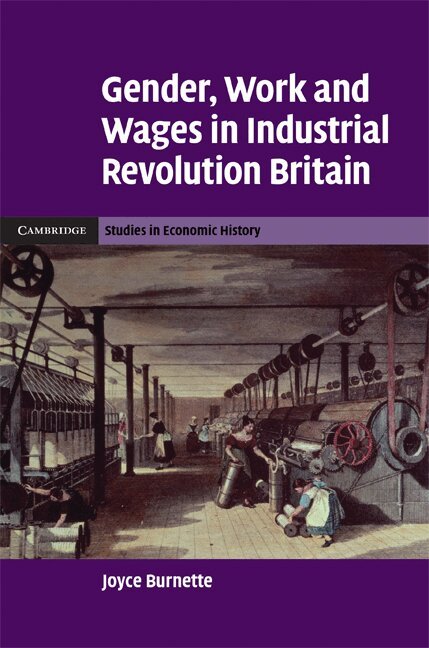
    Gender, Work and Wages in Industrial Revolution Britain

    AvJoyce Burnette

    Häftad, Engelska, 2011

    Del i serien Cambridge Studies in Economic History - Second Series

    615 kr

    Beställningsvara. Skickas inom 10-15 vardagar. Fri frakt över 249 kr.

    Fler format och utgåvor

    Inbunden

    1 582 kr

    Beskrivning

    A major study of the role of women in the labour market of Industrial Revolution Britain. It is well known that men and women usually worked in different occupations, and that women earned lower wages than men. These differences are usually attributed to custom but Joyce Burnette here demonstrates instead that gender differences in occupations and wages were instead largely driven by market forces. Her findings reveal that rather than harming women competition actually helped them by eroding the power that male workers needed to restrict female employment and minimising the gender wage gap by sorting women into the least strength-intensive occupations. Where the strength requirements of an occupation made women less productive than men, occupational segregation maximised both economic efficiency and female incomes. She shows that women's wages were then market wages rather than customary and the gender wage gap resulted from actual differences in productivity.
    Produktinformation

    • Utgivningsdatum:2011-06-30
    • Mått:152 x 229 x 20 mm
    • Vikt:520 g
    • Format:Häftad
    • Språk:Engelska
    • Serie:Cambridge Studies in Economic History - Second Series
    • Antal sidor:390
    • Förlag:Cambridge University Press
    • ISBN:9780521312288
    • Utmärkelser:Joint winner of Economic History Society First Monograph Prize 2010

    Utforska kategorier

    • Europas historia inom Historia och arkeologi

    Recensioner i media

    Review of the hardback: 'Professor Joyce Burnette has produced a major new work; one in which her arguments are supported and reinforced by comprehensive statistical evidence. For anyone studying women's history this is necessary reading.' Don Vincent, the Open University History Society

    Innehållsförteckning

    • Introduction; 1. Women's occupations; 2. Women's wages; 3. Explaining occupational sorting; 4. Testing for occupational barriers in agriculture; 5. Barriers to women's employment; 6. Occupational barriers in self-employment; 7. Women's labour force participation; 8. Conclusion; Appendixes.