• Fri frakt över 249 kr
  • •
  • Snabba leveranser
  • •
  • Billiga böcker
Kundservice

Du är på sajten för privatpersoner.

Företag, bibliotek eller offentlig verksamhet?

Du handlar på classic.bokus.com, där alla dina funktioner finns intakta.
Till classic.bokus.com
Bokus logotyp. Gå till startsidan.
  • Erbjudanden
  • Nyheter
  • Student
  • Topplistor
  • Barn & ungdom
  • Bokus Play
  • E-böcker
  • Pocketböcker
  • Spel & pussel

10% rabatt på allt med kod: NYSTART10 →

Sidfot

Mina sidor

    Hjälp

    • Kundservice
    • Vanliga frågor och svar
    • Frakt och leverans
    • Retur vid ångerrätt
    • Reklamera vara
    • Betalning
    • Köpvillkor
    • Allmänna villkor
    • Information om webbplatsens tillgänglighet

    Om Bokus

    • Om oss
    • Pressrum
    • För studenter
    • För företag
    • För bibliotek och offentlig verksamhet
    • För leverantörer
    • Hållbarhet

    Populärt

    • Aktuella erbjudanden
    • Presentkort
    • Studentlitteratur
    • Nya böcker
    • Topplistor
    • Signerade böcker
    • Engelska böcker

    Inspiration

    • Boktips
    • BookTok
    • Populära bokserier
    • Barnbokskaraktärer
    • Populära författare
    Logotyp för Bokus
    Följ oss på Facebook (extern länk)Följ oss på Instagram (extern länk)Följ oss på YouTube (extern länk)Följ oss på TikTok (extern länk)
    bokus @ CookiesAnpassa cookiesIntegritetspolicyKöpvillkor
    Till Citymail hemsida (extern länk)Till Budbee hemsida (extern länk)Till Postnord hemsida (extern länk)Till Schenker hemsida (extern länk)Till Early Bird hemsida (extern länk)Till Walleys hemsida (extern länk)
    1. Historia och arkeologi
    2. Historia
    3. Europas historia

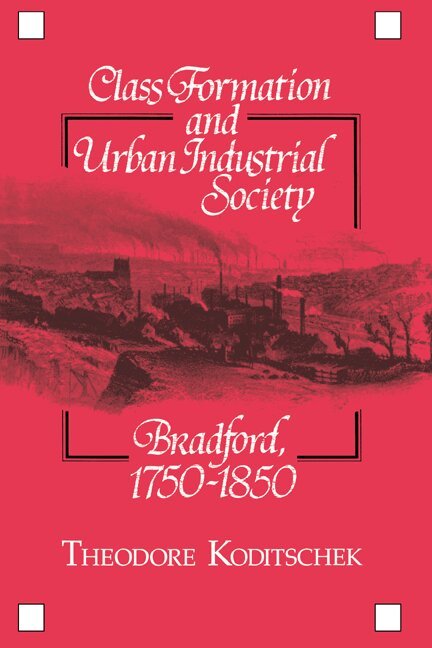
    Class Formation and Urban Industrial Society

    Bradford, 1750-1850

    AvTheodore Koditschek

    Inbunden, Engelska, 1990

    1 817 kr

    Beställningsvara. Skickas inom 10-15 vardagar. Fri frakt över 249 kr.

    Fler format och utgåvor

    Häftad

    684 kr

    Beskrivning

    In 1750 Bradford was a small market town of about 4000 inhabitants in the Yorkshire, West Riding. By 1850 it had become a major industrial city of 100,000, the international centre of the worsted production and trade. Behind this massive expansion of population there occurred a fundamental transformation of society. This book examines the process by which a capitalist society emerged in Bradford. Although Bradford represents an unusual social environment where industrial development began very early and proceeded very fast, its history discloses with unusual force and clarity a process that was more gradually transforming the wider society of nineteenth-century Britain and that subsequently spread throughout the world. By explaining the process of class formation in industrialising Bradford, this book seeks to shed some historical light on the character, contradictions and ultimate resilience of the competitive liberal social order we still occupy.

    Produktinformation

    • Utgivningsdatum:1990-03-30
    • Mått:152 x 228 x 49 mm
    • Vikt:1 150 g
    • Format:Inbunden
    • Språk:Engelska
    • Antal sidor:624
    • Förlag:Cambridge University Press
    • ISBN:9780521327718

    Utforska kategorier

    • Europas historia inom Historia och arkeologi

    Innehållsförteckning

    • Introduction; Part I. From traditional community to industrial city: Bradford: 1750–1850: 1. Protoindustrialisation in Bradford: 1750–1810; 2. The crisis of the traditional community; 3. The urban-industrial revolution: 1810–1850; 5. The industrial city and the traditional elite; Part II. The emergence of a liberal entrepreneurial society and the rise of an urban-industrial bourgeoisie: 1825–1850: 6. The rising generation of urban entrepreneurs; 7. The making of the self-made man; 8. The life of the self-denying entrepreneur; 9. The promise of a liberal entrepreneurial society; 10. The culture of voluntarism: religious association; 11. The culture of voluntarism: secular association; 12. The politics of liberalism; Part III. The crisis of proletarianisation and the stabilisation of the urban-industrial world: 1825–1850; 13. The process of proletarianisation; 14. From self-reliance to public relief: the bourgeois response to working-class poverty; 15. Urban-industrial paternalism and the Tory radical revival; 16. The emergence of working-class culture and consciousness; 17. The challenge of Chartism; 18. The foundations of the mid-Victorian liberal consensus; Epilogue; Appendices; Index.