• Fri frakt över 249 kr
  • •
  • Snabba leveranser
  • •
  • Billiga böcker
Kundservice

Du är på sajten för privatpersoner.

Företag, bibliotek eller offentlig verksamhet?

Du handlar på classic.bokus.com, där alla dina funktioner finns intakta.
Till classic.bokus.com
Bokus logotyp. Gå till startsidan.
  • Erbjudanden
  • Nyheter
  • Student
  • Topplistor
  • Barn & ungdom
  • Bokus Play
  • E-böcker
  • Pocketböcker
  • Spel & pussel

10% rabatt på allt med kod: NYSTART10 →

Sidfot

Mina sidor

    Hjälp

    • Kundservice
    • Vanliga frågor och svar
    • Frakt och leverans
    • Retur vid ångerrätt
    • Reklamera vara
    • Betalning
    • Köpvillkor
    • Allmänna villkor
    • Information om webbplatsens tillgänglighet

    Om Bokus

    • Om oss
    • Pressrum
    • För studenter
    • För företag
    • För bibliotek och offentlig verksamhet
    • För leverantörer
    • Hållbarhet

    Populärt

    • Aktuella erbjudanden
    • Presentkort
    • Studentlitteratur
    • Nya böcker
    • Topplistor
    • Signerade böcker
    • Engelska böcker

    Inspiration

    • Boktips
    • BookTok
    • Populära bokserier
    • Barnbokskaraktärer
    • Populära författare
    Logotyp för Bokus
    Följ oss på Facebook (extern länk)Följ oss på Instagram (extern länk)Följ oss på YouTube (extern länk)Följ oss på TikTok (extern länk)
    bokus @ CookiesAnpassa cookiesIntegritetspolicyKöpvillkor
    Till Citymail hemsida (extern länk)Till Budbee hemsida (extern länk)Till Postnord hemsida (extern länk)Till Schenker hemsida (extern länk)Till Early Bird hemsida (extern länk)Till Walleys hemsida (extern länk)
    1. Filosofi och religion
    2. Filosofi
    3. Filosofiska discipliner

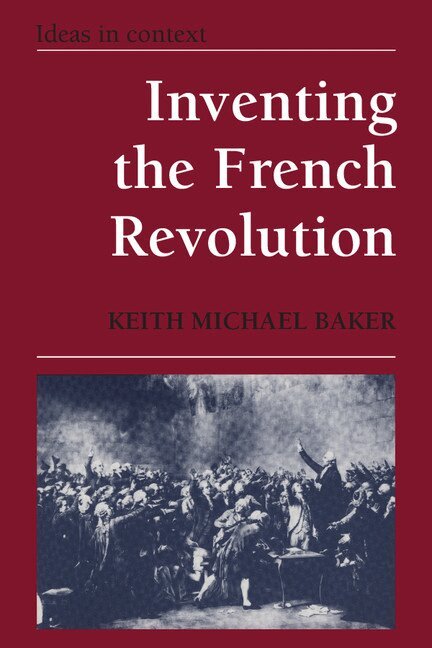
    Inventing the French Revolution `

    Essays on French Political Culture in the Eighteenth Century

    AvKeith Michael Baker

    Häftad, Engelska, 1990

    Del 16 i serien Ideas in Context

    443 kr

    Beställningsvara. Skickas inom 10-15 vardagar. Fri frakt över 249 kr.

    Beskrivning

    How did the French Revolution become thinkable? Keith Michael Baker, a leading authority on the ideological origins of the French Revolution, explores this question in his wide-ranging collection of essays. Analyzing the new politics of contestation that transformed the traditional political culture of the Old Regime during its last decades, Baker revises our historical map of the political space in which the French Revolution took form. Some essays study the ways in which the revolutionaries' break with the past was prepared by competition between agents and critics of absolute monarchy to control the cultural resources and political meanings of French sought before 1789 to reconstitute their body politic; and by the invention of 'public opinion' as a new form of political authority displacing notions of 'representation', 'constitution', 'sovereignty' - and of 'the French Revolution' itself - the ambiguities, tensions, and contradictions that were to drive the revolutionary dynamic in subsequent years. The result is a substantial and unified set of studies, stimulating renewed reflection on one of the central themes in modern European history.

    Produktinformation

    • Utgivningsdatum:1990-01-26
    • Mått:152 x 234 x 28 mm
    • Vikt:630 g
    • Format:Häftad
    • Språk:Engelska
    • Serie:Ideas in Context
    • Antal sidor:384
    • Förlag:Cambridge University Press
    • ISBN:9780521385787

    Utforska kategorier

    • Filosofiska discipliner inom Filosofi och religion

    Recensioner i media

    'Professor Keith Baker is undoubtedly one of the most creative historians working on the intellectual histiry of 18th century France … Anyone working in this field should listen carefully to what he has to say.' Colin Lucas, Balliol College, Oxford

    Innehållsförteckning

    • Acknowledgements; Introduction; 1. On the problem of the ideological origins of the French Revolution; Part I. French History at Issue: 2. Memory and practice: politics and the representation of the past in eighteenth-century France; 3. Controlling French history: the ideological arsenal of Jacob-Nicolas Moreau; 4. A script for a French revolution: the political consciousness of the abbé Mably; Part II. The Language of Politics at the End of the Old Regime: 5. French political thought at the accession of Louis XVI; 6. A classical republican in eighteenth-century Bordeaux: Guillaume-Joseph Saige; 7. Science and politics at the end of the old regime; 8. Public opinion as political invention; Part III. Toward a Revolutionary Lexicon: 9. Inventing the French Revolution; 10. Representation redefined; 11. Fixing the French constitution; Notes; Index.