• Fri frakt över 249 kr
  • •
  • Snabba leveranser
  • •
  • Billiga böcker
Kundservice

Du är på sajten för privatpersoner.

Företag, bibliotek eller offentlig verksamhet?

Du handlar på classic.bokus.com, där alla dina funktioner finns intakta.
Till classic.bokus.com
Bokus logotyp. Gå till startsidan.
  • Erbjudanden
  • Nyheter
  • Student
  • Topplistor
  • Barn & ungdom
  • Bokus Play
  • E-böcker
  • Pocketböcker
  • Spel & pussel

10% rabatt på allt med kod NYSTART10 →

Sidfot

Mina sidor

    Hjälp

    • Kundservice
    • Vanliga frågor och svar
    • Frakt och leverans
    • Retur vid ångerrätt
    • Reklamera vara
    • Betalning
    • Köpvillkor
    • Allmänna villkor
    • Information om webbplatsens tillgänglighet

    Om Bokus

    • Om oss
    • Pressrum
    • För studenter
    • För företag
    • För bibliotek och offentlig verksamhet
    • För leverantörer
    • Hållbarhet

    Populärt

    • Aktuella erbjudanden
    • Presentkort
    • Studentlitteratur
    • Nya böcker
    • Topplistor
    • Signerade böcker
    • Engelska böcker

    Inspiration

    • Boktips
    • BookTok
    • Populära bokserier
    • Barnbokskaraktärer
    • Populära författare
    Logotyp för Bokus
    Följ oss på Facebook (extern länk)Följ oss på Instagram (extern länk)Följ oss på YouTube (extern länk)Följ oss på TikTok (extern länk)
    bokus @ CookiesAnpassa cookiesIntegritetspolicyKöpvillkor
    Till Citymail hemsida (extern länk)Till Budbee hemsida (extern länk)Till Postnord hemsida (extern länk)Till Schenker hemsida (extern länk)Till Early Bird hemsida (extern länk)Till Walleys hemsida (extern länk)
    1. Filosofi och religion
    2. Filosofi
    3. Filosofiska discipliner

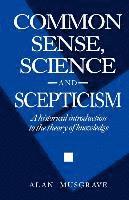
    Common Sense, Science and Scepticism

    A Historical Introduction to the Theory of Knowledge

    AvAlan Musgrave

    Häftad, Engelska, 1993

    686 kr

    Beställningsvara. Skickas inom 10-15 vardagar. Fri frakt över 249 kr.

    Beskrivning

    Can we know anything for certain? Dogmatists think we can, sceptics think we cannot, and epistemology is the great debate between them. Some dogmatists seek certainty in the deliverances of the senses. Sceptics object that the senses are not an adequate basis for certain knowledge. Other dogmatists seek certainty in the deliverances of pure reason. Sceptics object that rational self-evidence is no guarantee of truth. This book is an introductory and historically-based survey of the debate, siding for the most part with scepticism to show that the desire to vanquish it has often led to doctrines of idealism or anti-realism. Scepticism, science and common sense produce another view, fallibilism or critical rationalism: although we can have little or no certain knowledge, as the sceptics maintain, we can and do have plenty of conjectural knowledge. Fallibilism incorporates an uncompromising realism about perception, science, and the nature of truth.

    Produktinformation

    • Utgivningsdatum:1993-02-11
    • Mått:140 x 216 x 19 mm
    • Vikt:420 g
    • Format:Häftad
    • Språk:Engelska
    • Antal sidor:328
    • Förlag:Cambridge University Press
    • ISBN:9780521436250

    Utforska kategorier

    • Filosofiska discipliner inom Filosofi och religion

    Recensioner i media

    "The treatment of basic issues in epistemology is quite nicely done, and although the book is intended as an introduction, it is not confined to the coverage of elementary topics. Musgrave does devote a good deal of space to the discussion of such standard epistemological material as skepticism, but he also includes interesting, elegant, and informative summaries of problems and theories in logic, semantics, and the philosophy of mathematics. The book can be read profitably by anyone with an interest in epistemology and its history." Douglas M. Jesseph, Isis

    Innehållsförteckning

    • 1. The problem of knowledge; 2. Scepticism under attack; 3. Scepticism regarding the senses; 4. Empiricist psychology; 5. Idea-ism, appearance and reality; 6. Primary and secondary qualities; 7. Berkeley: idea-ism becomes idealism; 8. Hume: idea-ism becomes irrationalism; 9. Countering Hume on induction; 10. The Rationalist alternative; 11. Rationalism defended: Descartes; 12. Kant and the synthetic a priori; 13. Alternative geometries; 14. Truth and truth-theories; 15. Fallibilist realism.