• Fri frakt över 249 kr
  • •
  • Snabba leveranser
  • •
  • Billiga böcker
Kundservice

Du är på sajten för privatpersoner.

Företag, bibliotek eller offentlig verksamhet?

Du handlar på classic.bokus.com, där alla dina funktioner finns intakta.
Till classic.bokus.com
Bokus logotyp. Gå till startsidan.
  • Erbjudanden
  • Nyheter
  • Student
  • Topplistor
  • Barn & ungdom
  • Bokus Play
  • E-böcker
  • Pocketböcker
  • Spel & pussel

10% rabatt på allt med kod NYSTART10 →

Sidfot

Mina sidor

    Hjälp

    • Kundservice
    • Vanliga frågor och svar
    • Frakt och leverans
    • Retur vid ångerrätt
    • Reklamera vara
    • Betalning
    • Köpvillkor
    • Allmänna villkor
    • Information om webbplatsens tillgänglighet

    Om Bokus

    • Om oss
    • Pressrum
    • För studenter
    • För företag
    • För bibliotek och offentlig verksamhet
    • För leverantörer
    • Hållbarhet

    Populärt

    • Aktuella erbjudanden
    • Presentkort
    • Studentlitteratur
    • Nya böcker
    • Topplistor
    • Signerade böcker
    • Engelska böcker

    Inspiration

    • Boktips
    • BookTok
    • Populära bokserier
    • Barnbokskaraktärer
    • Populära författare
    Logotyp för Bokus
    Följ oss på Facebook (extern länk)Följ oss på Instagram (extern länk)Följ oss på YouTube (extern länk)Följ oss på TikTok (extern länk)
    bokus @ CookiesAnpassa cookiesIntegritetspolicyKöpvillkor
    Till Citymail hemsida (extern länk)Till Budbee hemsida (extern länk)Till Postnord hemsida (extern länk)Till Schenker hemsida (extern länk)Till Early Bird hemsida (extern länk)Till Walleys hemsida (extern länk)
    1. Historia och arkeologi
    2. Historia
    3. Europas historia

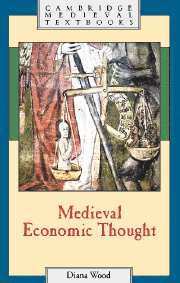
    Medieval Economic Thought

    AvDiana Wood

    Inbunden, Engelska, 2002

    Del i serien Cambridge Medieval Textbooks

    1 123 kr

    Beställningsvara. Skickas inom 10-15 vardagar. Fri frakt över 249 kr.

    Fler format och utgåvor

    Häftad

    497 kr

    Beskrivning

    This book is an introduction to medieval economic thought, mainly from the twelfth to the fifteenth centuries, as it emerges from the works of academic theologians and lawyers and other sources - from Italian merchants' writings to vernacular poetry, Parliamentary legislation, and manorial court rolls. It raises a number of questions based on the Aristotelian idea of the mean, the balance and harmony underlying justice, as applied by medieval thinkers to the changing economy. How could private ownership of property be reconciled with God's gift of the earth to all in common? How could charity balance resources between rich and poor? What was money? What were the just price and the just wage? How was a balance to be achieved between lender and borrower and how did the idea of usury change to reflect this? The answers emerge from a wide variety of ecclesiastical and secular sources.

    Produktinformation

    • Utgivningsdatum:2002-10-17
    • Mått:145 x 225 x 23 mm
    • Vikt:491 g
    • Format:Inbunden
    • Språk:Engelska
    • Serie:Cambridge Medieval Textbooks
    • Antal sidor:274
    • Förlag:Cambridge University Press
    • ISBN:9780521452601

    Utforska kategorier

    • Europas historia inom Historia och arkeologi

    Mer om författaren

    Diana Wood is Senior Research Fellow in History, University of East Anglia, and Associate Tutor in Local History, Oxford University Department for Continuing Education. Her publications include Clement VI: the Pontificate and Ideas of an Avignon Pope (Cambridge, 1989).

    Recensioner i media

    'In its range and clarity Medieval Economic Thought is an excellent introduction to its topic.' The Agricultural History Review

    Innehållsförteckning

    • Preface; Introduction: problems, evidence, and background; 1. Private property versus communal rights: the conflict of two laws; 2. Wealth, beggary and sufficiency; 3. What is money?; 4. Sovereign concerns: weights, measures and coinage; 5. The mercantile system; 6. The just price and the just wage; 7. The nature of usury: the usurer as winner; 8. The theory of interest: the usurer as loser; Conclusion; Appendix: notes on the main writers and anonymous works used in the text; Glossary; Bibliography.