• Fri frakt över 249 kr
  • •
  • Snabba leveranser
  • •
  • Billiga böcker
Kundservice

Du är på sajten för privatpersoner.

Företag, bibliotek eller offentlig verksamhet?

Du handlar på classic.bokus.com, där alla dina funktioner finns intakta.
Till classic.bokus.com
Bokus logotyp. Gå till startsidan.
  • Erbjudanden
  • Nyheter
  • Student
  • Topplistor
  • Barn & ungdom
  • Bokus Play
  • E-böcker
  • Pocketböcker
  • Spel & pussel

10% rabatt på allt med kod: NYSTART10 →

Sidfot

Mina sidor

    Hjälp

    • Kundservice
    • Vanliga frågor och svar
    • Frakt och leverans
    • Retur vid ångerrätt
    • Reklamera vara
    • Betalning
    • Köpvillkor
    • Allmänna villkor
    • Information om webbplatsens tillgänglighet

    Om Bokus

    • Om oss
    • Pressrum
    • För studenter
    • För företag
    • För bibliotek och offentlig verksamhet
    • För leverantörer
    • Hållbarhet

    Populärt

    • Aktuella erbjudanden
    • Presentkort
    • Studentlitteratur
    • Nya böcker
    • Topplistor
    • Signerade böcker
    • Engelska böcker

    Inspiration

    • Boktips
    • BookTok
    • Populära bokserier
    • Barnbokskaraktärer
    • Populära författare
    Logotyp för Bokus
    Följ oss på Facebook (extern länk)Följ oss på Instagram (extern länk)Följ oss på YouTube (extern länk)Följ oss på TikTok (extern länk)
    bokus @ CookiesAnpassa cookiesIntegritetspolicyKöpvillkor
    Till Citymail hemsida (extern länk)Till Budbee hemsida (extern länk)Till Postnord hemsida (extern länk)Till Schenker hemsida (extern länk)Till Early Bird hemsida (extern länk)Till Walleys hemsida (extern länk)
    1. Historia och arkeologi
    2. Arkeologi

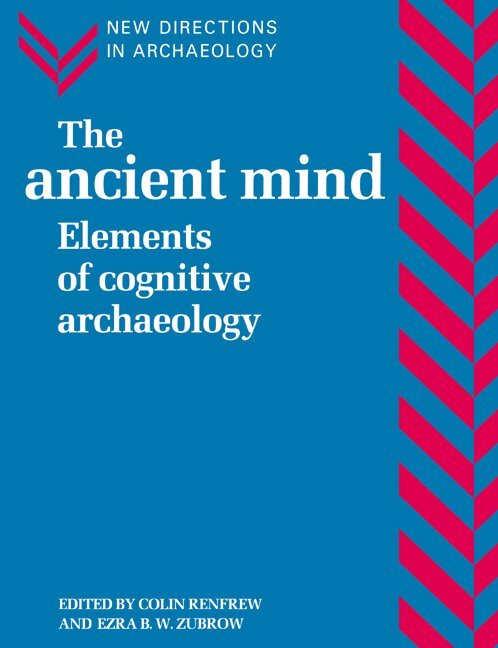
    The Ancient Mind

    Elements of Cognitive Archaeology

    AvColin Renfrew,Ezra B. W. Zubrow

    Häftad, Engelska, 1994

    Del i serien New Directions in Archaeology

    629 kr

    Beställningsvara. Skickas inom 10-15 vardagar. Fri frakt över 249 kr.

    Beskrivning

    One of the most troubling problems in archaeology is to determine the manner and content of prehistoric thought. A fundamental challenge is to develop the theory, methodology and tools to understand human cognition. Cognitive archaeology as a subject is still in its infancy, and archaeologists are adopting a variety of approaches. One direction has been to develop an 'interpretationist', anti-scientific, literary approach. Another has been to use a linguistic framework and develop a hermeneutic, semiotic approach. A third approach develops a new direction in prehistoric cognitive research which is rooted in the scientific tradition and in an empirical methodology. It draws upon the cognitive, the mathematical and the computer sciences in an attempt to understand what techniques can be used appropriately on archaeological data, and how to implement them efficiently. This is the approach adopted by the contributors to The Ancient Mind. Together, they begin to develop a science of cognitive archaeology.

    Produktinformation

    • Utgivningsdatum:1994-05-26
    • Mått:189 x 246 x 11 mm
    • Vikt:390 g
    • Format:Häftad
    • Språk:Engelska
    • Serie:New Directions in Archaeology
    • Antal sidor:212
    • Förlag:Cambridge University Press
    • ISBN:9780521456203

    Utforska kategorier

    • Arkeologi inom Historia och arkeologi

    Recensioner i media

    "...an important reference work for any library that attempts to stay abreast of current developments in archaeology." Dennis E. Smith, Religious Studies Review

    Innehållsförteckning

    • Foreword; Part I. Introduction: 1. Towards a cognitive archaeology; Part II. The Interdisciplinary Underpinning: 2. Interpretations and testability in theories about prehistoric thinking; 3. Archaeology and cognitive science; 4. From mental modularity to generalized intelligence: a cognitive interpretation of the Middle/Upper Paleolithic transition; 5. Are images animated? The psychology of images in Ancient Greece; Part III. Approaches to Cult Practice and Transcendental Belief Systems: 6. The archaeology of religion; 7. Ancient Zapotec ritual and religion: an application of the direct historical approach; 8. The meaning of death; 9. Prehistoric cognition and the science of archaeology; Part IV. Prehistoric Conceptions of Space and Time: 10. Symbols and signposts: understanding the prehistoric petroglyphs of the British Isles; 11. Knowledge representation and archaeology: a cognitive example using GIS; 12 Dials: a study in the physical representation of cognitive systems; Part V. The Material Basis of Cognitive Inference: Technology: 13. Cognitive aspects of 'technique'; 14. Mindful technology: unleashing the Chaîne Opératoire for an archaeology of mind; 15. Prehistoric technology: a cognitive science?; Part VI. The Material Basis of Cognitive Inference: Writing Systems; 16. Variation and change in symbol systems: case studies in Elamite Cuneiform; 17. Figure and text in Mesopotamia: match and mismatch; Part VII. Conclusion: 18. Cognitive archaeology reconsidered.

    Betyg & recensioner

    5/5