• Fri frakt över 249 kr
  • •
  • Snabba leveranser
  • •
  • Billiga böcker
Kundservice

Du är på sajten för privatpersoner.

Företag, bibliotek eller offentlig verksamhet?

Du handlar på classic.bokus.com, där alla dina funktioner finns intakta.
Till classic.bokus.com
Bokus logotyp. Gå till startsidan.
  • Erbjudanden
  • Student
  • Topplistor
  • Barn & ungdom
  • Bokus Play
  • E-böcker
  • Ljudböcker
  • Pocketböcker
  • Spel och pussel

5% studentrabatt – använd koden KURSBOK27 →

Sidfot

Mina sidor

    Hjälp

    • Kundservice
    • Vanliga frågor och svar
    • Frakt och leverans
    • Retur vid ångerrätt
    • Reklamera vara
    • Betalning
    • Köpvillkor
    • Allmänna villkor
    • Information om webbplatsens tillgänglighet

    Om Bokus

    • Om oss
    • Pressrum
    • För studenter
    • För företag
    • För bibliotek och offentlig verksamhet
    • För leverantörer
    • Hållbarhet

    Populärt

    • Aktuella erbjudanden
    • Presentkort
    • Studentlitteratur
    • Nya böcker
    • Topplistor
    • Signerade böcker
    • Engelska böcker

    Inspiration

    • Boktips
    • BookTok
    • Barnbokskaraktärer
    • Populära författare
    Logotyp för Bokus
    Följ oss på Facebook (extern länk)Följ oss på Instagram (extern länk)Följ oss på YouTube (extern länk)Följ oss på TikTok (extern länk)
    bokus @ CookiesAnpassa cookiesIntegritetspolicyKöpvillkor
    Till Citymail hemsida (extern länk)Till Budbee hemsida (extern länk)Till Postnord hemsida (extern länk)Till Schenker hemsida (extern länk)Till Early Bird hemsida (extern länk)Till Walleys hemsida (extern länk)
    1. Samhälle och politik
    2. Krig och försvar
    3. Vapen och utrustning
    4. Kärnvapen

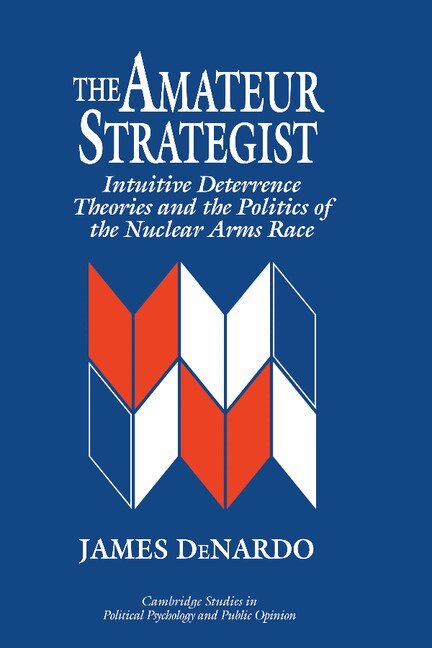
    The Amateur Strategist

    Intuitive Deterrence Theories and the Politics of the Nuclear Arms Race

    AvJames DeNardo,James H. Kuklinski

    Inbunden, Engelska, 1995

    Del i serien Cambridge Studies in Public Opinion and Political Psychology

    745 kr

    Beställningsvara. Skickas inom 7-10 vardagar. Fri frakt över 249 kr.

    Fler format och utgåvor

    Häftad

    463 kr

    Beskrivning

    This book, first published in 1995, explores how the everyday person reasons about nuclear strategy. James DeNardo's data reveals surprising patterns of thinking on basic issues from SDI, arms control, and proliferation to the end of the Cold War. The book describes a fascinating cast of players, including 'Nice Hawks' like Ronald Reagan, who wanted to give SDI to the Russians, and the 'NIFFs,' whose procurement rule, expressed simply, was: 'If they have it, we don't want it, but they don't have it, we should get it.' To explain his remarkable evidence, Professor DeNardo presents an innovative theory of intuitive deterrence reasoning. He then confronts the theory with data from professional nuclear strategists. His discovery that the amateur's strategic reasoning defies all conventional theories lays the groundwork for a new understanding of national security politics. His demonstration that professional strategists reason like novices - that we are all Amateur Strategists - challenges the intellectual foundations of modern deterrence theory, public opinion studies, and game theory.

    Produktinformation

    • Utgivningsdatum:1995-08-25
    • Mått:152 x 229 x 19 mm
    • Vikt:610 g
    • Format:Inbunden
    • Språk:Engelska
    • Serie:Cambridge Studies in Public Opinion and Political Psychology
    • Antal sidor:330
    • Förlag:Cambridge University Press
    • ISBN:9780521481212

    Utforska kategorier

    • Kärnvapen inom Samhälle och politik

    Recensioner i media

    'This unusual book combines security studies, game theory, psychology, political sciences and statistical analysis in an investigation of preferences regarding American polity for Nuclear weapons. … The wide scope of the material in this book is supported by extensive references to current literature.' Defence Analysis

    Innehållsförteckning

    • 1. Introduction; 2. A primer on the Cold War nuclear debate; 3. An introduction to intuitive deterrence theories; 4. Competing hypotheses about nuclear thinking; 5. The novice strategists; 6. The intuitive calculus of nuclear deterrence; 7. Statistical tests of the intuitive nuclear calculus; 8. Expert nuclear reasoning; 9. The factional politics of strategy and the end of the Cold War arms race; 10. Nuclear thinking after the cold war.