• Fri frakt över 249 kr
  • •
  • Snabba leveranser
  • •
  • Billiga böcker
Kundservice

Du är på sajten för privatpersoner.

Företag, bibliotek eller offentlig verksamhet?

Du handlar på classic.bokus.com, där alla dina funktioner finns intakta.
Till classic.bokus.com
Bokus logotyp. Gå till startsidan.
  • Erbjudanden
  • Nyheter
  • Student
  • Topplistor
  • Barn & ungdom
  • Bokus Play
  • E-böcker
  • Pocketböcker
  • Spel & pussel

10% studentrabatt med kod TERM26

Sidfot

Mina sidor

    Hjälp

    • Kundservice
    • Vanliga frågor och svar
    • Frakt och leverans
    • Retur vid ångerrätt
    • Reklamera vara
    • Betalning
    • Köpvillkor
    • Allmänna villkor
    • Information om webbplatsens tillgänglighet

    Om Bokus

    • Om oss
    • Pressrum
    • För studenter
    • För företag
    • För bibliotek och offentlig verksamhet
    • För leverantörer
    • Hållbarhet

    Populärt

    • Aktuella erbjudanden
    • Presentkort
    • Studentlitteratur
    • Nya böcker
    • Topplistor
    • Signerade böcker
    • Engelska böcker

    Inspiration

    • Boktips
    • BookTok
    • Populära bokserier
    • Barnbokskaraktärer
    • Populära författare
    Logotyp för Bokus
    Följ oss på Facebook (extern länk)Följ oss på Instagram (extern länk)Följ oss på YouTube (extern länk)Följ oss på TikTok (extern länk)
    bokus @ CookiesAnpassa cookiesIntegritetspolicyKöpvillkor
    Till Citymail hemsida (extern länk)Till Budbee hemsida (extern länk)Till Postnord hemsida (extern länk)Till Schenker hemsida (extern länk)Till Early Bird hemsida (extern länk)Till Walleys hemsida (extern länk)
    1. Filosofi och religion
    2. Religion och tro
    3. Kristendom

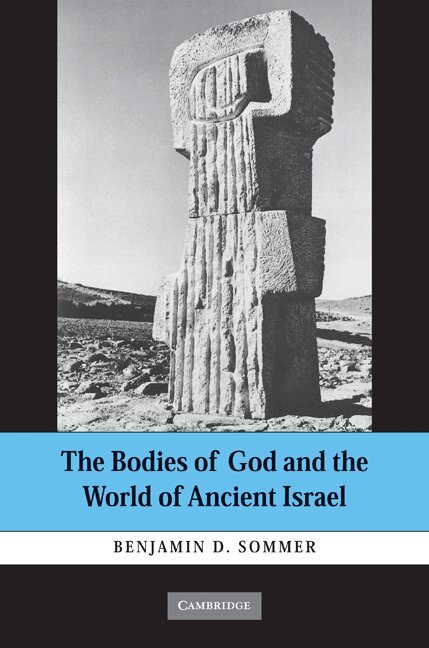
    The Bodies of God and the World of Ancient Israel

    AvBenjamin D. Sommer

    Inbunden, Engelska, 2009

    1 107 kr

    Beställningsvara. Skickas inom 10-15 vardagar. Fri frakt över 249 kr.

    Fler format och utgåvor

    Häftad

    664 kr

    Beskrivning

    Sommer utilizes a lost ancient Near Eastern perception of divinity according to which a god has more than one body and fluid, unbounded selves. Though the dominant strains of biblical religion rejected it, a monotheistic version of this theological intuition is found in some biblical texts. Later Jewish and Christian thinkers inherited this ancient way of thinking; ideas such as the sefirot in Kabbalah and the trinity in Christianity represent a late version of this theology. This book forces us to rethink the distinction between monotheism and polytheism, as this notion of divine fluidity is found in both polytheistic cultures (Babylonia, Assyria, Canaan) and monotheistic ones (biblical religion, Jewish mysticism, Christianity), whereas it is absent in some polytheistic cultures (classical Greece). The Bodies of God and the World of Ancient Israel has important repercussions not only for biblical scholarship and comparative religion but for Jewish-Christian dialogue.

    Produktinformation

    • Utgivningsdatum:2009-06-29
    • Mått:160 x 235 x 27 mm
    • Vikt:600 g
    • Format:Inbunden
    • Språk:Engelska
    • Antal sidor:352
    • Förlag:Cambridge University Press
    • ISBN:9780521518727

    Utforska kategorier

    • Kristendom inom Filosofi och religion

    Mer om författaren

    Benjamin D. Sommer is Professor in the Department of Bible and Ancient Semitic Languages at the Jewish Theological Seminary of America.

    Recensioner i media

    Reviews of the hardback: 'An innovative and illuminating exploration of the idea that God in the Hebrew Bible is embodied. Benjamin Sommer explores the various modes of embodiment found in different sources and shows that both rabbinic and mystical Judaism, as well as Christianity, have roots in the variety of presentations in the Hebrew Bible. A characteristically lucid and original book.' John Barton, Oriel College, University of Oxford

    Innehållsförteckning

    • 1. Introduction: God's body and the Bible's interpreters; 2. Fluidity of divine embodiment and selfhood: Mesopotamia and Canaan; 3. The fluidity model in ancient Israel; 4. The rejection of the fluidity model in ancient Israel; 5. God's bodies and sacred space (1): tent, ark, and temple; 6. God's bodies and sacred space (2): difficult beginnings; 7. The perception of divinity in Biblical tradition: implications and afterlife.