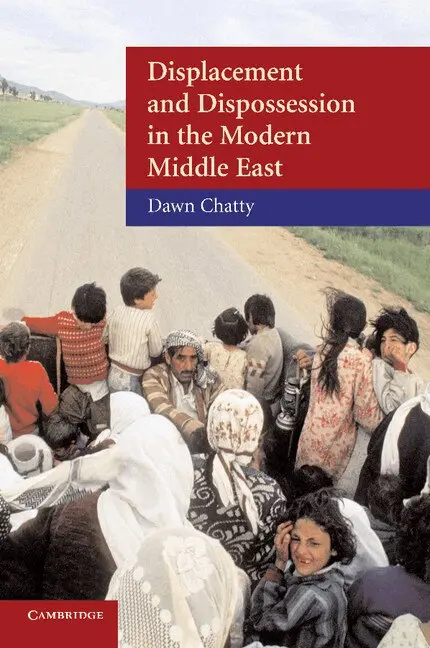
Häftad, Engelska, 2010
Displacement and Dispossession in the Modern Middle East
Av Dawn Chatty
Del 5 i serien The Contemporary Middle East
471 kr
Beställningsvara. Skickas inom 5-8 vardagar. Fri frakt över 249 kr.
Beskrivning
Produktinformation
- Utgivningsdatum: 2010-03-08
- Mått: 154 x 228 x 20 mm
- Vikt: 470 g
- Format: Häftad
- Språk: Engelska
- Serie: The Contemporary Middle East
- Antal sidor: 350
- Förlag: Cambridge University Press
- ISBN: 9780521521048
Utforska kategorier
Mer om författaren
Dawn Chatty is a social anthropologist with long experience in the Middle East. Displacement and Dispossession in the Modern Middle East is her most recent book. Previously she edited the thirty-six chapter Nomadic Societies in the Middle East and North Africa: Facing the 21st Century (2006). She is University Reader in Anthropology and Forced Migration at the Refugee Studies Centre in the Department of International Development, University of Oxford.
Recensioner i media
'Dawn Chatty brings to this study a detailed knowledge of the Chechen, Circassian, Armenian, Palestinian and Kurdish peoples, displaced into and within the early modern/modern Middle East. Her approach highlights interaction between European and Middle Eastern history (usually taught separately), the relative openness of the Ottoman Empire to ethnic and religious diversity, and the socio-cultural capacity of migrants to build new communities in unfamiliar places. This is a book I would definitely use for classes on nationalism, forced migration and refugeedom as factors in the making of the modern Middle East.' Rosemary Sayigh, Independent Scholar
Betyg & recensioner
1 recensioner, genomsnitt 4/5
- 4/5 Mariam