• Fri frakt över 249 kr
  • •
  • Snabba leveranser
  • •
  • Billiga böcker
Kundservice

Du är på sajten för privatpersoner.

Företag, bibliotek eller offentlig verksamhet?

Du handlar på classic.bokus.com, där alla dina funktioner finns intakta.
Till classic.bokus.com
Bokus logotyp. Gå till startsidan.
  • Erbjudanden
  • Nyheter
  • Student
  • Topplistor
  • Barn & ungdom
  • Bokus Play
  • E-böcker
  • Pocketböcker
  • Spel & pussel

Må bättre, för mindre! Upp till 50% rabatt på hälsoböcker

Sidfot

Mina sidor

    Hjälp

    • Kundservice
    • Vanliga frågor och svar
    • Frakt och leverans
    • Retur vid ångerrätt
    • Reklamera vara
    • Betalning
    • Köpvillkor
    • Allmänna villkor
    • Information om webbplatsens tillgänglighet

    Om Bokus

    • Om oss
    • Pressrum
    • För studenter
    • För företag
    • För bibliotek och offentlig verksamhet
    • För leverantörer
    • Hållbarhet

    Populärt

    • Aktuella erbjudanden
    • Presentkort
    • Studentlitteratur
    • Nya böcker
    • Topplistor
    • Signerade böcker
    • Engelska böcker

    Inspiration

    • Boktips
    • BookTok
    • Populära bokserier
    • Barnbokskaraktärer
    • Populära författare
    Logotyp för Bokus
    Följ oss på Facebook (extern länk)Följ oss på Instagram (extern länk)Följ oss på YouTube (extern länk)Följ oss på TikTok (extern länk)
    bokus @ CookiesAnpassa cookiesIntegritetspolicyKöpvillkor
    Till Citymail hemsida (extern länk)Till Budbee hemsida (extern länk)Till Postnord hemsida (extern länk)Till Schenker hemsida (extern länk)Till Early Bird hemsida (extern länk)Till Walleys hemsida (extern länk)
    1. Psykologi och pedagogik
    2. Psykologi
    3. Socialpsykologi och gruppsykologi

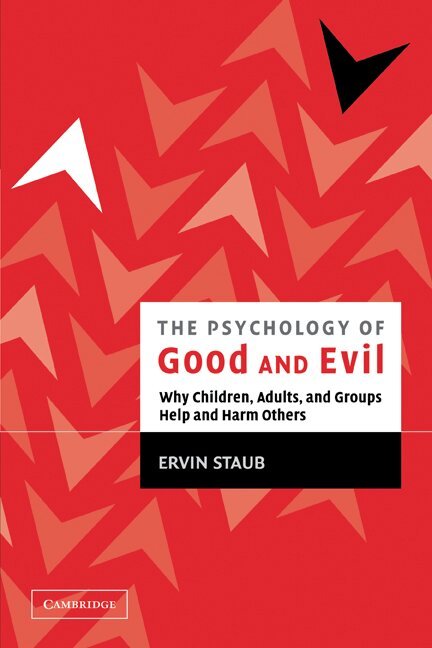
    The Psychology of Good and Evil

    Why Children, Adults, and Groups Help and Harm Others

    AvErvin Staub

    Häftad, Engelska, 2003

    443 kr

    Beställningsvara. Skickas inom 10-15 vardagar. Fri frakt över 249 kr.

    Fler format och utgåvor

    Inbunden

    1 206 kr

    Beskrivning

    This book gathers the knowledge gained in a lifelong study of the roots of goodness and evil. Since the late 1960s, Ervin Staub has studied the causes of helpful, caring, generous, and altruistic behavior. He has also studied bullying and victimization in schools as well as youth violence and its prevention. He spent years studying the origins of genocide and mass killing and has examined the Holocaust, the genocide of the Armenians, the autogenocide in Cambodia, the disappearances in Argentina, the genocide in Rwanda. He has applied his work in many real world settings and has consulted parents, teachers, police officers, and political leaders. Since September 11th, he has appeared frequently in the media explaining the causes and prevention of terrorism. Professor Staub's work is collected together for the first time in The Psychology of Good and Evil.

    Produktinformation

    • Utgivningsdatum:2003-07-21
    • Mått:152 x 230 x 34 mm
    • Vikt:803 g
    • Format:Häftad
    • Språk:Engelska
    • Antal sidor:612
    • Förlag:Cambridge University Press
    • ISBN:9780521528801

    Utforska kategorier

    • Socialpsykologi och gruppsykologi inom Psykologi och pedagogik

    Recensioner i media

    '… an excellent source of material and ideas for those teaching in the areas of aggression, pro- and antisocial behaviour, and intergroup conflict.' Educational Psychology

    Innehållsförteckning

    • Part I. Introduction and Core Concepts: 1. Introduction: good and evil: themes and overview; 2. Studying the pivotal role of bystanders; 3. Studying and promoting altruism and studying and working to prevent genocide: the guiding role of early survival; 4. Is evil a useful concept for psychologists and others?; 5. Basic needs and their role in altruism and aggression; Part II. The Roots of Helping and Passivity: 6. Helping a distressed person: social, personality, and stimulus determinants; 7. Spontaneous (or impulsive) helping; 8. Social and prosocial behavior; 9. The power to help others: report on a Psychology Today survey on values, helping, and well being; Part III. How Children Become Caring and Helpful vs. Hostile and Aggressive: Section 1. Culture, Socialization, and Children's Experience: 10. Origins of caring, helping, and nonaggression: parental socialization, the family system, schools, and cultural influence; 11. Natural socialization: participation in positive behavior and experiential learning; 12. The origins of hostility and aggression; 13. Cultural societal roots of violence: youth violence; 14. Bystanders and bullying; 15. Students' experience of bullying and other aspects of their lives in middle school in Belchertown; 16. Self-esteem and aggression; 17. Father-daughter incest; Section 2. Interventions to Reduce Aggression and Promote Caring and Helping: 18. Reducing boys' aggression: learning to fulfill basic needs constructively; 19. The Caring Schools project; Part IV. The Origins of Genocide and Other Collective Violence: 20. A note on the cultural societal roots of violence; 21. Psychology of bystanders, perpetrators, and heroic helpers; 22. Steps along a continuum of destruction; 23. The SS and the psychology of perpetrators: The interweaving and merging of role and person; 24. The origins of genocide: Rwanda; 25. Bystanders as evil: the example of Rwanda; 26. Individual and group identities in genocide and mass killing; 27. Mass murder: origins, prevention, and US involvement; 28. When instigation does not result in mass murder; 29. Persian Gulf Conflict was reflection of stormy undercurrents in US psyche; 30. Mob violence: societal-cultural sources, instigators, group processes, and participants; 31. Understanding and Preventing Police Violence; Part V. The Aftermath of Mass Violence: Trauma, Healing, and Reconciliation: 32. Preventing group violence; 33. Kosovo: the need for flexible bystander response; 34. The effects of violence on groups and their members; 35. Healing, reconciliation, and forgiving after genocide and other collective violence; 36. Healing, forgiveness, and reconciliation in Rwanda: project summary and outcome; 37. Further avenues to prevention; 38. Commentary: human destructiveness and the refugee experience; 39. A vision of holocaust education in holocaust centers and schools; 40. Out of hiding; 41. Review of: Legacy of Silence: encounters with children of the Third Reich; 42. What can we learn from this tragedy?: a reaction days after September 11th, 2001; Part VI. Creating Morally Inclusive Societies: 43. Transforming the bystander: altruism, caring, and social responsibility; 44. Changing cultures and society; 45. Blind vs. constructive patriotism: moving from embeddedness in the group to critical loyalty and action; 46. Manifestations of blind vs. constructive patriotism: summary of findings; 47. The ideal university in the real world; Conclusion: 48. Creating caring societies; Appendix: what are your values and goals?