• Fri frakt över 249 kr
  • •
  • Snabba leveranser
  • •
  • Billiga böcker
Kundservice

Du är på sajten för privatpersoner.

Företag, bibliotek eller offentlig verksamhet?

Du handlar på classic.bokus.com, där alla dina funktioner finns intakta.
Till classic.bokus.com
Bokus logotyp. Gå till startsidan.
  • Erbjudanden
  • Nyheter
  • Student
  • Topplistor
  • Barn & ungdom
  • Bokus Play
  • E-böcker
  • Pocketböcker
  • Spel & pussel

10% rabatt på allt med kod: NYSTART10 →

Sidfot

Mina sidor

    Hjälp

    • Kundservice
    • Vanliga frågor och svar
    • Frakt och leverans
    • Retur vid ångerrätt
    • Reklamera vara
    • Betalning
    • Köpvillkor
    • Allmänna villkor
    • Information om webbplatsens tillgänglighet

    Om Bokus

    • Om oss
    • Pressrum
    • För studenter
    • För företag
    • För bibliotek och offentlig verksamhet
    • För leverantörer
    • Hållbarhet

    Populärt

    • Aktuella erbjudanden
    • Presentkort
    • Studentlitteratur
    • Nya böcker
    • Topplistor
    • Signerade böcker
    • Engelska böcker

    Inspiration

    • Boktips
    • BookTok
    • Populära bokserier
    • Barnbokskaraktärer
    • Populära författare
    Logotyp för Bokus
    Följ oss på Facebook (extern länk)Följ oss på Instagram (extern länk)Följ oss på YouTube (extern länk)Följ oss på TikTok (extern länk)
    bokus @ CookiesAnpassa cookiesIntegritetspolicyKöpvillkor
    Till Citymail hemsida (extern länk)Till Budbee hemsida (extern länk)Till Postnord hemsida (extern länk)Till Schenker hemsida (extern länk)Till Early Bird hemsida (extern länk)Till Walleys hemsida (extern länk)
    1. Språk och ordböcker
    2. Språkundervisning och språkinlärning

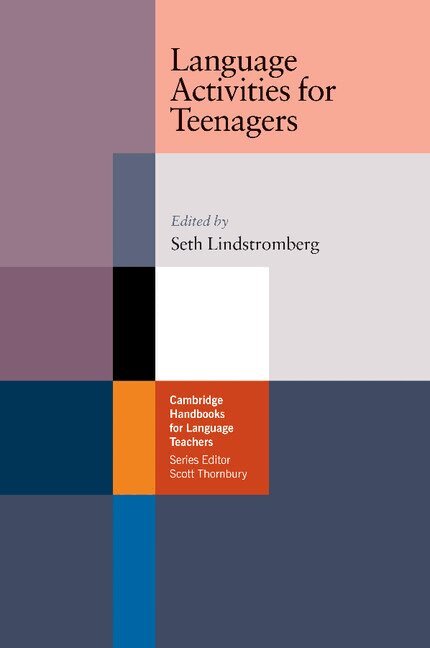
    Language Activities for Teenagers

    AvSeth Lindstromberg

    Häftad, Engelska, 2004

    Del i serien Cambridge Handbooks for Language Teachers

    511 kr

    Beställningsvara. Skickas inom 10-15 vardagar. Fri frakt över 249 kr.

    Beskrivning

    The activities included in this book will coax, cajole and tempt teenagers into learning English in a meaningful and enjoyable way. The activities can be used alongside any coursebook. The book covers topics including maintaining discipline in the classroom, using ice-breakers, warmers, fillers and closers, practising skills: speaking, reading, listening and writing, developing vocabulary, using literature, and promoting discussion. It contains material drawn from the real-life classroom experience of well-known ELT contributors: Judit Fehér, Jean Rüdiger-Harper, David Hill, Hanna Kryszewska, Seth Lindstromberg, Bonnie Tsai and Tessa Woodward.

    Produktinformation

    • Utgivningsdatum:2004-03-18
    • Mått:153 x 228 x 17 mm
    • Vikt:384 g
    • Format:Häftad
    • Språk:Engelska
    • Serie:Cambridge Handbooks for Language Teachers
    • Antal sidor:240
    • Förlag:Cambridge University Press
    • ISBN:9780521541930

    Utforska kategorier

    • Språkundervisning och språkinlärning inom Språk och ordböcker

    Innehållsförteckning

    • Chapter 1: Maintaining discipline in the classroom. Part one: Basics of maintaining order: Introduction; Key practices; Part two: Routines for maintaining order: 1.1 Jobs for friendship pairs;1.2 Spatial anchoring;1.3 Noise control: The disappearing word; 1.4 Confiscating things;1.5 Behaviour charts; Part three: Peer mediation: structured discussion of conflictual behaviour: Introduction; 1.6 Writing scenarios; 1.7 Discussing ground rules; 1.8 Asking questions about people's stories and thinking of solutions; 1.9 Dry run, with role reversal and solutions brainstorm; Chapter 2: Short auxiliary activities: ice-breakers, warm ups, breaks and closers; Introduction; 2.1 Clap and say; 2.2 Passing on; 2.3 Flash the picture; 2.4 Alphabetical vocabulary review; 2.5 Surprise questions; 2.6 From letters to grammar; 2.7 Comparing it and me; 2.8 Kill the text (then bring it back to life); 2.9 Question, question improvisation dialogues; 2.10 Alphabet improvisation dialogues; Chapter 3: Mainly Speaking; Introduction; Part One: Oral fluency in pairs and groups: instructing, conversing, interviewing; 3.1 LEGO constructions; 3.2 Describe and draw the opposite; 3.3 The same but different; 3.4 Newspaper pictures 3.5 My map of the world;3.6 Be someone else; 3.7 Picture interviews 3.8 Tell me about it; 3.9 Stories from pictures; 3.10 Graffiti; Part two: Holding forth, being in the spotlight: 3.11 Letter on the board; 3.12 30 second stimulus talks; 3.13 Pitching a wonderful new product; 3.14 Questions to the head; 3.15 The third degree about a text; 3.16 Simulation and presentations by groups; 3.17 Performing stories from sounds; Chapter 4: Mainly Listening; Introduction: Part one: Using your own voice; 4.1 Ticking differences; 4.2 General knowledge quizzes 4.3 Picture dictation-a basic version; Part two: Using recordings: 4.4 Which was it?; 4.5 Who said what, when and why? -using an excerpt from a film; 4.6 Where do these words go?; 4.7 Interactive song dictation Chapter 5: Mainly reading; Introduction; Part one: Reading tasks for authentic English; 5.1 Mind-map the text; 5.2 Listening for the differences; 5.3 Put it in order; 5.4 Take a good song and make it better; 5.5 Quiz with a difference; 5.6 Horoscopes; Part two: Reading stories, then reading out or telling them: 5.7 Reading a story aloud; 5.8 What comes next?; 5.9 Imagine that!; Chapter 6: Mainly Writing; Introduction; 6.1 What's the number?;6.2 ABC sentences; 6.3 Writing from a medley; 6.4 Connecting the Top Fifty; 6.5 Fake biographies; 6.6 What a story!; 6.7 Put yourself in the picture; 6.8 Write in the shape; 6.9 Draw the text; 6.10 Diary questions; Chapter 7: Vocabulary-learning and reviewing; Introduction: Part one: Activities completable in one or two lessons; 7.1 Mime the text; 7.2 That can I see in English?; 7.3 How many?; 7.4 Find the words in the picture; 7.5 Lists from pictures, pictures from lists 7.6 My schoolbag--and yours?; 7.7 The best;7.8 What can you hear and smell in the picture?; Activities that can roll from lesson to lesson: 7.9 Acting out prepositions 7.10 Memory poster circles 7.11 Physical action vocabulary and metaphor Chapter 8: Literature; Introduction: Writing poetic texts: learning about basic features of poetic writing; 8.1 Writing haikus; 8.2 Writing limericks; 8.3 Word association poems; First encounters with a poem-preparing for reception, hearing/reading; 8.4 From words to predictions; 8.5 Find the poem; 8.6 Gradual reveal; Learning a poem really well-reading out loud and/or memorising; 8.7 Starting and ending with dashes; 8.8 Picture poem; 8.9 Technicolour reading-recital in voice groups; Exploring the meanings of literary texts: reading, thinking, discussing; 8.10 Poem picture metaphor; 8.11 From sketch to discussion of a short story; 8.12 Literature interpretation mandala; 8.13 Summarap; 8.14 Card quiz game on a novel; 8.15 Two short texts on a similar topic; Chapter 9: Building the skills of discussion and debate;