• Fri frakt över 249 kr
  • •
  • Snabba leveranser
  • •
  • Billiga böcker
Kundservice

Du är på sajten för privatpersoner.

Företag, bibliotek eller offentlig verksamhet?

Du handlar på classic.bokus.com, där alla dina funktioner finns intakta.
Till classic.bokus.com
Bokus logotyp. Gå till startsidan.
  • Erbjudanden
  • Student
  • Topplistor
  • Barn & ungdom
  • Bokus Play
  • E-böcker
  • Ljudböcker
  • Pocketböcker
  • Spel och pussel

5% studentrabatt – använd koden KURSBOK27 →

Sidfot

Mina sidor

    Hjälp

    • Kundservice
    • Vanliga frågor och svar
    • Frakt och leverans
    • Retur vid ångerrätt
    • Reklamera vara
    • Betalning
    • Köpvillkor
    • Allmänna villkor
    • Information om webbplatsens tillgänglighet

    Om Bokus

    • Om oss
    • Pressrum
    • För studenter
    • För företag
    • För bibliotek och offentlig verksamhet
    • För leverantörer
    • Hållbarhet

    Populärt

    • Aktuella erbjudanden
    • Presentkort
    • Studentlitteratur
    • Nya böcker
    • Topplistor
    • Signerade böcker
    • Engelska böcker

    Inspiration

    • Boktips
    • BookTok
    • Barnbokskaraktärer
    • Populära författare
    Logotyp för Bokus
    Följ oss på Facebook (extern länk)Följ oss på Instagram (extern länk)Följ oss på YouTube (extern länk)Följ oss på TikTok (extern länk)
    bokus @ CookiesAnpassa cookiesIntegritetspolicyKöpvillkor
    Till Citymail hemsida (extern länk)Till Budbee hemsida (extern länk)Till Postnord hemsida (extern länk)Till Schenker hemsida (extern länk)Till Early Bird hemsida (extern länk)Till Walleys hemsida (extern länk)
    1. Samhälle och politik
    2. Sociologi och antropologi

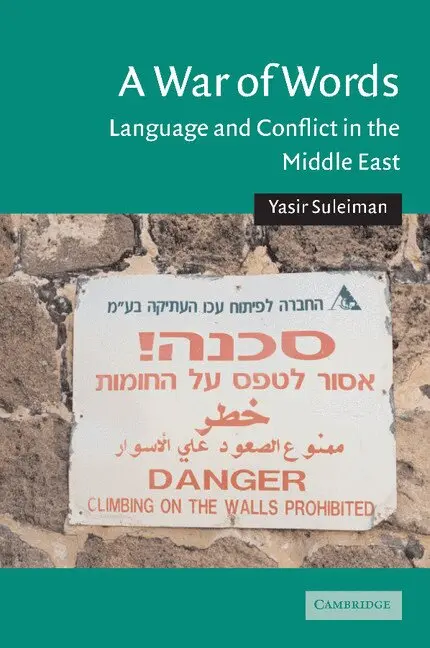
    A War of Words

    Language and Conflict in the Middle East

    AvYasir Suleiman,Charles Tripp

    Häftad, Engelska, 2004

    Del 19 i serien Cambridge Middle East Studies

    507 kr

    Beställningsvara. Skickas inom 7-10 vardagar. Fri frakt över 249 kr.

    Fler format och utgåvor

    Inbunden

    739 kr

    Beskrivning

    Yasir Suleiman's 2004 book considers national identity in relation to language, the way in which language can be manipulated to signal political, cultural or even historical difference. As a language with a long-recorded heritage and one spoken by the majority of those in the Middle East in a variety of dialects, Arabic is a particularly appropriate vehicle for such an investigation. It is also a penetrating device for exploring the conflicts of the Middle East, the diversity of its peoples and the diversity of their viewpoints. Suleiman's book offers a wealth of empirical material, and intriguing, often poignant illustrations of antagonisms articulated through pun or double entendre.

    Produktinformation

    • Utgivningsdatum:2004-06-10
    • Mått:153 x 228 x 19 mm
    • Vikt:461 g
    • Format:Häftad
    • Språk:Engelska
    • Serie:Cambridge Middle East Studies
    • Antal sidor:286
    • Förlag:Cambridge University Press
    • ISBN:9780521546560

    Utforska kategorier

    • Sociologi och antropologi inom Samhälle och politik

    Mer om författaren

    Yasir Suleiman is Professor of Arabic and Middle Eastern Studies, and Director of the Edinburgh Institute for the Advanced Study of the Arab World and Islam at the University of Edinburgh. His publications include The Arabic Language and National Identity: A Study in Ideology (2003) and The Arabic Grammatical Tradition: a Study in Ta'liil (1999).

    Recensioner i media

    'Yasir Suleiman's book is a seminal work on the linguistic situation in the Middle East, its socio-political and cultural roots, and its implications for nationhood and the study of conflict. This is a well-crafted, well organized, and eloquent book. ' Karin Ryding, Georgetown University

    Innehållsförteckning

    • 1. Introduction; 2. Language, power and conflict in the Middle East; 3. When language and dialects collide: standard Arabic and its 'opponents'; 4. When dialects collide: on the banks of the River Jordan; 5. When languages collide: between the River Jordan and the Mediterranean sea; 6. Language and conflict in the Middle East: a conclusion.