• Fri frakt över 249 kr
  • •
  • Snabba leveranser
  • •
  • Billiga böcker
Kundservice

Du är på sajten för privatpersoner.

Företag, bibliotek eller offentlig verksamhet?

Du handlar på classic.bokus.com, där alla dina funktioner finns intakta.
Till classic.bokus.com
Bokus logotyp. Gå till startsidan.
  • Erbjudanden
  • Student
  • Topplistor
  • Barn & ungdom
  • Bokus Play
  • E-böcker
  • Ljudböcker
  • Pocketböcker
  • Spel & pussel

Upp till 25% på utvalda nyheter →

Sidfot

Mina sidor

    Hjälp

    • Kundservice
    • Vanliga frågor och svar
    • Frakt och leverans
    • Retur vid ångerrätt
    • Reklamera vara
    • Betalning
    • Köpvillkor
    • Allmänna villkor
    • Information om webbplatsens tillgänglighet

    Om Bokus

    • Om oss
    • Pressrum
    • För studenter
    • För företag
    • För bibliotek och offentlig verksamhet
    • För leverantörer
    • Hållbarhet

    Populärt

    • Aktuella erbjudanden
    • Presentkort
    • Studentlitteratur
    • Nya böcker
    • Topplistor
    • Signerade böcker
    • Engelska böcker

    Inspiration

    • Boktips
    • BookTok
    • Populära bokserier
    • Barnbokskaraktärer
    • Populära författare
    Logotyp för Bokus
    Följ oss på Facebook (extern länk)Följ oss på Instagram (extern länk)Följ oss på YouTube (extern länk)Följ oss på TikTok (extern länk)
    bokus @ CookiesAnpassa cookiesIntegritetspolicyKöpvillkor
    Till Citymail hemsida (extern länk)Till Budbee hemsida (extern länk)Till Postnord hemsida (extern länk)Till Schenker hemsida (extern länk)Till Early Bird hemsida (extern länk)Till Walleys hemsida (extern länk)
    1. Naturvetenskap och teknik
    2. Matematik och naturvetenskap
    3. Naturvetenskap:allmänt

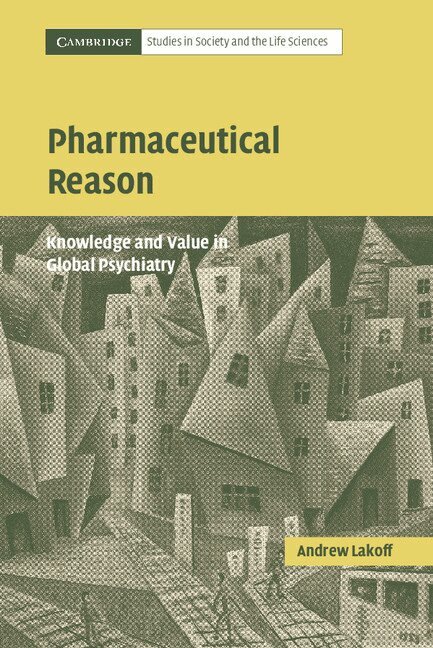
    Pharmaceutical Reason

    Knowledge and Value in Global Psychiatry

    AvAndrew Lakoff

    Häftad, Engelska, 2006

    Del i serien Cambridge Studies in Society and the Life Sciences

    570 kr

    Beställningsvara. Skickas inom 7-10 vardagar. Fri frakt över 249 kr.

    Fler format och utgåvor

    Inbunden

    1 335 kr

    Beskrivning

    Andrew Lakoff argues that a new 'pharmaceutical' way of thinking about and acting upon mental disorder is coming to reshape not only the field of psychiatry, but also our very notions of self. Drawing from a comprehensive ethnography of psychiatric practice in Argentina (a country which boasts the most psychoanalysts per capita in the world) Lakoff looks at new ways of understanding and intervening in human behaviour. He charts the globalization of pharmacology, particularily the global impact of US psychiatry and US models of illness, and further illustrates the clashes, conflicts, alliances and reformulations that take place when psychoanalytic and psychopharmacological models of illness and cure meet. Highlighting the social and political implications that these new forms of expertise about human behaviour and human thought bring, Lakoff presents an arresting case-study that will appeal to scholars and students alike.

    Produktinformation

    • Utgivningsdatum:2006-01-05
    • Mått:152 x 229 x 13 mm
    • Vikt:340 g
    • Format:Häftad
    • Språk:Engelska
    • Serie:Cambridge Studies in Society and the Life Sciences
    • Antal sidor:220
    • Förlag:Cambridge University Press
    • ISBN:9780521546669

    Utforska kategorier

    • Naturvetenskap:allmänt inom Naturvetenskap och teknik

    Mer om författaren

    Dr Andrew Lakoff is an Assistant Professor of Sociology and Science Studies at the University of California, San Diego. He is co-editor, with Adriana Petryna and Arthur Kleinman of Global Pharmaceuticals: Ethics, Markets, Practices (2006).

    Recensioner i media

    '…a substantial contribution to the sociology of psychiatry. It is as essential as those by Estroff, Barrett and Karp. I can only hope it will be read not only by sociologists or anthropologists, but also by students on their way to becoming psychiatrists.' Journal of BioSocieties

    Innehållsförteckning

    • Introduction: specific effects; 1. Diagnostic liquidity; 2. Medicating the symptom; 3. The Lacan ward; 4. Living with neuroscience; 5. The private life of numbers; Conclusion: the segmented phenotype.