• Fri frakt över 249 kr
  • •
  • Snabba leveranser
  • •
  • Billiga böcker
Kundservice

Du är på sajten för privatpersoner.

Företag, bibliotek eller offentlig verksamhet?

Du handlar på classic.bokus.com, där alla dina funktioner finns intakta.
Till classic.bokus.com
Bokus logotyp. Gå till startsidan.
  • Erbjudanden
  • Nyheter
  • Student
  • Topplistor
  • Barn & ungdom
  • Bokus Play
  • E-böcker
  • Pocketböcker
  • Spel & pussel

10% rabatt på allt med kod: NYSTART10 →

Sidfot

Mina sidor

    Hjälp

    • Kundservice
    • Vanliga frågor och svar
    • Frakt och leverans
    • Retur vid ångerrätt
    • Reklamera vara
    • Betalning
    • Köpvillkor
    • Allmänna villkor
    • Information om webbplatsens tillgänglighet

    Om Bokus

    • Om oss
    • Pressrum
    • För studenter
    • För företag
    • För bibliotek och offentlig verksamhet
    • För leverantörer
    • Hållbarhet

    Populärt

    • Aktuella erbjudanden
    • Presentkort
    • Studentlitteratur
    • Nya böcker
    • Topplistor
    • Signerade böcker
    • Engelska böcker

    Inspiration

    • Boktips
    • BookTok
    • Populära bokserier
    • Barnbokskaraktärer
    • Populära författare
    Logotyp för Bokus
    Följ oss på Facebook (extern länk)Följ oss på Instagram (extern länk)Följ oss på YouTube (extern länk)Följ oss på TikTok (extern länk)
    bokus @ CookiesAnpassa cookiesIntegritetspolicyKöpvillkor
    Till Citymail hemsida (extern länk)Till Budbee hemsida (extern länk)Till Postnord hemsida (extern länk)Till Schenker hemsida (extern länk)Till Early Bird hemsida (extern länk)Till Walleys hemsida (extern länk)
    1. Naturvetenskap och teknik
    2. Matematik och naturvetenskap
    3. Biologi

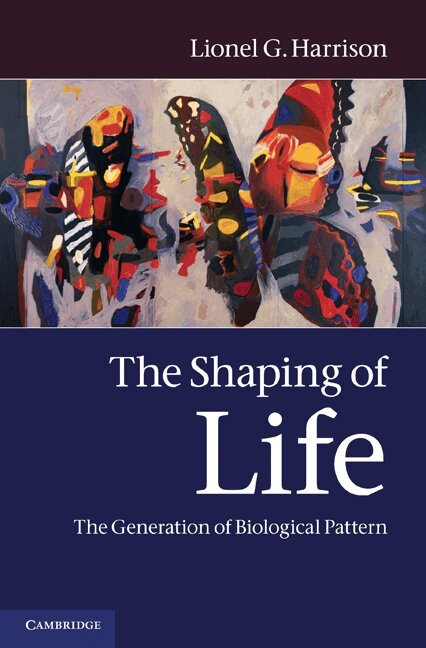
    The Shaping of Life

    The Generation of Biological Pattern

    AvLionel G. Harrison

    Inbunden, Engelska, 2010

    1 710 kr

    Beställningsvara. Skickas inom 10-15 vardagar. Fri frakt över 249 kr.

    Beskrivning

    Biological development, how organisms acquire their form, is one of the great frontiers in science. While a vast knowledge of the molecules involved in development has been gained in recent decades, big questions remain on the molecular organization and physics that shape cells, tissues and organisms. Physical scientists and biologists traditionally have very different backgrounds and perspectives, yet some of the fundamental questions in developmental biology will only be answered by combining expertise from a range of disciplines. This book is a personal account by Professor Lionel Harrison of an interdisciplinary approach to studying biological pattern formation. It articulates the power of studying dynamics in development: that to understand how an organism is made we must not only know the structure of its molecules; we must also understand how they interact and how fast they do so.

    Produktinformation

    • Utgivningsdatum:2010-12-23
    • Mått:158 x 235 x 16 mm
    • Vikt:560 g
    • Format:Inbunden
    • Språk:Engelska
    • Antal sidor:272
    • Förlag:Cambridge University Press
    • ISBN:9780521553506

    Utforska kategorier

    • Biologi inom Naturvetenskap och teknik

    Mer om författaren

    Lionel G. Harrison (1929–2008) was Professor Emeritus in the Department of Chemistry, University of British Columbia, where he was a faculty member for 50 years. A physical chemist by training, he was inspired to study biological form and 'in developmental biology … found something different and immensely exciting: a field with a Great Unknown' as he wrote in his 1993 book Kinetic Theory of Living Pattern. 'To pursue it is like trying to account for the rainbow in the 14th century, to do celestial mechanics before Newton, or to pursue quantum theory in the 1890s.'

    Recensioner i media

    'The Shaping of Life is an excellent resource. To those with interest in the evolution and theory at the interface of physical chemistry and the biological sphere, this book offers a pithy and well-informed perspective.' Plant Science Bulletin

    Innehållsförteckning

    • Foreword Thurston Lacalli; Preface; Acknowledgements; 1. Organizer. Organize thyself; Part I. Watching Plants Grow: 2. Branching: how do plants get it started?; 3. Whorled structures; 4. Dichotomous branching; 5. Micrasterias and computing patterning along with growth; Part II. Between Plants and Animals: 6. The emergence of dynamic theories; 7. Classifying developmental theories as physical chemistry; Part III. But Animals are Different: 8. The dreaded fruit fly; 9. Various vertebrate events; Epilogue; References; Index.