• Fri frakt över 249 kr
  • •
  • Snabba leveranser
  • •
  • Billiga böcker
Kundservice

Du är på sajten för privatpersoner.

Företag, bibliotek eller offentlig verksamhet?

Du handlar på classic.bokus.com, där alla dina funktioner finns intakta.
Till classic.bokus.com
Bokus logotyp. Gå till startsidan.
  • Erbjudanden
  • Nyheter
  • Student
  • Topplistor
  • Barn & ungdom
  • Bokus Play
  • E-böcker
  • Pocketböcker
  • Spel & pussel

10% rabatt på allt med kod NYSTART10 →

Sidfot

Mina sidor

    Hjälp

    • Kundservice
    • Vanliga frågor och svar
    • Frakt och leverans
    • Retur vid ångerrätt
    • Reklamera vara
    • Betalning
    • Köpvillkor
    • Allmänna villkor
    • Information om webbplatsens tillgänglighet

    Om Bokus

    • Om oss
    • Pressrum
    • För studenter
    • För företag
    • För bibliotek och offentlig verksamhet
    • För leverantörer
    • Hållbarhet

    Populärt

    • Aktuella erbjudanden
    • Presentkort
    • Studentlitteratur
    • Nya böcker
    • Topplistor
    • Signerade böcker
    • Engelska böcker

    Inspiration

    • Boktips
    • BookTok
    • Populära bokserier
    • Barnbokskaraktärer
    • Populära författare
    Logotyp för Bokus
    Följ oss på Facebook (extern länk)Följ oss på Instagram (extern länk)Följ oss på YouTube (extern länk)Följ oss på TikTok (extern länk)
    bokus @ CookiesAnpassa cookiesIntegritetspolicyKöpvillkor
    Till Citymail hemsida (extern länk)Till Budbee hemsida (extern länk)Till Postnord hemsida (extern länk)Till Schenker hemsida (extern länk)Till Early Bird hemsida (extern länk)Till Walleys hemsida (extern länk)
    1. Samhälle och politik
    2. Krig och försvar
    3. Vapen och utrustning

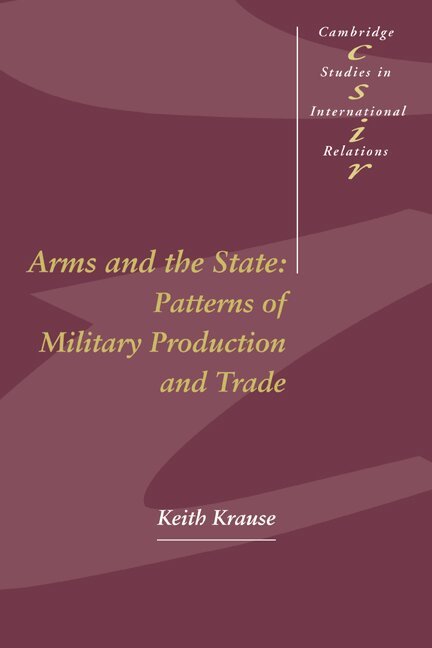
    Arms and the State

    Patterns of Military Production and Trade

    AvKeith Krause,Steve Smith

    Häftad, Engelska, 1995

    Del 22 i serien Cambridge Studies in International Relations

    463 kr

    Beställningsvara. Skickas inom 10-15 vardagar. Fri frakt över 249 kr.

    Beskrivning

    This book analyses the structure and motive forces that shape the global arms transfer and production system. The author distinguishes three tiers of arms producers, defined by such factors as defence production base, military research and development capabilities, and dependence upon arms exports. These factors interact with underlying political, economic, and military motivations to drive states to produce and export arms, and provide the force which directs the international trade in arms. The author discusses the United States and the Soviet Union, the European arms suppliers, and the emerging arms producers of the developing world. Although it concentrates on the contemporary period, the book covers a wide historical span, from the development of military technologies in the fifteenth and sixteenth centuries to twentieth-century revolutions in weaponry. By focusing on the processes of technological innovation and diffusion, the author shows the evolutionary nature of the spread of military technologies, and situates the current arms transfer system in a broad historical context.

    Produktinformation

    • Utgivningsdatum:1995-08-10
    • Mått:152 x 230 x 24 mm
    • Vikt:467 g
    • Format:Häftad
    • Språk:Engelska
    • Serie:Cambridge Studies in International Relations
    • Antal sidor:320
    • Förlag:Cambridge University Press
    • ISBN:9780521558662

    Utforska kategorier

    • Vapen och utrustning inom Samhälle och politik

    Recensioner i media

    'Keith Krause's book is strong across the board: it develops new historical materials spanning centuries; it attends to the complex interrelationships among international politics, dominant processes of international economics, and technological developments … and it analyzes contemporary arms-trade data.' American Political Science Review

    Innehållsförteckning

    • 1. Motive forces in the evolution of the arms transfer and production system; 2. The emergence of a global arms transfer and production system; 3. From the Military Revolution to the Industrial Revolution; 4. An overview of the post-1945 global arms transfer system; 5. The dominance of first-tier producers and suppliers; 6. Second-tier producers and suppliers: the struggle to keep pace; 7. Dependent production and exports in the third tier; 8. The subordinate role of arms recipients.