• Fri frakt över 249 kr
  • •
  • Snabba leveranser
  • •
  • Billiga böcker
Kundservice

Du är på sajten för privatpersoner.

Företag, bibliotek eller offentlig verksamhet?

Du handlar på classic.bokus.com, där alla dina funktioner finns intakta.
Till classic.bokus.com
Bokus logotyp. Gå till startsidan.
  • Erbjudanden
  • Nyheter
  • Student
  • Topplistor
  • Barn & ungdom
  • Bokus Play
  • E-böcker
  • Pocketböcker
  • Spel & pussel

10% rabatt på allt med kod: NYSTART10 →

Sidfot

Mina sidor

    Hjälp

    • Kundservice
    • Vanliga frågor och svar
    • Frakt och leverans
    • Retur vid ångerrätt
    • Reklamera vara
    • Betalning
    • Köpvillkor
    • Allmänna villkor
    • Information om webbplatsens tillgänglighet

    Om Bokus

    • Om oss
    • Pressrum
    • För studenter
    • För företag
    • För bibliotek och offentlig verksamhet
    • För leverantörer
    • Hållbarhet

    Populärt

    • Aktuella erbjudanden
    • Presentkort
    • Studentlitteratur
    • Nya böcker
    • Topplistor
    • Signerade böcker
    • Engelska böcker

    Inspiration

    • Boktips
    • BookTok
    • Populära bokserier
    • Barnbokskaraktärer
    • Populära författare
    Logotyp för Bokus
    Följ oss på Facebook (extern länk)Följ oss på Instagram (extern länk)Följ oss på YouTube (extern länk)Följ oss på TikTok (extern länk)
    bokus @ CookiesAnpassa cookiesIntegritetspolicyKöpvillkor
    Till Citymail hemsida (extern länk)Till Budbee hemsida (extern länk)Till Postnord hemsida (extern länk)Till Schenker hemsida (extern länk)Till Early Bird hemsida (extern länk)Till Walleys hemsida (extern länk)
    1. Historia och arkeologi
    2. Historia
    3. Europas historia

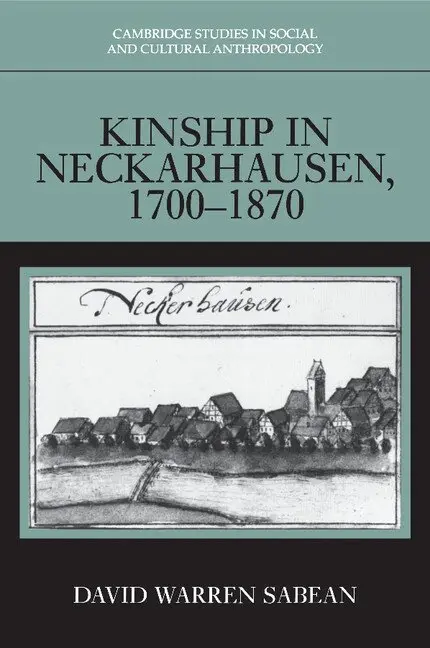
    Kinship in Neckarhausen, 1700-1870

    AvDavid Warren Sabean

    Häftad, Engelska, 1997

    712 kr

    Beställningsvara. Skickas inom 10-15 vardagar. Fri frakt över 249 kr.

    Fler format och utgåvor

    Inbunden

    1 969 kr

    Beskrivning

    This work analyses shifts in the relations of families, households, and individuals in a single German village during the transition to a modern social structure and cultural order. The findings call into question the idea that the more modern society became, the less kin mattered. Rather, the opposite happened. During 'modernization', close kin developed a flexible set of exchanges, passing marriage partners, godparents, political favors, work contacts, and financial guarantees back and forth. Sabean also argues that the new kinship systems were fundamental for class formation, and he repositions women in the center of a political culture of alliance construction. One of a series of important local studies coming out of the Max Planck Institute for History, it is the most thorough-going attempt to work between the disciplines of social and cultural history and anthropology, and it demonstrates the power of microhistory to reconceptualize general historical trends.

    Produktinformation

    • Utgivningsdatum:1997-12-13
    • Mått:152 x 229 x 34 mm
    • Vikt:870 g
    • Format:Häftad
    • Språk:Engelska
    • Antal sidor:658
    • Förlag:Cambridge University Press
    • ISBN:9780521586573

    Utforska kategorier

    • Europas historia inom Historia och arkeologi

    Recensioner i media

    "...a superb piece of scholarship, which speaks to the interests of specialists working in different disciplines with different geographical concentrations." Karl Wegert, Canadian Journal of History

    Innehållsförteckning

    • Introduction: 1. An introduction to kinship; 2. Vetterleswirtschaft: rise and fall of a political discourse; 3. The politics of incest and the ecology of alliance formation; Cohort I (1700–9): 4. Introduction to kinship during the early decades of the eighteenth century; 5. Kinship as a factor in marriage strategy; 6. Marriage and kinship practices; 7. Ritual kinship; 8. Naming children; Cohort II (1740–9): 9. Restructuring the system of alliance; 10. Village politics at mid-century; Cohort III (1780–9): 11. Consanguinity as a principle of alliance; 12. The formation of an alliance system; 13. Ritual kinship and alternative alliance; 14. Naming an patrilineal alliance; Cohort IV (1820–9): 15. Kinship at the beginning of the nineteenth century; 16. Kinship and practice at the turn of the century; Cohort V (1860–9): 17. Kinship in the mid-nineteenth century village: an introduction; 18. Networking with kin around the mid-nineteenth century; 19. Matrifocal alliance; Conclusion: 20. Consanguinity in European perspective; 21. Neckarhausen in European comparative perspective; 22. Kinship and class formation; 23. Kinship and gender.