• Fri frakt över 249 kr
  • •
  • Snabba leveranser
  • •
  • Billiga böcker
Kundservice

Du är på sajten för privatpersoner.

Företag, bibliotek eller offentlig verksamhet?

Du handlar på classic.bokus.com, där alla dina funktioner finns intakta.
Till classic.bokus.com
Bokus logotyp. Gå till startsidan.
  • Erbjudanden
  • Student
  • Topplistor
  • Barn & ungdom
  • Bokus Play
  • E-böcker
  • Ljudböcker
  • Pocketböcker
  • Spel och pussel

Pocketfynda! Hundratals böcker för 49 kr/st →

Sidfot

Mina sidor

    Hjälp

    • Kundservice
    • Vanliga frågor och svar
    • Frakt och leverans
    • Retur vid ångerrätt
    • Reklamera vara
    • Betalning
    • Köpvillkor
    • Allmänna villkor
    • Information om webbplatsens tillgänglighet

    Om Bokus

    • Om oss
    • Pressrum
    • För studenter
    • För företag
    • För bibliotek och offentlig verksamhet
    • För leverantörer
    • Hållbarhet

    Populärt

    • Aktuella erbjudanden
    • Presentkort
    • Studentlitteratur
    • Nya böcker
    • Topplistor
    • Signerade böcker
    • Engelska böcker

    Inspiration

    • Boktips
    • BookTok
    • Barnbokskaraktärer
    • Populära författare
    Logotyp för Bokus
    Följ oss på Facebook (extern länk)Följ oss på Instagram (extern länk)Följ oss på YouTube (extern länk)Följ oss på TikTok (extern länk)
    bokus @ CookiesAnpassa cookiesIntegritetspolicyKöpvillkor
    Till Citymail hemsida (extern länk)Till Budbee hemsida (extern länk)Till Postnord hemsida (extern länk)Till Schenker hemsida (extern länk)Till Early Bird hemsida (extern länk)Till Walleys hemsida (extern länk)
    1. Naturvetenskap och teknik
    2. Teknik och industri
    3. Teknik: allmänt

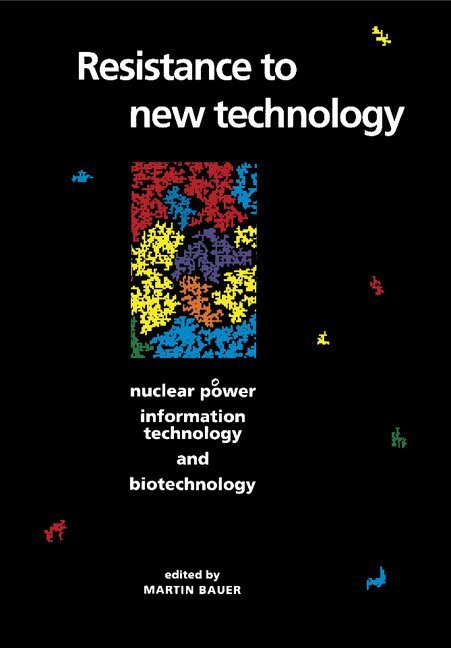
    Resistance to New Technology

    Nuclear Power, Information Technology and Biotechnology

    AvMartin Bauer

    Häftad, Engelska, 1997

    638 kr

    Beställningsvara. Skickas inom 7-10 vardagar. Fri frakt över 249 kr.

    Beskrivning

    This book compares resistance to technology across time, nations, and technologies. Three post-war examples - nuclear power, information technology, and biotechnology - are used in the analysis. The focus is on post-1945 Europe, with comparisons made with the USA, Japan, and Australia. Instead of assuming that resistance contributes to the failure of a technology, the main thesis of the book is that resistance is a constructive force in technological development, giving technology its particular shape in a particular context. Whilst many people still believe in the positive contribution made by science and technology, many have become sceptical. By exploring the idea that modernity creates effects that undermine its own foundations, forms and effects of resistance are explored in various contexts. The book presents a unique interdisciplinary study, including contributions from historians, sociologists, psychologists, and political scientists.

    Produktinformation

    • Utgivningsdatum:1997-06-19
    • Mått:173 x 247 x 26 mm
    • Vikt:760 g
    • Format:Häftad
    • Språk:Engelska
    • Antal sidor:436
    • Förlag:Cambridge University Press
    • ISBN:9780521599481

    Utforska kategorier

    • Teknik: allmänt inom Naturvetenskap och teknik

    Recensioner i media

    '… Bauer [suggests] that resistance to new technology ... performs a function analogous to acute pain in the body - as an alarm signal. It might be hard to persuade the biotechnologists to accept that idea. But as we move into the century of biology, they may need to begin thinking along these lines if the future is not to be marked by conficts. They should start by studying this thought-provoking collection.' Jon Turney, New Scientist

    Innehållsförteckning

    • 1. Resistance to new technology and its effects on nuclear power, information technology and biotechnology Martin Bauer; 2. The crisis of 'progress' Alain Touraine; 3. Reinterpreting 'Luddism': resistance to new technology in the British industrial revolution Adrian J. Randall; 4. The changeability of public opinions about new technology: assimilation effects in attitude surveys Danckler D. L. Daamen and Ivo A. van der Lans; 5. 'Technophobia': a misleading conception of resistance to new technology Martin Bauer; 6. Patterns of resistance to new technologies in Scandinavia: an historical perspective Kristine Bruland; 7. Henry Ford's relationship to 'Fordism': ambiguity as a modality of technological resistance John M. Staudenmaier; 8. Resistance to nuclear technology: optimists, opportunists and opposition in Australian nuclear history Roy M. Macleod; 9. New technology in Fleet Street, 1975–80 Roderick Martin; 10. The impact of resistance to biotechnology in Switzerland: a sociological view of the recent referendum Marlis Buchmann; 11. The politics of resistance to new technology: semiconductor diffusion in France and Japan until 1965 Antonio J. J. Botelho; 12. User resistance to new interactive media: participants, processes and paradigms Ian Miles and Graham Thomas; 13. The impact of anti-nuclear power movements in international comparison Dieter Rucht; 14. In the engine of history: regulators of biotechnology, 1970–86 Robert Bud; 15. Product, process, or programme: three cultures and the regulation of biotechnology Sheila S. Jasanoff; 16. Learning from Chernobyl for the fight against genetics? Stages and stimuli of German protest movements - a comparative synopsis Joachim Radkau; 17. Individual and institutional impacts upon press coverage of sciences: the case of nuclear power and genetic engineering in Germany Hans Mathias Kepplinger; 18. Forms of intrusion: comparing resistance to information technology and biotechnology in the USA Dorothy Nelkin; 19. Towards a functional analysis of resistance.