• Fri frakt över 249 kr
  • •
  • Snabba leveranser
  • •
  • Billiga böcker
Kundservice

Du är på sajten för privatpersoner.

Företag, bibliotek eller offentlig verksamhet?

Du handlar på classic.bokus.com, där alla dina funktioner finns intakta.
Till classic.bokus.com
Bokus logotyp. Gå till startsidan.
  • Erbjudanden
  • Nyheter
  • Student
  • Topplistor
  • Barn & ungdom
  • Bokus Play
  • E-böcker
  • Pocketböcker
  • Spel & pussel

10% rabatt på allt med kod: NYSTART10 →

Sidfot

Mina sidor

    Hjälp

    • Kundservice
    • Vanliga frågor och svar
    • Frakt och leverans
    • Retur vid ångerrätt
    • Reklamera vara
    • Betalning
    • Köpvillkor
    • Allmänna villkor
    • Information om webbplatsens tillgänglighet

    Om Bokus

    • Om oss
    • Pressrum
    • För studenter
    • För företag
    • För bibliotek och offentlig verksamhet
    • För leverantörer
    • Hållbarhet

    Populärt

    • Aktuella erbjudanden
    • Presentkort
    • Studentlitteratur
    • Nya böcker
    • Topplistor
    • Signerade böcker
    • Engelska böcker

    Inspiration

    • Boktips
    • BookTok
    • Populära bokserier
    • Barnbokskaraktärer
    • Populära författare
    Logotyp för Bokus
    Följ oss på Facebook (extern länk)Följ oss på Instagram (extern länk)Följ oss på YouTube (extern länk)Följ oss på TikTok (extern länk)
    bokus @ CookiesAnpassa cookiesIntegritetspolicyKöpvillkor
    Till Citymail hemsida (extern länk)Till Budbee hemsida (extern länk)Till Postnord hemsida (extern länk)Till Schenker hemsida (extern länk)Till Early Bird hemsida (extern länk)Till Walleys hemsida (extern länk)
    1. Naturvetenskap och teknik
    2. Matematik och naturvetenskap
    3. Astronomi

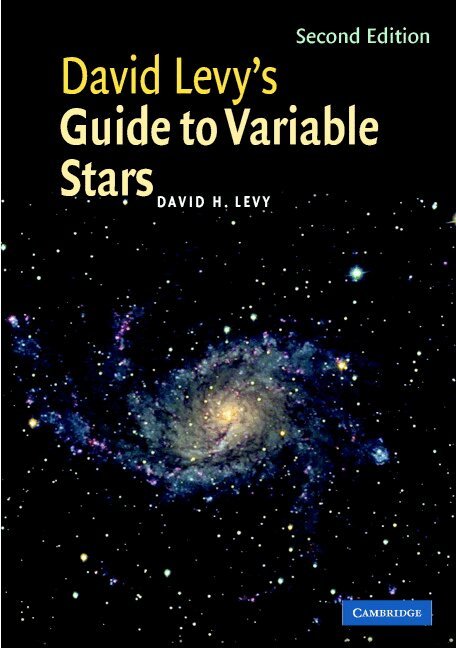
    David Levy's Guide to Variable Stars

    AvDavid H. Levy

    Häftad, Engelska, 2005

    661 kr

    Beställningsvara. Skickas inom 10-15 vardagar. Fri frakt över 249 kr.

    Beskrivning

    Variable stars are fascinating objects to observe; found all over the sky, they change in brightness over time and can be seen with even the most basic of equipment. Variable star astronomy is one field in which amateur astronomers can still make significant contributions to science and in this highly accessible book David Levy teaches the reader how variable stars work, and how to observe them. Using simple, non-technical terms he explains how to get started with electronic (or CCD) observing, as well as how to observe variable stars through a small telescope or binoculars. Including a section on Southern hemisphere stars, the book covers various types of object that can be observed by amateur astronomers, including more exotic phenomena like gamma ray bursts, blazars, and polars. This book will serve to motivate anyone with even a basic interest in astronomy to begin observing these fascinating objects.

    Produktinformation

    • Utgivningsdatum:2005-12-15
    • Mått:174 x 246 x 15 mm
    • Vikt:559 g
    • Format:Häftad
    • Språk:Engelska
    • Antal sidor:276
    • Förlag:Cambridge University Press
    • ISBN:9780521608602

    Utforska kategorier

    • Astronomi inom Naturvetenskap och teknik
    • Populärastronomi inom Djur och Natur

    Mer om författaren

    David Levy is one of the most successful comet discoverers in history, and the author or editor of 31 books and other products.

    Recensioner i media

    '… as a simple guide for the novice observer, this volume has no rival.' Astronomy Magazine

    Innehållsförteckning

    • Foreword to first edition; 1. Getting to know the sky; 2. Magnitude, color, and distance; 3. A word on binoculars and telescopes; 4. Learning to see; 5. Getting to know the variables; 6. Getting started with cepheids; 7. Algol, the demon of autumn; 8. How to estimate a variable; 9. Names and records; 10. How your observations help us understand a variable star; 11. Observing hints; 12. Observing with CCDs; 13. Stately and wonderful; 14. Stars of challenge; 15. Bright, easy, and interesting; 16. Betelgeuse: easy and hard; 17. Not too regular; 18. Nova? What nova?; 19. Supernovae; 20. Clyde Tombaugh's star and the family of cataclysmic variables; 21. A Nova in reverse?; 22. RU Lupi?; 23. Orion, the star factory; 24. Other variable things; 25. The Sun; 26. Suggested variables for observation throughout the year; 27. January, February, March; 28. April, May, June; 29. July, August, September; 30. October, November, December; 31. Southern Sky notes; 32. Stars and people; 33. Hands-on astrophysics for the next generation; 34. Going further; 35. Glossary and abbreviations.