• Fri frakt över 249 kr
  • •
  • Snabba leveranser
  • •
  • Billiga böcker
Kundservice

Du är på sajten för privatpersoner.

Företag, bibliotek eller offentlig verksamhet?

Du handlar på classic.bokus.com, där alla dina funktioner finns intakta.
Till classic.bokus.com
Bokus logotyp. Gå till startsidan.
  • Erbjudanden
  • Nyheter
  • Student
  • Topplistor
  • Barn & ungdom
  • Bokus Play
  • E-böcker
  • Pocketböcker
  • Spel & pussel

10% rabatt på allt med kod NYSTART10 →

Sidfot

Mina sidor

    Hjälp

    • Kundservice
    • Vanliga frågor och svar
    • Frakt och leverans
    • Retur vid ångerrätt
    • Reklamera vara
    • Betalning
    • Köpvillkor
    • Allmänna villkor
    • Information om webbplatsens tillgänglighet

    Om Bokus

    • Om oss
    • Pressrum
    • För studenter
    • För företag
    • För bibliotek och offentlig verksamhet
    • För leverantörer
    • Hållbarhet

    Populärt

    • Aktuella erbjudanden
    • Presentkort
    • Studentlitteratur
    • Nya böcker
    • Topplistor
    • Signerade böcker
    • Engelska böcker

    Inspiration

    • Boktips
    • BookTok
    • Populära bokserier
    • Barnbokskaraktärer
    • Populära författare
    Logotyp för Bokus
    Följ oss på Facebook (extern länk)Följ oss på Instagram (extern länk)Följ oss på YouTube (extern länk)Följ oss på TikTok (extern länk)
    bokus @ CookiesAnpassa cookiesIntegritetspolicyKöpvillkor
    Till Citymail hemsida (extern länk)Till Budbee hemsida (extern länk)Till Postnord hemsida (extern länk)Till Schenker hemsida (extern länk)Till Early Bird hemsida (extern länk)Till Walleys hemsida (extern länk)
    1. Psykologi och pedagogik
    2. Psykologi
    3. Psykologiska teorier och skolor

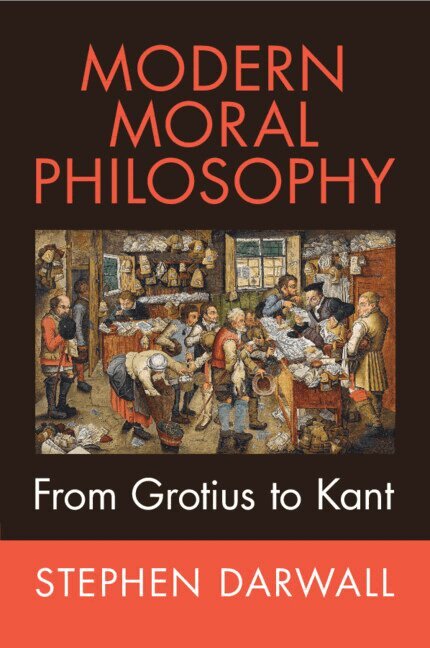
    Modern Moral Philosophy

    From Grotius to Kant

    AvStephen Darwall

    Häftad, Engelska, 2025

    341 kr

    Beställningsvara. Skickas inom 10-15 vardagar. Fri frakt över 249 kr.

    Fler format och utgåvor

    Inbunden

    417 kr

    E-bok

    411 kr

    E-bok

    411 kr

    Beskrivning

    In this magisterial study, one of our leading moral philosophers refutes the charge (originally made by Elizabeth Anscombe) that modern ethics is incoherent because it essentially depends on theological and religious assumptions that it cannot acknowledge. Stephen Darwall's panoramic picture starts with the seventeenth-century thinker Grotius and tells the story continuously down to the time of Kant, exploring what was in fact a completely new way of doing ethics based on secular ideas of human psychology and universal accountability. He shows that thinkers from Grotius to Kant are profoundly united by this modern approach, and that it helped them to create a theory of natural human rights that remains of great political relevance today. He further shows that this new way of thinking provides conceptual resources that are far from exhausted, and that moral philosophy in this idiom still has a vibrant future.

    Produktinformation

    • Utgivningsdatum:2025-07-03
    • Mått:152 x 229 x 21 mm
    • Vikt:576 g
    • Format:Häftad
    • Språk:Engelska
    • Antal sidor:398
    • Förlag:Cambridge University Press
    • ISBN:9780521677790

    Utforska kategorier

    • Psykologiska teorier och skolor inom Psykologi och pedagogik
    • Filosofiska discipliner inom Filosofi och religion

    Mer om författaren

    Stephen Darwall teaches philosophy at Yale University. He is the author of The British Moralists and the Internal 'Ought', 1640–1740 (Cambridge University Press, 1995), and of many other publications in moral philosophy and its history, including The Second-Person Standpoint: Morality, Respect, and Accountability (2006).

    Recensioner i media

    'Modern moral philosophy emerged from its medieval and ancient ancestors through the development of new ideas about natural law.  Stephen Darwall, in this masterly work, explains the development of these ideas and how they became central to the debates of the eighteenth century over the nature of morality and the sources of moral knowledge.  His explanation is a powerful argument for the juridical conception of morality that took form in the work of Grotius and reached its most profound exposition in the work of Kant.' John Deigh, University of Texas, Austin

    Innehållsförteckning

    • 1. Grotius; 2. Hobbes and Pufendorf; 3. Locke and Cumberland; 4. Spinoza, Cudworth, Shaftesbury, and Leibniz; 5. Hutcheson and Butler; 6. Hume and Smith; 7. The British Rationalists and Reid; 8. Rousseau and Kant.