• Fri frakt över 249 kr
  • •
  • Snabba leveranser
  • •
  • Billiga böcker
Kundservice

Du är på sajten för privatpersoner.

Företag, bibliotek eller offentlig verksamhet?

Du handlar på classic.bokus.com, där alla dina funktioner finns intakta.
Till classic.bokus.com
Bokus logotyp. Gå till startsidan.
  • Erbjudanden
  • Nyheter
  • Student
  • Topplistor
  • Barn & ungdom
  • Bokus Play
  • E-böcker
  • Pocketböcker
  • Spel & pussel

10% rabatt på allt med kod: NYSTART10 →

Sidfot

Mina sidor

    Hjälp

    • Kundservice
    • Vanliga frågor och svar
    • Frakt och leverans
    • Retur vid ångerrätt
    • Reklamera vara
    • Betalning
    • Köpvillkor
    • Allmänna villkor
    • Information om webbplatsens tillgänglighet

    Om Bokus

    • Om oss
    • Pressrum
    • För studenter
    • För företag
    • För bibliotek och offentlig verksamhet
    • För leverantörer
    • Hållbarhet

    Populärt

    • Aktuella erbjudanden
    • Presentkort
    • Studentlitteratur
    • Nya böcker
    • Topplistor
    • Signerade böcker
    • Engelska böcker

    Inspiration

    • Boktips
    • BookTok
    • Populära bokserier
    • Barnbokskaraktärer
    • Populära författare
    Logotyp för Bokus
    Följ oss på Facebook (extern länk)Följ oss på Instagram (extern länk)Följ oss på YouTube (extern länk)Följ oss på TikTok (extern länk)
    bokus @ CookiesAnpassa cookiesIntegritetspolicyKöpvillkor
    Till Citymail hemsida (extern länk)Till Budbee hemsida (extern länk)Till Postnord hemsida (extern länk)Till Schenker hemsida (extern länk)Till Early Bird hemsida (extern länk)Till Walleys hemsida (extern länk)
    1. Kultur
    2. Arkitektur

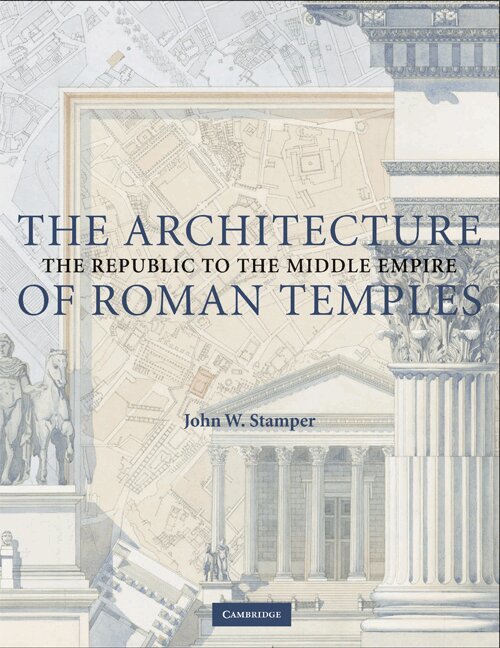
    The Architecture of Roman Temples

    The Republic to the Middle Empire

    AvJohn W. Stamper

    Häftad, Engelska, 2008

    588 kr

    Beställningsvara. Skickas inom 10-15 vardagar. Fri frakt över 249 kr.

    Beskrivning

    This book examines the development of Roman temple architecture from its earliest history in the sixth century BC to the reigns of Hadrian and the Antonines in the second century AD. Although archaeologists, architects, and historians have studied the temples of this period since the Renaissance, this book is unique for its specific analysis of Roman temples as a building type. John Stamper analyzes their formal qualities, the public spaces in which they were located and, most importantly, the authority of precedent in their designs. The basis of that authority was the Temple of Jupiter Capitolinus, the city's first and most important temple. Stamper challenges the accepted reconstruction of this temple, proposing a new reconstruction, and assessing its role in the transformation of Rome. He also traces Rome's temple architecture as it evolved over time and how it accommodated changing political and religious contexts, as well as the effects of new stylistic influences.

    Produktinformation

    • Utgivningsdatum:2008-01-28
    • Mått:213 x 272 x 14 mm
    • Vikt:710 g
    • Format:Häftad
    • Språk:Engelska
    • Antal sidor:304
    • Förlag:Cambridge University Press
    • ISBN:9780521723718

    Utforska kategorier

    • Arkitektur inom Kultur

    Mer om författaren

    John Stamper is Associate Professor in the School of Architecture at the University of Notre Dame. Both an architect and architectural historian, he is the author of Chicago's North Michigan Avenue: Planning and Development, 1900-1930.

    Recensioner i media

    "Stamper aims at providing architects, planners, historians, and students with a more comprehensive discussion of the ancient temples of Rome than exists to date by interpreting the work of archaeologists through the eyes of an architectural historian (xiv). Stamper is successful in his aim and this is the real contribution of his book." --Bryn Mawr Classical Review

    Innehållsförteckning

    • Introduction: the authority of precedent; 1. Building the Temple of Jupiter Capitolinus; 2. A new reconstruction of the temple; 3. Etrusco-Roman temples of the Early Republic; 4. Assimilation of Hellenistic architecture after the Punic Wars; 5. The Corinthian Order in the First Century B.C.; 6. Architecture and ceremony in the time of Pompey and Julius Caesar; 7. Rebuilding Rome in the time of Augustus; 8. Augustus and the Temple of Mars Ultor; 9. Temples and fora of the Flavian Emperors; 10. Trajan's Forum; 11. Hadrian's Pantheon; 12. Hadrian and the Antonines.