John W. Stamper – författare
Visar alla böcker från författaren John W. Stamper. Handla med fri frakt och snabb leverans.
3 produkter
3 produkter
1 028 kr
Tillfälligt slut
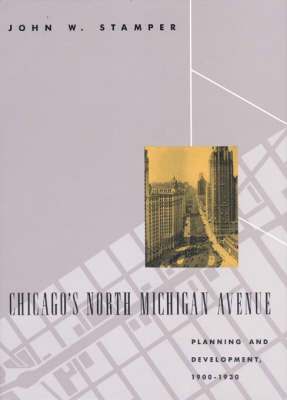
Since its opening in the 1920s, Chicago's North Michigan Avenue has been one of the city's most prestigious commerical corridors, lined by some of its most architecturally distinctive business, residential, and hotel buildings. Planned by Daniel Burnham in 1909, the avenue became the principal connecting link between downtown and the wealthy, residential "Gold Coast" north of the Loop. Some thirty buildings were constructed along its path in the ten-year period before the Depression, an urban expansion comparable in significance to that of Pennsylvania and Park Avenues. John W. Stamper traces the complex development of North Michigan Avenue from the 1880s to the 1920s building boom that solidified its character and economic base, describing the initiation of the planning process by private interests to its execution aided by the city's powerful condemnation and taxation proceedings. He focuses on individual buildings constructed on the avenue, including the Renaissance- and Gothic-inspired Wrigley Building, Tribune Tower, and Drake Hotel, and places them within the context of factors governing their construction—property ownership, financing, zoning laws, design theory, and advertising. Stamper compares this stylistically diverse mixture of low- and high-rise structures with earlier, rejected planning proposals, all of which had prescribed a uniformly designed, European-like avenue of continuous cornice heights, consistent facade widths, and complementary stylistic features. He analyzes the drastically different character the avenue took by 1930, with high-rise towers reaching thirty stories and beyond, in terms of the clash among economic, political, and architectural interests. His argument—that the discrepancies between the rejected plans and reality illustrate the developers' choice of economic return on their investment over aesthetic community—is extended through to the present avenue and the virtual disregard of the urban qualities proposed at its inception. Generously illustrated, with an epilogue condensing the avenue's history between the end of World War II and the present, this is an exhaustive account of an important topic in the history of modern architecture and city planning.
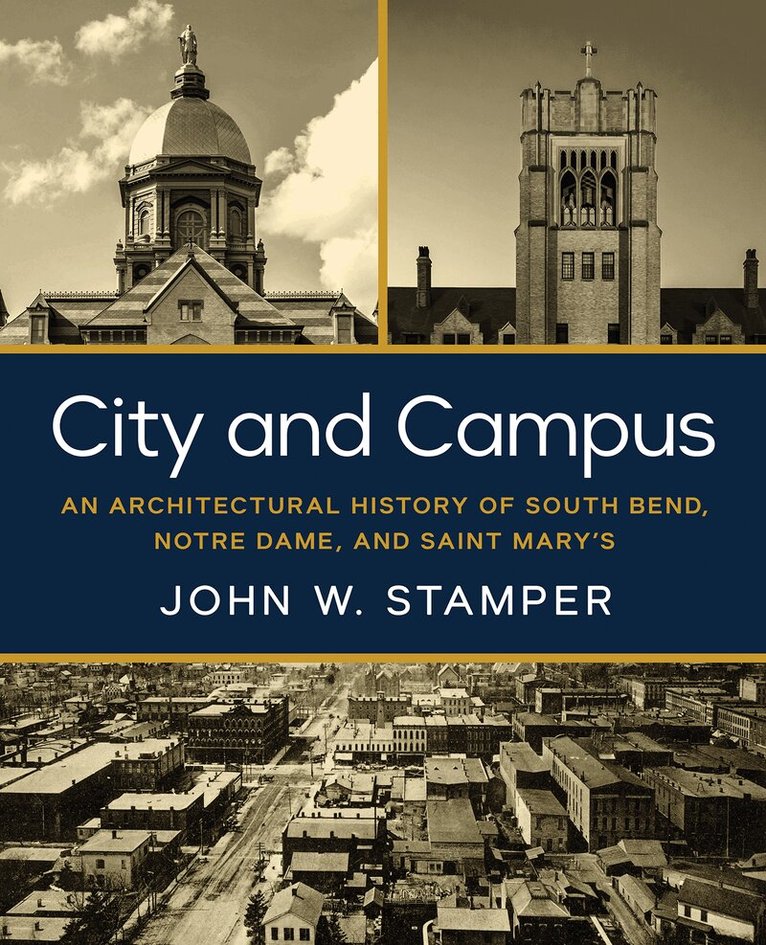
City and Campus
An Architectural History of South Bend, Notre Dame, and Saint Mary's
Inbunden, Engelska, 2024
621 kr
Skickas inom 10-15 vardagar
City and Campus tells the rich history of a Midwest industrial town and its two academic institutions through the buildings that helped bring these places to life.John W. Stamper paints a narrative portrait of South Bend and the campuses of the University of Notre Dame and Saint Mary's College from their founding and earliest settlement in the 1830s through the boom of the Roaring Twenties. Industrialist giants such as the Studebaker Brothers Manufacturing Company and Oliver Chilled Plow Works invested their wealth into creating some of the city's most important and historically significant buildings.Famous architects, including Frank Lloyd Wright, brought the latest trends in architecture to the heart of South Bend. Stamper also illuminates how Notre Dame's founder and long-time president Father Edward Sorin, C.S.C., recruited other successful architects to craft in stone the foundations of the university and the college at the same time as he built the scholarship. City and Campus provides an engaging and definitive history of how this urban and academic environment emerged on the shores of the St. Joseph River.
574 kr
Skickas inom 7-10 vardagar
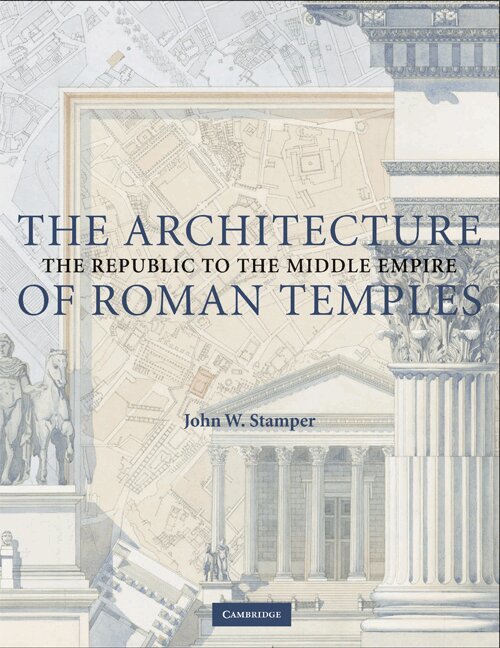
This book examines the development of Roman temple architecture from its earliest history in the sixth century BC to the reigns of Hadrian and the Antonines in the second century AD. Although archaeologists, architects, and historians have studied the temples of this period since the Renaissance, this book is unique for its specific analysis of Roman temples as a building type. John Stamper analyzes their formal qualities, the public spaces in which they were located and, most importantly, the authority of precedent in their designs. The basis of that authority was the Temple of Jupiter Capitolinus, the city's first and most important temple. Stamper challenges the accepted reconstruction of this temple, proposing a new reconstruction, and assessing its role in the transformation of Rome. He also traces Rome's temple architecture as it evolved over time and how it accommodated changing political and religious contexts, as well as the effects of new stylistic influences.