• Fri frakt över 249 kr
  • •
  • Snabba leveranser
  • •
  • Billiga böcker
Kundservice

Du är på sajten för privatpersoner.

Företag, bibliotek eller offentlig verksamhet?

Du handlar på classic.bokus.com, där alla dina funktioner finns intakta.
Till classic.bokus.com
Bokus logotyp. Gå till startsidan.
  • Erbjudanden
  • Nyheter
  • Student
  • Topplistor
  • Barn & ungdom
  • Bokus Play
  • E-böcker
  • Pocketböcker
  • Spel & pussel

Må bättre, för mindre! Upp till 50% rabatt på hälsoböcker

Sidfot

Mina sidor

    Hjälp

    • Kundservice
    • Vanliga frågor och svar
    • Frakt och leverans
    • Retur vid ångerrätt
    • Reklamera vara
    • Betalning
    • Köpvillkor
    • Allmänna villkor
    • Information om webbplatsens tillgänglighet

    Om Bokus

    • Om oss
    • Pressrum
    • För studenter
    • För företag
    • För bibliotek och offentlig verksamhet
    • För leverantörer
    • Hållbarhet

    Populärt

    • Aktuella erbjudanden
    • Presentkort
    • Studentlitteratur
    • Nya böcker
    • Topplistor
    • Signerade böcker
    • Engelska böcker

    Inspiration

    • Boktips
    • BookTok
    • Populära bokserier
    • Barnbokskaraktärer
    • Populära författare
    Logotyp för Bokus
    Följ oss på Facebook (extern länk)Följ oss på Instagram (extern länk)Följ oss på YouTube (extern länk)Följ oss på TikTok (extern länk)
    bokus @ CookiesAnpassa cookiesIntegritetspolicyKöpvillkor
    Till Citymail hemsida (extern länk)Till Budbee hemsida (extern länk)Till Postnord hemsida (extern länk)Till Schenker hemsida (extern länk)Till Early Bird hemsida (extern länk)Till Walleys hemsida (extern länk)
    1. Juridik
    2. Internationell rätt

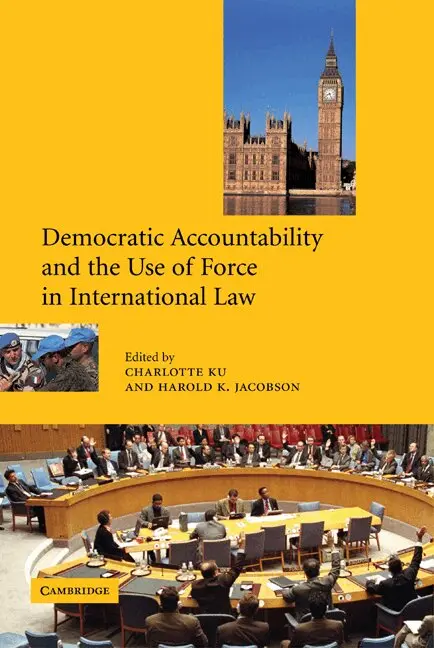
    Democratic Accountability and the Use of Force in International Law

    AvCharlotte Ku,Harold K. Jacobson

    Inbunden, Engelska, 2003

    1 627 kr

    Beställningsvara. Skickas inom 10-15 vardagar. Fri frakt över 249 kr.

    Beskrivning

    The spread of democracy to a majority of the world's states and the legitimization of the use of force by multilateral institutions such as NATO and the UN have been two key developments since World War II. In the last decade these developments have become intertwined, as multilateral forces moved from traditional peacekeeping to peace enforcement among warring parties. This book explores the experiences of nine countries (Canada, France, Germany, India, Japan, Norway, Russia, UK and US) in the deployment of armed forces under the UN and NATO, asking who has been and should be accountable to the citizens of these nations, and to the citizens of states who are the object of deployments, for the decisions made in such military actions. The authors conclude that national-level mechanisms have been most important in assuring democratic accountability of national and international decision-makers.

    Produktinformation

    • Utgivningsdatum:2003-02-13
    • Mått:158 x 236 x 34 mm
    • Vikt:850 g
    • Format:Inbunden
    • Språk:Engelska
    • Antal sidor:468
    • Förlag:Cambridge University Press
    • ISBN:9780521807470

    Utforska kategorier

    • Internationell rätt inom Juridik

    Recensioner i media

    'This book shows the author's astute understanding of contemporary issues of law, democracy and international order, and is essential for any complete library on this topic.' John Allison, ACUNS

    Innehållsförteckning

    • List of figures; List of tables; Notes on contributors; Preface; List of abbreviations; Part I. Introduction: 1. Broaching the issues Charlotte Ku and Harold K. Jacobson; Part II. The Domestic and International Context: 2. The interface of national constitutional systems with international law and institutions on using military forces: changing trends in executive and legislative powers Lori F. Damrosch; 3. Domestic political factors and decisions to use military forces Karen A. Mingst; 4. Collective security, peacekeeping, and ad hoc multilateralism Edwin M. Smith; 5. The legal responsibility of military personnel Robert C. R. Siekmann; Part III. Traditional Contributors to International Military Operations: 6. Canada: committed contributor of ideas and forces, but with growing doubts and problems Fen Osler Hampson; 7. Norway: political consensus and the problem of accountability Knut G. Nustad and Henrik Thune; 8. India: democratic, poor, internationalist Ramesh Thakur and Dipankar Banerjee; Part IV. Newcomers to International Military Operations: 9. Japan: moderate commitment within legal strictures Akiho Shibata; 10. Germany: ensuring political legitimacy for the use of military forces by requiring constitutional accountability Georg Nolte; Part V. Permanent Members of the UN Security Council: 11. Russian Federation: the pendulum of powers and accountability Bakhtiyar Tuzmukhamedov; 12. France: Security Council legitimacy and executive primacy Yves Boyer, Serge Sur and Olivier Fleurence; 13. The United Kingdom: increasing commitment requires greater parliamentary involvement Nigel D. White; 14. The United States: democracy, hegemony, and accountability Michael J. Glennon; Part VI. Conclusion: 15. Towards a mixed system of democratic accountability Charlotte Ku and Harold K. Jacobson; Appendix A: uses of military forces under the auspices of the UN and NATO; Appendix B: country participation in international operations, 1945–2000; References; Index.