• Fri frakt över 249 kr
  • •
  • Snabba leveranser
  • •
  • Billiga böcker
Kundservice

Du är på sajten för privatpersoner.

Företag, bibliotek eller offentlig verksamhet?

Du handlar på classic.bokus.com, där alla dina funktioner finns intakta.
Till classic.bokus.com
Bokus logotyp. Gå till startsidan.
  • Erbjudanden
  • Student
  • Topplistor
  • Barn & ungdom
  • Bokus Play
  • E-böcker
  • Ljudböcker
  • Pocketböcker
  • Spel och pussel

5% studentrabatt – använd koden KURSBOK27 →

Sidfot

Mina sidor

    Hjälp

    • Kundservice
    • Vanliga frågor och svar
    • Frakt och leverans
    • Retur vid ångerrätt
    • Reklamera vara
    • Betalning
    • Köpvillkor
    • Allmänna villkor
    • Information om webbplatsens tillgänglighet

    Om Bokus

    • Om oss
    • Pressrum
    • För studenter
    • För företag
    • För bibliotek och offentlig verksamhet
    • För leverantörer
    • Hållbarhet

    Populärt

    • Aktuella erbjudanden
    • Presentkort
    • Studentlitteratur
    • Nya böcker
    • Topplistor
    • Signerade böcker
    • Engelska böcker

    Inspiration

    • Boktips
    • BookTok
    • Barnbokskaraktärer
    • Populära författare
    Logotyp för Bokus
    Följ oss på Facebook (extern länk)Följ oss på Instagram (extern länk)Följ oss på YouTube (extern länk)Följ oss på TikTok (extern länk)
    bokus @ CookiesAnpassa cookiesIntegritetspolicyKöpvillkor
    Till Citymail hemsida (extern länk)Till Budbee hemsida (extern länk)Till Postnord hemsida (extern länk)Till Schenker hemsida (extern länk)Till Early Bird hemsida (extern länk)Till Walleys hemsida (extern länk)
    1. Språk och ordböcker
    2. Språkvetenskap och lingvistik

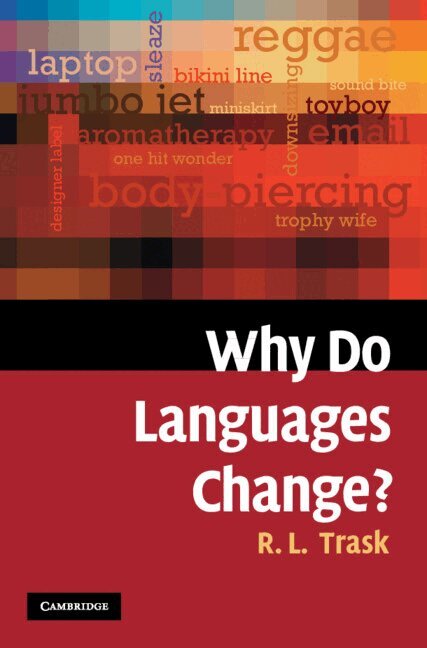
    Why Do Languages Change?

    AvLarry Trask

    Inbunden, Engelska, 2009

    822 kr

    Beställningsvara. Skickas inom 7-10 vardagar. Fri frakt över 249 kr.

    Fler format och utgåvor

    Häftad

    390 kr

    Beskrivning

    The first recorded English name for the make-up we now call blusher was paint, in 1660. In the 1700s a new word, rouge, displaced paint, and remained in standard usage for around two centuries. Then, in 1965, an advertisement coined a new word for the product: blusher. Each generation speaks a little differently, and every language is constantly changing. It is not only words that change, every aspect of a language changes over time - pronunciation, word-meanings and grammar. Packed with fascinating examples of changes in the English language over time, this entertaining book explores the origin of words and place names, the differences between British and American English, and the apparent eccentricities of the English spelling system. Amusingly written yet deeply instructive, it will be enjoyed by anyone involved in studying the English language and its history, as well as anyone interested in how and why languages change.

    Produktinformation

    • Utgivningsdatum:2009-12-24
    • Mått:156 x 234 x 14 mm
    • Vikt:470 g
    • Format:Inbunden
    • Språk:Engelska
    • Antal sidor:210
    • Förlag:Cambridge University Press
    • ISBN:9780521838023

    Utforska kategorier

    • Språkvetenskap och lingvistik inom Språk och ordböcker

    Mer om författaren

    R. L. Trask was a world authority on the Basque language and on historical linguistics. He wrote both academic and popular books, notably on grammar, punctuation, and English style and usage. His publications include Language: The Basics (1995) and Mind the Gaffe (2001). At the time of his death in 2004, he was Professor of Linguistics at the University of Sussex.

    Recensioner i media

    'Clear, sensible and stimulating … a fine memorial to the late Larry Trask. This book deserves to succeed as a splendid introductory text for anyone interested in language change.' Jeremy J. Smith, University of Glasgow

    Innehållsförteckning

    • 1. How do languages change?; 2. Why are languages always changing?; 3. Where do words come from?; 4. Skunk-Leek – my kind of town: what's in a name?; 5. Where does English come from?; 6. Why is American English different from British English?; 7. Why is English spelling so eccentric?; 8. Which is the oldest language?