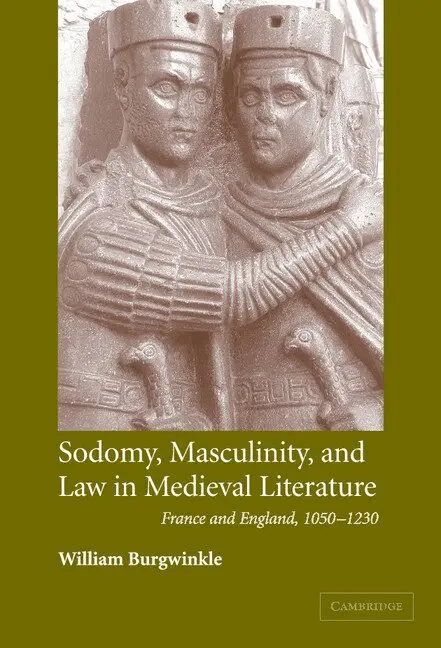
Inbunden, Engelska, 2004
Sodomy, Masculinity and Law in Medieval Literature
France and England, 1050-1230
Del 51 i serien Cambridge Studies in Medieval Literature
1859 kr
Beställningsvara. Skickas inom 7-10 vardagar. Fri frakt över 249 kr.
Beskrivning
Produktinformation
- Utgivningsdatum: 2004-07-08
- Mått: 160 x 235 x 24 mm
- Vikt: 663 g
- Format: Inbunden
- Språk: Engelska
- Serie: Cambridge Studies in Medieval Literature
- Antal sidor: 314
- Förlag: Cambridge University Press
- ISBN: 9780521839686
Utforska kategorier
Mer om författaren
William Burgwinkle is Lecturer in French and Occitan in the Faculty of Modern and Medieval Languages in the University of Cambridge and fellow at King's College. He is the author of Love for Sale: Materialist Readings of the Troubadour Razo Corpus Razos and Troubadour Songs (1997) and the editor of Significant Others: Film and Literature, East and West (1993).
Recensioner i media
"This elegantly understated tour de force is lucid, accessible, and appealing. It should speak to a variety of readerships, all of them fit, even if some of them are few: scholars of medieval romance, of Old French and Anglo-Norman, of the Latin prosimetrum and the so-called School of Chartres, and of the twelfth century generally and that sudden profusion in nearly ever form of cultural expression often misleadingly called the twelfth-century Renaissance." - Larry Scanlon, Rutgers University
Betyg & recensioner
0 recensioner
Inga recensioner tillgängliga.