• Fri frakt över 249 kr
  • •
  • Snabba leveranser
  • •
  • Billiga böcker
Kundservice

Du är på sajten för privatpersoner.

Företag, bibliotek eller offentlig verksamhet?

Du handlar på classic.bokus.com, där alla dina funktioner finns intakta.
Till classic.bokus.com
Bokus logotyp. Gå till startsidan.
  • Erbjudanden
  • Nyheter
  • Student
  • Topplistor
  • Barn & ungdom
  • Bokus Play
  • E-böcker
  • Pocketböcker
  • Spel & pussel

10% rabatt på allt med kod: NYSTART10 →

Sidfot

Mina sidor

    Hjälp

    • Kundservice
    • Vanliga frågor och svar
    • Frakt och leverans
    • Retur vid ångerrätt
    • Reklamera vara
    • Betalning
    • Köpvillkor
    • Allmänna villkor
    • Information om webbplatsens tillgänglighet

    Om Bokus

    • Om oss
    • Pressrum
    • För studenter
    • För företag
    • För bibliotek och offentlig verksamhet
    • För leverantörer
    • Hållbarhet

    Populärt

    • Aktuella erbjudanden
    • Presentkort
    • Studentlitteratur
    • Nya böcker
    • Topplistor
    • Signerade böcker
    • Engelska böcker

    Inspiration

    • Boktips
    • BookTok
    • Populära bokserier
    • Barnbokskaraktärer
    • Populära författare
    Logotyp för Bokus
    Följ oss på Facebook (extern länk)Följ oss på Instagram (extern länk)Följ oss på YouTube (extern länk)Följ oss på TikTok (extern länk)
    bokus @ CookiesAnpassa cookiesIntegritetspolicyKöpvillkor
    Till Citymail hemsida (extern länk)Till Budbee hemsida (extern länk)Till Postnord hemsida (extern länk)Till Schenker hemsida (extern länk)Till Early Bird hemsida (extern länk)Till Walleys hemsida (extern länk)
    1. Samhälle och politik
    2. Samhälle och kultur
    3. Sociala grupper och identitet
    4. Genusvetenskap

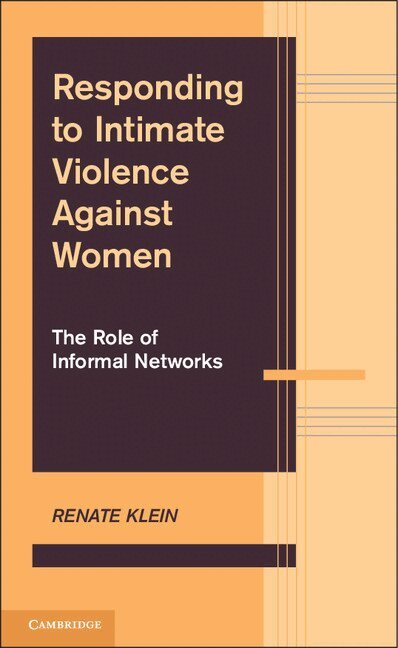
    Responding to Intimate Violence against Women

    The Role of Informal Networks

    AvRenate Klein

    Inbunden, Engelska, 2012

    Del i serien Advances in Personal Relationships

    1 469 kr

    Beställningsvara. Skickas inom 10-15 vardagar. Fri frakt över 249 kr.

    Fler format och utgåvor

    Häftad

    463 kr

    Beskrivning

    Family members, friends, coworkers and neighbors are often the first to know that a woman has been abused by an intimate male partner. What is the proper course of action for those with knowledge of abuse? Using a wide range of empirical data from international sources, Renate Klein documents informal third parties as the first port of call, sources of support and interference, and gatekeepers to formal services. Family and social network members disrupt ongoing assaults, respond to disclosures of abuse and provide solace and practical help. These networks do not always side with victims, however, and may either sympathize with or actively support perpetrators. Klein illuminates the complexities of these contingent situations. Her analysis highlights the potential of informal third parties for effective intervention, demonstrating their significant role in promoting societies free from rape and domestic violence.

    Produktinformation

    • Utgivningsdatum:2012-09-17
    • Mått:140 x 216 x 14 mm
    • Vikt:370 g
    • Format:Inbunden
    • Språk:Engelska
    • Serie:Advances in Personal Relationships
    • Antal sidor:172
    • Förlag:Cambridge University Press
    • ISBN:9780521849852

    Utforska kategorier

    • Genusvetenskap inom Samhälle och politik

    Mer om författaren

    Renate Klein grew up in Germany and studied psychology at the University of Marburg. Since relocating to the United States in the 1990s, Klein has collaborated with international partners on projects related to gender, culture, violence, and violence prevention. She initiated an interdisciplinary network of researchers addressing gender and violence in Europe, which has fostered international collaborations and serves as a forum for constructive debate in this field. Klein has also supported voluntary sector-led research in the United States and England, working as a research consultant for nonprofit organizations in Central Maine.

    Innehållsförteckning

    • 1. Introduction; 2. Lessons from egalitarian societies; 3. Social ties, gender beliefs and the construction of personhood; 4. Disrupting assaults; 5. Responses to disclosure and help-seeking; 6. Collusion with perpetrators; 7. Summary and conclusions; References.