• Fri frakt över 249 kr
  • •
  • Snabba leveranser
  • •
  • Billiga böcker
Kundservice

Du är på sajten för privatpersoner.

Företag, bibliotek eller offentlig verksamhet?

Du handlar på classic.bokus.com, där alla dina funktioner finns intakta.
Till classic.bokus.com
Bokus logotyp. Gå till startsidan.
  • Erbjudanden
  • Nyheter
  • Student
  • Topplistor
  • Barn & ungdom
  • Bokus Play
  • E-böcker
  • Pocketböcker
  • Spel & pussel

10% rabatt på allt med kod: NYSTART10 →

Sidfot

Mina sidor

    Hjälp

    • Kundservice
    • Vanliga frågor och svar
    • Frakt och leverans
    • Retur vid ångerrätt
    • Reklamera vara
    • Betalning
    • Köpvillkor
    • Allmänna villkor
    • Information om webbplatsens tillgänglighet

    Om Bokus

    • Om oss
    • Pressrum
    • För studenter
    • För företag
    • För bibliotek och offentlig verksamhet
    • För leverantörer
    • Hållbarhet

    Populärt

    • Aktuella erbjudanden
    • Presentkort
    • Studentlitteratur
    • Nya böcker
    • Topplistor
    • Signerade böcker
    • Engelska böcker

    Inspiration

    • Boktips
    • BookTok
    • Populära bokserier
    • Barnbokskaraktärer
    • Populära författare
    Logotyp för Bokus
    Följ oss på Facebook (extern länk)Följ oss på Instagram (extern länk)Följ oss på YouTube (extern länk)Följ oss på TikTok (extern länk)
    bokus @ CookiesAnpassa cookiesIntegritetspolicyKöpvillkor
    Till Citymail hemsida (extern länk)Till Budbee hemsida (extern länk)Till Postnord hemsida (extern länk)Till Schenker hemsida (extern länk)Till Early Bird hemsida (extern länk)Till Walleys hemsida (extern länk)
    1. Ekonomi och Ledarskap
    2. Nationalekonomi
    3. Miljöekonomi

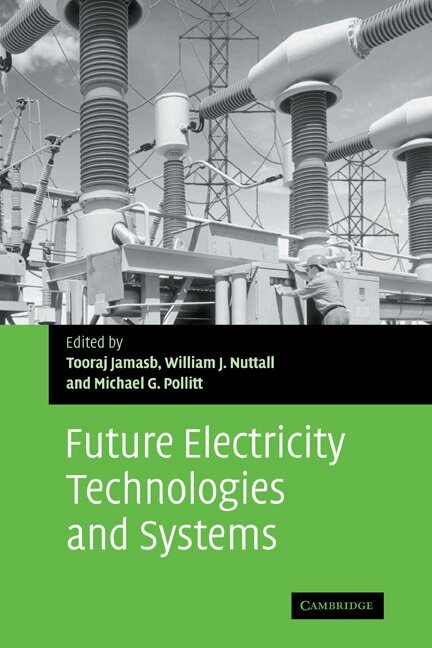
    Future Electricity Technologies and Systems

    AvTooraj Jamasb,William J. Nuttall

    Inbunden, Engelska, 2006

    Del 67 i serien Department of Applied Economics Occasional Papers

    1 181 kr

    Beställningsvara. Skickas inom 10-15 vardagar. Fri frakt över 249 kr.

    Beskrivning

    Where will our electricity come from in the future, and how will we use it? The UK is aiming for a 60% reduction of 1990 carbon dioxide emission levels by 2050, yet the electricity industry and patterns of electricity use must change radically if this is to be achieved. This authoritative overview analyses a range of possible scenarios for the future of electricity in the UK. Specialists in various renewable electricity technologies demonstrate the potential each has to play a significant role. Other routes to a low-carbon electricity system are also considered, including nuclear power, improved power electronics, a wider use of superconducting technology, and micro-generation systems including combined heat and power. The book concludes by examining opportunities for demand side improvements in architecture, industry and transport. Each chapter is written by a technical expert in a manner accessible to readers interested in energy technology, policy and economics.

    Produktinformation

    • Utgivningsdatum:2006-07-20
    • Mått:159 x 236 x 35 mm
    • Vikt:860 g
    • Format:Inbunden
    • Språk:Engelska
    • Serie:Department of Applied Economics Occasional Papers
    • Antal sidor:456
    • Förlag:Cambridge University Press
    • ISBN:9780521860499

    Utforska kategorier

    • Miljöekonomi inom Ekonomi och Ledarskap

    Mer om författaren

    Tooraj Jamasb is Senior Research Associate in the Faculty of Economics, University of Cambridge. William J. Nuttall is Course Director and Senior Lecturer at the Judge Institute of Management, University of Cambridge. Michael G. Pollitt is a senior lecturer in business economics at the Judge Institute of Management, University of Cambridge. He is also Fellow and Director of Studies in Economics and Management at Sidney Sussex College, Cambridge.

    Recensioner i media

    'This is an invaluable source book for the energy technologies that will see us into the second half of the 21st century. Without increasing supplies of clean energy we will languish and stagnate. Only new technology can supply our insatiable demand for energy and fuel economic growth.' Ian Fells CBE FREng FRSE

    Innehållsförteckning

    • Figures; Tables; Notes on contributors; Preface Michael Grubb and Janus Bialek; Acknowledgements; List of abbreviations; 1. New electricity technologies for a sustainable future Tooraj Jamasb, William Nuttall and Michael Pollitt; 2. Electricity network scenarios for the UK in 2050 Ian Elders, Graham Ault, Stuart Galloway, Jim McDonald, Jonathan Köhler, Matthew Leach and Efterpi Lampaditou; 3. Wind power: status and perspectives Poul Erik Morthorst; 4. Solar energy: photovoltaic electricity generation Asim Mumtaz and Gehan Amaratunga; 5. Bioenergy: future prospects for thermal processing of biomass Anthony V. Bridgwater; 6. Wave energy Tom Thorpe and Robin Wallace; 7. CO2 capture, transport and storage for coal, oil and gas: technology overview Nils A. Røkke; 8. Nuclear energy Malcolm C. Grimston; 9. Miniaturisation of the electricity generation industry: issues, technologies and potential Andreas Biermann; 10. Superconductors in the electrical power industry A. M. Campbell; 11. The role of power electronics in future power systems T. C. Green and C. A. Hernández Arámburo; 12. Sustainable hydrogen energy Peter P. Edwards, Vladimir L. Kuznetsov, Simon R. Johnson, Matthew T. J. Lodge and Martin Owen Jones; 13. Electrical energy storage A. J. Ruddell; 14. End-use technologies - main drivers and patterns of future demand: buildings Wolfgang Eichhammer; 15. Industry Lynn Price, Christina Galitsky and Ernst Worrell; 16. Transport Pieter Vermeyen and Ronnie Belmans; 17. Prospects for smart metering in the UK Hannah Devine-Wright and Patrick Devine-Wright.