William J. Nuttall - Böcker
Visar alla böcker från författaren William J. Nuttall. Handla med fri frakt och snabb leverans.
9 produkter
9 produkter
758 kr
Skickas inom 10-15 vardagar
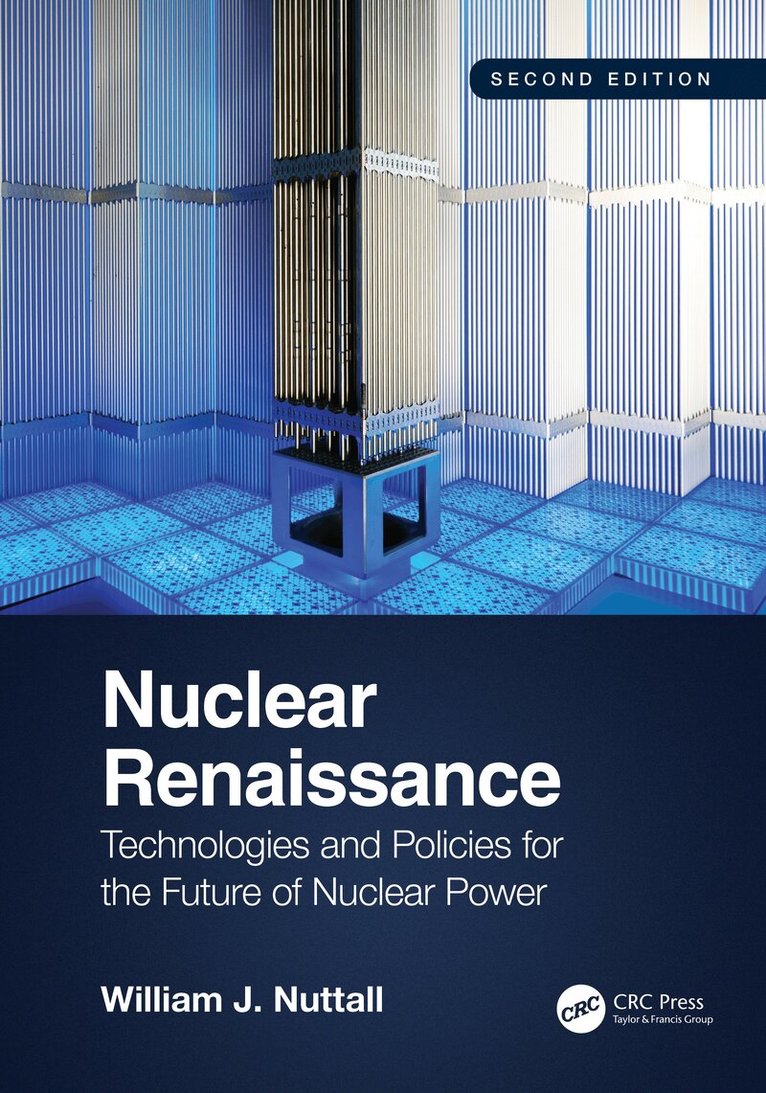
Nuclear power is low carbon and reliable, but in recent years it has struggled to play a strong role in global plans for electricity generation in the 21st century. Many of those involved with nuclear power and environmental agencies see controlled expansion of nuclear plants as the most environmentally friendly way of meeting growing energy demands. In the UK policy makers must recognise concerns around severe accidents and radioactive wastes and balance these against the risks arising from other energy technologies. In addition, energy policy-makers must ensure that energy supplies remain affordable for all in society. How might new nuclear power stations help meet emerging policy needs?This second edition of Nuclear Renaissance: Technologies and Policies for the Future of Nuclear Power continues to examine the future of nuclear power in the contexts of economics, environmental sustainability, and security of electricity supplies. Fully updated with the latest technologies and concerns, this comprehensive guide illustrates the technical challenges and opportunities facing nuclear power. This semi-technical overview of modern technologies meets the growing interest from scientists, environmentalists, and governments in the potential expansion of nuclear power. Various countries are starting to announce plans for new nuclear plants, either to replace those being decommissioned, to provide additional power or to contribute to the decarbonisation of especially challenging industrial activities. In the 2020s many commentators, once again, point to a renaissance just beginning. Nuclear Renaissance: Technologies and Policies for the Future of Nuclear Power is essential reading for physicists, engineers, policy-makers, researchers, energy analysts and graduate students in energy sciences, engineering and public policy.Key features Fully updated throughout, with new content on topics including the latest developments in fission and fusion energy, the global financial crisis of 2008/2009, and the Fukushima-Daiichi nuclear accident. Accessible to readers without a formal education in the area Authored by an authority in the field
Nuclear Renaissance
Technologies and Policies for the Future of Nuclear Power
Inbunden, Engelska, 2022
2 103 kr
Skickas inom 10-15 vardagar
Nuclear power is low carbon and reliable, but in recent years it has struggled to play a strong role in global plans for electricity generation in the 21st century. Many of those involved with nuclear power and environmental agencies see controlled expansion of nuclear plants as the most environmentally friendly way of meeting growing energy demands. In the UK policy makers must recognise concerns around severe accidents and radioactive wastes and balance these against the risks arising from other energy technologies. In addition, energy policy-makers must ensure that energy supplies remain affordable for all in society. How might new nuclear power stations help meet emerging policy needs?This second edition of Nuclear Renaissance: Technologies and Policies for the Future of Nuclear Power continues to examine the future of nuclear power in the contexts of economics, environmental sustainability, and security of electricity supplies. Fully updated with the latest technologies and concerns, this comprehensive guide illustrates the technical challenges and opportunities facing nuclear power. This semi-technical overview of modern technologies meets the growing interest from scientists, environmentalists, and governments in the potential expansion of nuclear power. Various countries are starting to announce plans for new nuclear plants, either to replace those being decommissioned, to provide additional power or to contribute to the decarbonisation of especially challenging industrial activities. In the 2020s many commentators, once again, point to a renaissance just beginning. Nuclear Renaissance: Technologies and Policies for the Future of Nuclear Power is essential reading for physicists, engineers, policy-makers, researchers, energy analysts and graduate students in energy sciences, engineering and public policy.Key features Fully updated throughout, with new content on topics including the latest developments in fission and fusion energy, the global financial crisis of 2008/2009, and the Fukushima-Daiichi nuclear accident. Accessible to readers without a formal education in the area Authored by an authority in the field
Del 67 - Department of Applied Economics Occasional Papers
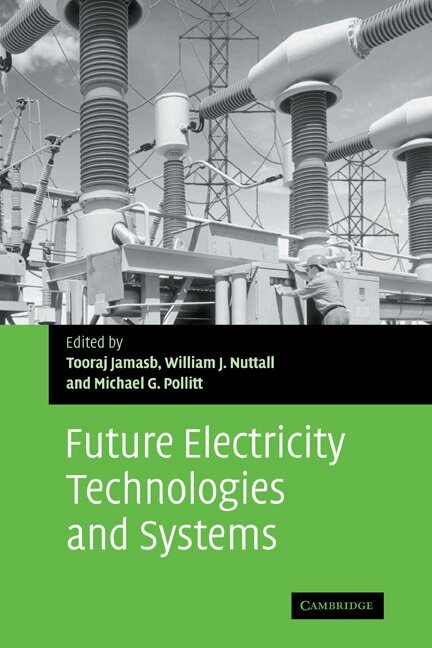
Future Electricity Technologies and Systems
Inbunden, Engelska, 2006
1 074 kr
Skickas inom 7-10 vardagar
Where will our electricity come from in the future, and how will we use it? The UK is aiming for a 60% reduction of 1990 carbon dioxide emission levels by 2050, yet the electricity industry and patterns of electricity use must change radically if this is to be achieved. This authoritative overview analyses a range of possible scenarios for the future of electricity in the UK. Specialists in various renewable electricity technologies demonstrate the potential each has to play a significant role. Other routes to a low-carbon electricity system are also considered, including nuclear power, improved power electronics, a wider use of superconducting technology, and micro-generation systems including combined heat and power. The book concludes by examining opportunities for demand side improvements in architecture, industry and transport. Each chapter is written by a technical expert in a manner accessible to readers interested in energy technology, policy and economics.
1 153 kr
Skickas inom 7-10 vardagar
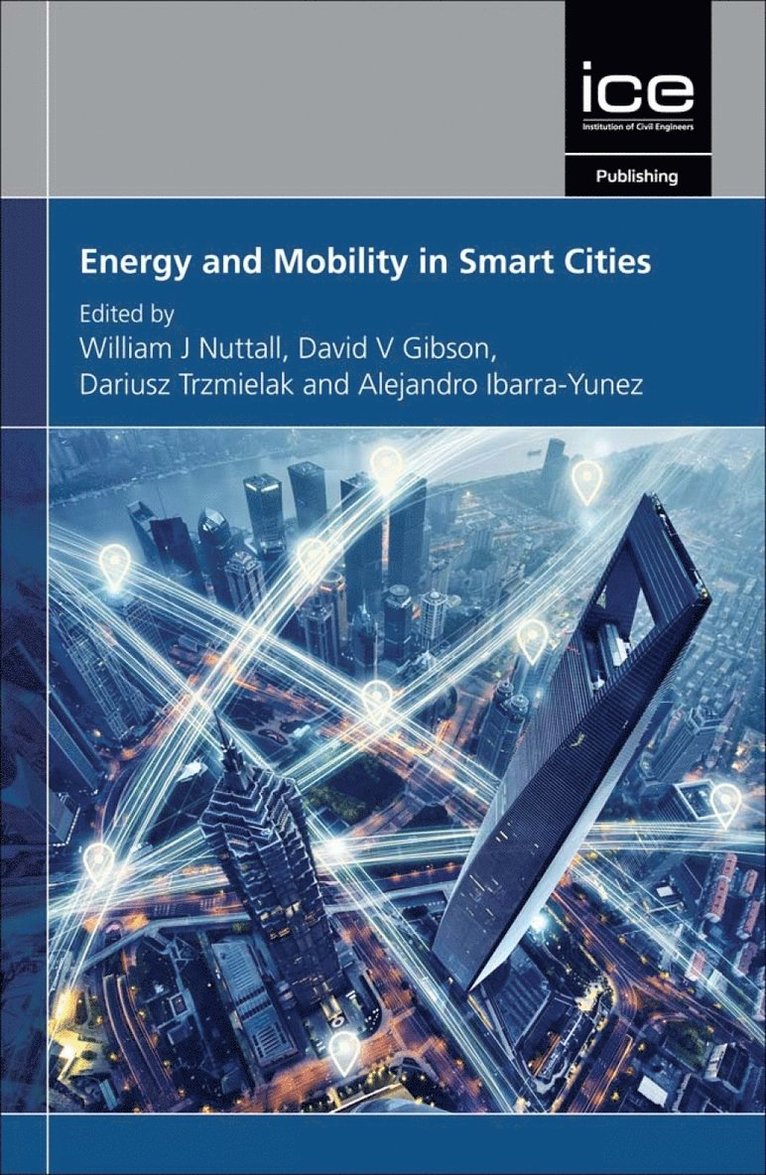
Energy and Mobility in Smart Cities brings together a collection of expert perspectives focusing on key themes underlying successful smart city developments. With a particular emphasis on developments relating to energy and mobility, the book provides a far-reaching analysis of key drivers of innovation. It explores potential opportunities and challenges associated with the rise of digital infrastructure and smart cities technology.The book is divided into four parts. Part 1 covers the changing nature of communities in the digital age, while Part 2 looks at mobility in smart cities, including the development of autonomous smart vehicles, and key innovations in logistics and transport. Part 3 focuses on energy and covers electricity markets in transition economies as well as the role of renewable energy in future smart energy systems. Part 4, on governance, examines political issues shaping the smart future, and principles of sustainable development, inclusivity and transparency in smart city development. Together, the chapters emphasise the importance of engineers working across disciplinary boundaries and recommend adopting an integrated approach for successful smart city development.Energy and Mobility in Smart Cities will be essential reading for researchers and postgraduate students. Also it will be a useful tool for consultants, senior-level engineers, city planners, government officials and policy makers.
749 kr
Skickas inom 7-10 vardagar
The move towards sustainable energy production and use is one the most challenging and profound changes currently taking place in the world's established and emerging economies. Energy and Innovation: Structural Change and Policy Implications presents a series of informative case studies from Norway, the United Kingdom, Poland, the United States, Russia, Japan, and China that demonstrate how the pace of sustainable energy production differs by country. This variability is examined under three section headings: Part 1 - Sustainable Energy Challenges and Policies; Part 2 - Innovation Challenges in Different Economic Contexts; and, Part 3 - The Adoption of Energy Solutions by Different Technology and Organization Sectors. Part 1 examines the challenges of increasing sustainable energy production. The main themes include differences between countries in the European Union concerning energy consumption, energy security, smart metering, and resistance to change. Part 2 presents challenges to innovation in different economic systems. The authors contrast developed European and North American systems with emerging economies such as that of China. Their focus is on improving the innovation capabilities of firms and organizations through enhanced access to knowledge. Solutions include corporate collaborations with the academic sector and access to investment capital. Part 3 surveys the range of industry sectors that are adopting environmentally-friendly solutions. There is a special focus on start-up companies that are working to bring new energy-production technologies to the market.
2 185 kr
Skickas inom 7-10 vardagar
In economic, technical and political terms, the security of energy supply is of the utmost importance for Europe. Alongside competition and sustainability, supply security represents a cornerstone of the EU's energy policy, and in times of rising geopolitical conflict plays an increasingly important role in its external relation. Within this context, the contributors analyse and explore the natural gas, nuclear, and hydrogen energy sectors, which will be of critical significance for the future of energy supplies in EuropeThe book opens with an extensive exploration of the very definition of `supply security' and moves beyond sector-specific debates to highlight the political sensitivity surrounding energy security. The expert contributors apply a policy perspective, underpinned by theoretical discussion, to economic analysis in order to yield policy-relevant conclusions. They illustrate that the EU lacks a coherent transnational energy policy, that national energy policies fail to match EU goals and that, ultimately, sustainable energy policies, more competition, and better regulation will improve global welfareAcademics and EU policymakers- both at national and international levels-will find that the topical policy recommendations, extensive overview of supply security, and detailed perspectives on the natural gas, nuclear and hydrogen sectors presented herewith constitute an invaluable reference and recearch tool
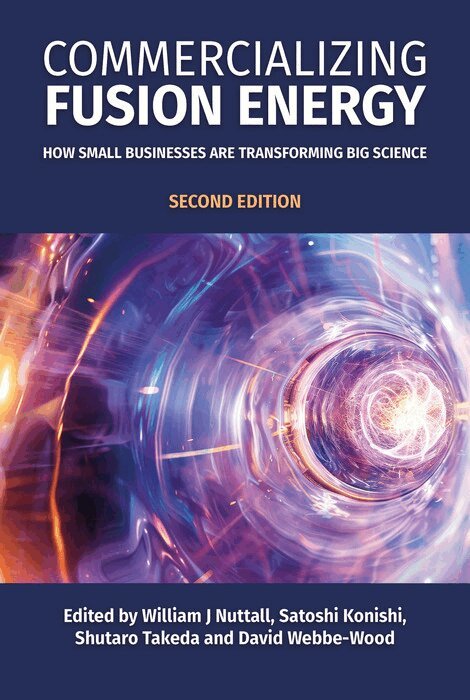
Commercializing Fusion Energy
How Small Businesses are Transforming Big Science
Häftad, Engelska, 2025
414 kr
Skickas
Fusion energy has now emerged as one of the most disruptive technology opportunities, attracting the attention of risk-tolerant investors and large amounts of private capital. This book examines the emergence of nuclear fusion technology as a commercial proposition, grounded in both technological opportunities and high-technology business development. The book introduces a broad range of possible commercial fusion technologies and various pathways to commercialization are described.While the prospect of grid-scale fusion electricity is a major motivator, it is not the only, nor the easiest, path to first commercialization. Reflecting the background of the editorial team, the book has a particular focus on developments in Japan and the UK – two leading fusion nations. A such, it gives weight to developments in these two countries at the forefront of fusion innovation but the book has a global outlook and developments elsewhere, especially in the United States, are also considered.The scientific and technical basis of fusion is introduced sufficient to appreciate the range of innovation in the sector and to illustrate why fusion is attracting billions of dollars of private sector investment. The relationship of private sector firms to state-funded research laboratories is discussed as both help drive the technology forward to deployment.Various business models for fusion technology are explored, from the monetization of fast fusion neutrons through to the generation of baseload grid-scale electricity. The book helps the reader appreciate the diversity of fusion innovation and hence separate the hype from the reality.
359 kr
Skickas inom 10-15 vardagar
As the case for Climate Change mitigation becomes ever more pressing, hydrogen has the potential to play a major role in a low-carbon energy future. Hydrogen can drive the vehicles of tomorrow and also heat homes and supply energy to businesses. Much recent discussion in energy policy circles has considered ways in which greatly expanded electrification can meet the demand for low-carbon mobility and heating. Such narratives centre on the widespread use of renewable energy sources with occasionally surplus renewable electricity being used to produce hydrogen, for example by electrolysis. While such developments have a beneficial role to play, this book focuses on an alternative paradigm. This book considers a more evolutionary path involving the continued extraction and use of fossil fuels, most notably natural gas, but in ways that greatly reduce greenhouse gas emissions. In this way much established industrial capacity and know how might be transitioned to help deliver the low carbonfuture that the world so desperately requires. Presenting up-to-date energy policy recommendations with a focus on hydrogen from fossil fuels, the book will be of considerable interest to policymakers and energy researchers in academia, industry and government labs, while also offering a valuable reference guide for business developers in low-carbon energy, and for oil and gas industry analysts.
433 kr
Skickas inom 10-15 vardagar
This open access book offers a comprehensive exploration of the future of the hydrogen industry. It builds upon insights gathered from a series of expert workshops and follow-on activity. International experts from various fields, including industry, public policy, and academia, engaged in dialogue and knowledge exchange, resulting in invaluable findings and observations.This book builds upon that process to offers an in-depth analysis of the key issues facing commercial hydrogen energy development in the late 2020s. It highlights how hydrogen has the potential to emerge as a major component of the global energy industry, aiding the decarbonization process. Among the important lessons learned, the book discusses how both hydrogen and electrification will both play a significant role in the energy sector, but hydrogen could emerge as the larger energy carrier, and the two developments will largely operate independently of each other.The book also highlights the significance of industrial infrastructure such as ports, pipelines, hubs, and clusters in scaling up hydrogen use. Finally, the book considers the importance of hydrogen purity for future applications and acknowledges the potential for geologically sourced hydrogen to be a vital component of supply in the future.