• Fri frakt över 249 kr
  • •
  • Snabba leveranser
  • •
  • Billiga böcker
Kundservice

Du är på sajten för privatpersoner.

Företag, bibliotek eller offentlig verksamhet?

Du handlar på classic.bokus.com, där alla dina funktioner finns intakta.
Till classic.bokus.com
Bokus logotyp. Gå till startsidan.
  • Erbjudanden
  • Nyheter
  • Student
  • Topplistor
  • Barn & ungdom
  • Bokus Play
  • E-böcker
  • Pocketböcker
  • Spel & pussel

10% rabatt på allt med kod NYSTART10 →

Sidfot

Mina sidor

    Hjälp

    • Kundservice
    • Vanliga frågor och svar
    • Frakt och leverans
    • Retur vid ångerrätt
    • Reklamera vara
    • Betalning
    • Köpvillkor
    • Allmänna villkor
    • Information om webbplatsens tillgänglighet

    Om Bokus

    • Om oss
    • Pressrum
    • För studenter
    • För företag
    • För bibliotek och offentlig verksamhet
    • För leverantörer
    • Hållbarhet

    Populärt

    • Aktuella erbjudanden
    • Presentkort
    • Studentlitteratur
    • Nya böcker
    • Topplistor
    • Signerade böcker
    • Engelska böcker

    Inspiration

    • Boktips
    • BookTok
    • Populära bokserier
    • Barnbokskaraktärer
    • Populära författare
    Logotyp för Bokus
    Följ oss på Facebook (extern länk)Följ oss på Instagram (extern länk)Följ oss på YouTube (extern länk)Följ oss på TikTok (extern länk)
    bokus @ CookiesAnpassa cookiesIntegritetspolicyKöpvillkor
    Till Citymail hemsida (extern länk)Till Budbee hemsida (extern länk)Till Postnord hemsida (extern länk)Till Schenker hemsida (extern länk)Till Early Bird hemsida (extern länk)Till Walleys hemsida (extern länk)
    1. Naturvetenskap och teknik
    2. Teknik och industri
    3. Maskinteknik och material

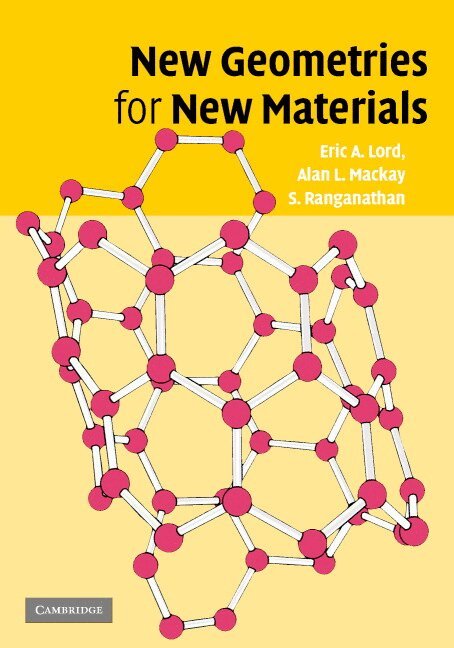
    New Geometries for New Materials

    AvEric A. Lord,Alan L. Mackay

    Inbunden, Engelska, 2006

    1 844 kr

    Beställningsvara. Skickas inom 10-15 vardagar. Fri frakt över 249 kr.

    Fler format och utgåvor

    Häftad

    798 kr

    Beskrivning

    Advances in materials science have given rise to novel materials with unique properties, through the manipulation of structure at the atomic level. Elucidating the shape and form of matter at this scale requires the application of mathematical concepts. This 2006 book presents the geometrical ideas that are being developed and integrated into materials science to provide descriptors and enable visualisation of the atomic arrangements in three-dimensional space. Emphasis is placed on the intuitive understanding of geometrical principles, presented through numerous illustrations. Mathematical complexity is kept to a minimum and only a superficial knowledge of vectors and matrices is required, making this an accessible introduction to the area. With a comprehensive reference list, this book will appeal to those working in crystallography, solid state and materials science.

    Produktinformation

    • Utgivningsdatum:2006-09-21
    • Mått:170 x 244 x 16 mm
    • Vikt:610 g
    • Format:Inbunden
    • Språk:Engelska
    • Antal sidor:258
    • Förlag:Cambridge University Press
    • ISBN:9780521861045

    Utforska kategorier

    • Maskinteknik och material inom Naturvetenskap och teknik

    Mer om författaren

    Dr Eric A. Lord is a Visiting Scientist in the Department of Metallurgy at the Indian Institute of Science. Professor Alan L. Mackay retired in 1991 as Professor Emeritus for the School of Crystallography at the University of London. He continues to pursue several research collaborations and is a Fellow of the Royal Society. Professor S. Ranganathan is an Honorary Professor in the Department of Metallugy at the Indian Institute of Science and has contributed to some 250 papers in scientific journals.

    Recensioner i media

    Review of the hardback: '… gives a well-organised description of the geometries of these materials at a mathematical level which should not be too frightening to any graduate chemist … it will appeal to those working in crystallography, metallurgy, solid state and materials science.' Chemistry World

    Innehållsförteckning

    • 1. Introduction; 2. 2D Tilings; 3. 3D Tilings; 4. Circle and sphere packing; 5. Hierarchical structures; 6. Clusters; 7. Helical and spiral structures; 8. 3D Nets; 9. Triply periodic surfaces; 10. Novel atomic configurations in metallics.