• Fri frakt över 249 kr
  • •
  • Snabba leveranser
  • •
  • Billiga böcker
Kundservice

Du är på sajten för privatpersoner.

Företag, bibliotek eller offentlig verksamhet?

Du handlar på classic.bokus.com, där alla dina funktioner finns intakta.
Till classic.bokus.com
Bokus logotyp. Gå till startsidan.
  • Erbjudanden
  • Nyheter
  • Student
  • Topplistor
  • Barn & ungdom
  • Bokus Play
  • E-böcker
  • Pocketböcker
  • Spel & pussel

10% rabatt på allt med kod: NYSTART10 →

Sidfot

Mina sidor

    Hjälp

    • Kundservice
    • Vanliga frågor och svar
    • Frakt och leverans
    • Retur vid ångerrätt
    • Reklamera vara
    • Betalning
    • Köpvillkor
    • Allmänna villkor
    • Information om webbplatsens tillgänglighet

    Om Bokus

    • Om oss
    • Pressrum
    • För studenter
    • För företag
    • För bibliotek och offentlig verksamhet
    • För leverantörer
    • Hållbarhet

    Populärt

    • Aktuella erbjudanden
    • Presentkort
    • Studentlitteratur
    • Nya böcker
    • Topplistor
    • Signerade böcker
    • Engelska böcker

    Inspiration

    • Boktips
    • BookTok
    • Populära bokserier
    • Barnbokskaraktärer
    • Populära författare
    Logotyp för Bokus
    Följ oss på Facebook (extern länk)Följ oss på Instagram (extern länk)Följ oss på YouTube (extern länk)Följ oss på TikTok (extern länk)
    bokus @ CookiesAnpassa cookiesIntegritetspolicyKöpvillkor
    Till Citymail hemsida (extern länk)Till Budbee hemsida (extern länk)Till Postnord hemsida (extern länk)Till Schenker hemsida (extern länk)Till Early Bird hemsida (extern länk)Till Walleys hemsida (extern länk)
    1. Juridik
    2. Rättsvetenskap

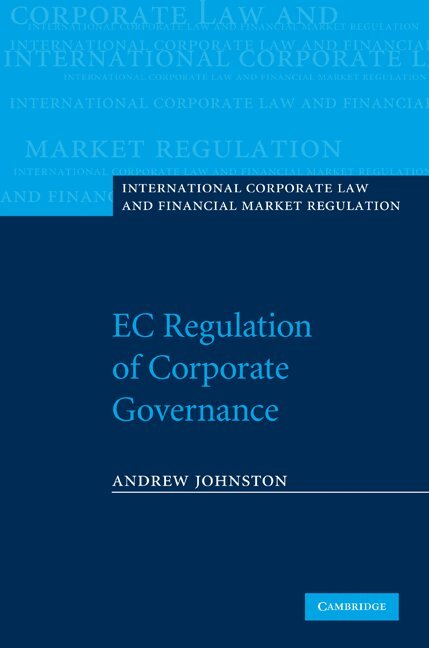
    EC Regulation of Corporate Governance

    AvAndrew Johnston

    Inbunden, Engelska, 2009

    Del i serien International Corporate Law and Financial Market Regulation

    1 142 kr

    Beställningsvara. Skickas inom 10-15 vardagar. Fri frakt över 249 kr.

    Beskrivning

    Andrew Johnston examines EC regulation of national corporate governance systems through the lenses of economic theory and reflexive governance. By contrasting the normative demands of the neoclassical 'agency' model with those of the productive coalition model, he shows how their incompatibility required political compromise. Reflexive governance theory is then used to explain how progress has been possible. Through detailed analysis of both case law and positive regulation, the author highlights the move from positive to negative integration; the benefits as well as the limits of regulatory competition; and the significant role of reflexive techniques in both preventing market failure and enabling positive integration to proceed. The workable compromise that has emerged between market integration and continued regulatory diversity at national level demonstrates that procedural regulation can steer autonomous social subsystems towards greater responsibility and a better articulation of the public good.

    Produktinformation

    • Utgivningsdatum:2009-12-03
    • Mått:155 x 234 x 23 mm
    • Vikt:790 g
    • Format:Inbunden
    • Språk:Engelska
    • Serie:International Corporate Law and Financial Market Regulation
    • Antal sidor:418
    • Förlag:Cambridge University Press
    • ISBN:9780521876674

    Utforska kategorier

    • Rättsvetenskap inom Juridik

    Mer om författaren

    Andrew Johnston is a senior lecturer in the TC Beirne School of Law at the University of Queensland where he teaches and researches corporate law and corporate governance. He is also a research associate at the Centre for Business Research at the University of Cambridge.

    Innehållsförteckning

    • 1. Introduction; Part I. Theories of Corporate Governance: 2. The shareholder value model; 3. The productive coalition model; Part II. Supranational Regulatory Techniques: 4. Harmonisation; 5. Negative integration; 6. Variety and integration: reflexive corporate governance regulation; Part III. EC Regulation of Corporate Governance: 7. The European company statute and the takeover directive; 8. Capital market regulation; 9. 'Labour law' regulation; 10. 'Soft law'; 11. Conclusion: the genius of EC corporate governance regulation.