• Fri frakt över 249 kr
  • •
  • Snabba leveranser
  • •
  • Billiga böcker
Kundservice

Du är på sajten för privatpersoner.

Företag, bibliotek eller offentlig verksamhet?

Du handlar på classic.bokus.com, där alla dina funktioner finns intakta.
Till classic.bokus.com
Bokus logotyp. Gå till startsidan.
  • Erbjudanden
  • Nyheter
  • Student
  • Topplistor
  • Barn & ungdom
  • Bokus Play
  • E-böcker
  • Pocketböcker
  • Spel & pussel

Må bättre, för mindre! Upp till 50% rabatt på hälsoböcker

Sidfot

Mina sidor

    Hjälp

    • Kundservice
    • Vanliga frågor och svar
    • Frakt och leverans
    • Retur vid ångerrätt
    • Reklamera vara
    • Betalning
    • Köpvillkor
    • Allmänna villkor
    • Information om webbplatsens tillgänglighet

    Om Bokus

    • Om oss
    • Pressrum
    • För studenter
    • För företag
    • För bibliotek och offentlig verksamhet
    • För leverantörer
    • Hållbarhet

    Populärt

    • Aktuella erbjudanden
    • Presentkort
    • Studentlitteratur
    • Nya böcker
    • Topplistor
    • Signerade böcker
    • Engelska böcker

    Inspiration

    • Boktips
    • BookTok
    • Populära bokserier
    • Barnbokskaraktärer
    • Populära författare
    Logotyp för Bokus
    Följ oss på Facebook (extern länk)Följ oss på Instagram (extern länk)Följ oss på YouTube (extern länk)Följ oss på TikTok (extern länk)
    bokus @ CookiesAnpassa cookiesIntegritetspolicyKöpvillkor
    Till Citymail hemsida (extern länk)Till Budbee hemsida (extern länk)Till Postnord hemsida (extern länk)Till Schenker hemsida (extern länk)Till Early Bird hemsida (extern länk)Till Walleys hemsida (extern länk)
    1. Historia och arkeologi
    2. Historia
    3. Europas historia

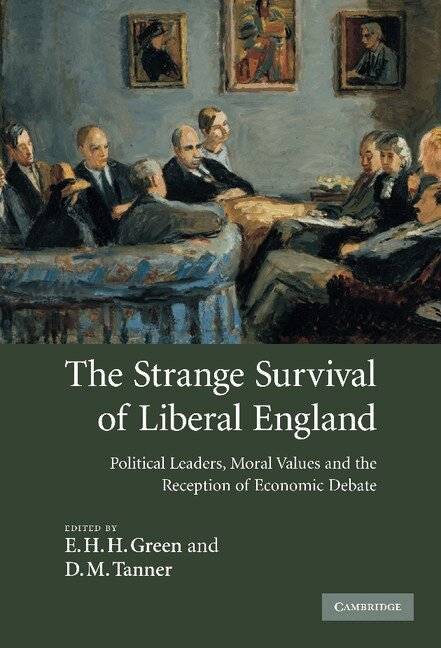
    The Strange Survival of Liberal England

    Political Leaders, Moral Values and the Reception of Economic Debate

    AvE. H. H. Green,D. M. Tanner

    Inbunden, Engelska, 2007

    1 375 kr

    Beställningsvara. Skickas inom 10-15 vardagar. Fri frakt över 249 kr.

    Beskrivning

    It is often assumed that politicians are swept along by global forces and influences, without the power - or the desire - to shape events. By contrast, this book is concerned with the way that cultural values, individual moral sentiments and politicians' interpretation of economic and other imperatives have helped to shape political values. Focusing on the nineteenth and twentieth centuries, and containing contributions by a series of prominent scholars, themes are developed through essays on recognisably important events and figures. Subjects include the policy ideas of W. E. Gladstone, Woodrow Wilson's support for war in 1916 and Ramsay MacDonald's role in the 1931 crisis. Other essays examine the way that Keynesian ideas were understood and used across the party spectrum, and beyond Britain itself, or reflect on the relationship between ideas, values and politics. This volume also celebrates and represents an approach to historical writing which has received little attention from scholars.

    Produktinformation

    • Utgivningsdatum:2007-11-15
    • Mått:152 x 229 x 22 mm
    • Vikt:650 g
    • Format:Inbunden
    • Språk:Engelska
    • Antal sidor:328
    • Förlag:Cambridge University Press
    • ISBN:9780521881678

    Utforska kategorier

    • Europas historia inom Historia och arkeologi

    Mer om författaren

    Ewen Green was a fellow of Magdalen College, Oxford. Duncan Tanner is Professor of History and Director of the Welsh Institute for Social and Cultural Affairs at the University of Wales, Bangor.

    Recensioner i media

    "Strange Survival of Liberal England is a very good read. Like other works of the new political history...it reveals that political history need not be stodgy or dull." -Matthew Hendley, H-Albion

    Innehållsförteckning

    • Abbreviations; Notes on contributors; Introduction Ewen Green and Duncan Tanner; Part I. Economic Ideas and Political Leaders: 1. Utilitarian or neo-Foxite Whig? Robert Lowe as Chancellor of the Exchequer Boyd Hilton; 2. Political economy, the Labour movement and the minimum wage James Thompson; 3. Economic interpretations of war: American liberals and US entry into World War I John A. Thompson; 4. Political leadership, intellectual debate and economic policy during the Second Labour Government 1929–31 Duncan Tanner; Part II. The Use and Abuse of Economic Ideas: Keynes and his Interpreters: 5. The Labour party and Keynes Richard Toye; 6. The Conservative party and Keynes Ewen Green; 7. Keynesian ideas and the recasting of Italian democracy, 1945–53 Eugenio Biagini; Part III. Economic Forces and their Significance: 8. Where did it all go wrong? Cultural critics and 'modernity' in inter-war Britain Stefan Collini; 9. Moral choice and economics: British political economy in the twentieth century Barry Supple.