• Fri frakt över 249 kr
  • •
  • Snabba leveranser
  • •
  • Billiga böcker
Kundservice

Du är på sajten för privatpersoner.

Företag, bibliotek eller offentlig verksamhet?

Du handlar på classic.bokus.com, där alla dina funktioner finns intakta.
Till classic.bokus.com
Bokus logotyp. Gå till startsidan.
  • Erbjudanden
  • Nyheter
  • Student
  • Topplistor
  • Barn & ungdom
  • Bokus Play
  • E-böcker
  • Pocketböcker
  • Spel & pussel

10% rabatt på allt med kod: NYSTART10 →

Sidfot

Mina sidor

    Hjälp

    • Kundservice
    • Vanliga frågor och svar
    • Frakt och leverans
    • Retur vid ångerrätt
    • Reklamera vara
    • Betalning
    • Köpvillkor
    • Allmänna villkor
    • Information om webbplatsens tillgänglighet

    Om Bokus

    • Om oss
    • Pressrum
    • För studenter
    • För företag
    • För bibliotek och offentlig verksamhet
    • För leverantörer
    • Hållbarhet

    Populärt

    • Aktuella erbjudanden
    • Presentkort
    • Studentlitteratur
    • Nya böcker
    • Topplistor
    • Signerade böcker
    • Engelska böcker

    Inspiration

    • Boktips
    • BookTok
    • Populära bokserier
    • Barnbokskaraktärer
    • Populära författare
    Logotyp för Bokus
    Följ oss på Facebook (extern länk)Följ oss på Instagram (extern länk)Följ oss på YouTube (extern länk)Följ oss på TikTok (extern länk)
    bokus @ CookiesAnpassa cookiesIntegritetspolicyKöpvillkor
    Till Citymail hemsida (extern länk)Till Budbee hemsida (extern länk)Till Postnord hemsida (extern länk)Till Schenker hemsida (extern länk)Till Early Bird hemsida (extern länk)Till Walleys hemsida (extern länk)
    1. Naturvetenskap och teknik
    2. Matematik och naturvetenskap
    3. Biologi
    4. Biovetenskap

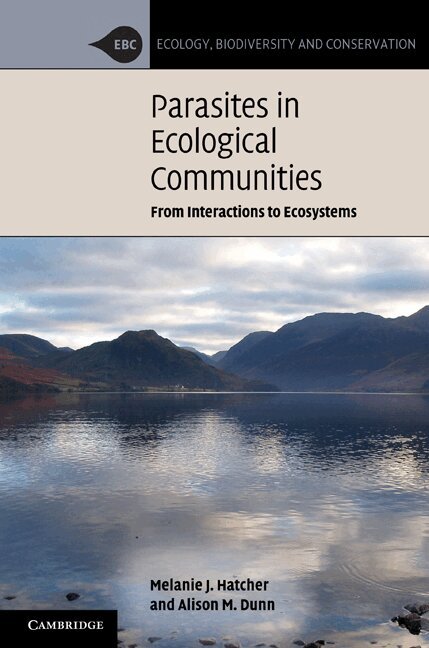
    Parasites in Ecological Communities

    From Interactions to Ecosystems

    AvMelanie J. Hatcher,Alison M. Dunn

    Inbunden, Engelska, 2011

    Del i serien Ecology, Biodiversity and Conservation

    1 227 kr

    Beställningsvara. Skickas inom 10-15 vardagar. Fri frakt över 249 kr.

    Fler format och utgåvor

    Häftad

    802 kr

    Beskrivning

    Interactions between competitors, predators and their prey have traditionally been viewed as the foundation of community structure. Parasites - long ignored in community ecology - are now recognized as playing an important part in influencing species interactions and consequently affecting ecosystem function. Parasitism can interact with other ecological drivers, resulting in both detrimental and beneficial effects on biodiversity and ecosystem health. Species interactions involving parasites are also key to understanding many biological invasions and emerging infectious diseases. This book bridges the gap between community ecology and epidemiology to create a wide-ranging examination of how parasites and pathogens affect all aspects of ecological communities, enabling the new generation of ecologists to include parasites as a key consideration in their studies. This comprehensive guide to a newly emerging field is of relevance to academics, practitioners and graduates in biodiversity, conservation and population management, and animal and human health.

    Produktinformation

    • Utgivningsdatum:2011-06-16
    • Mått:158 x 235 x 26 mm
    • Vikt:850 g
    • Format:Inbunden
    • Språk:Engelska
    • Serie:Ecology, Biodiversity and Conservation
    • Antal sidor:464
    • Förlag:Cambridge University Press
    • ISBN:9780521889704

    Utforska kategorier

    • Biovetenskap inom Naturvetenskap och teknik
    • Biologi inom Naturvetenskap och teknik

    Mer om författaren

    Melanie J. Hatcher is Visiting Research Fellow, School of Biology, University of Bristol, and Senior Research Fellow, Institute of Integrative and Comparative Biology, University of Leeds. Alison M. Dunn is Reader in Evolutionary Biology, Institute of Integrative and Comparative Biology, Faculty of Biological Sciences, University of Leeds.

    Recensioner i media

    'Hatcher and Dunn have done us a great service. Theirs is an important and timely book that should catalyse research at the interface of epidemiology and community ecology. It reads well … is also well referenced … With its nice combination of models and empirical examples, [this book] seems tailor-made for a graduate course in community ecology or ecological parasitology.' Robert Poulin, Ecology

    Innehållsförteckning

    • Part I. Introduction; Part II. Parasites and Competitors: 1. Introduction; 2. One host-one parasite systems; 3. Apparent competition; 4. Parasite-mediated competition; 5. Parasite-modified competition; 6. Examples from conservation and management; 7. Competition between parasites; 8. Conclusions; Part III. Parasites and Predators: 9. Introduction; 10. Parasites of prey with specialist predators; 11. Parasites of prey with generalist predators; 12. Parasites of predator; 13. Parasites of predator and prey; 14. Applications: predator control and harvesting; 15. Conclusions; Part IV. Parasites and Intraguild Predation: 16. Introduction; 17. Ecological significance of IGP; 18. IGP as a unifying framework for competition and predation; 19. Parasites intrinsic to IGP; 20. Parasites extrinsic to IGP; 21. Models of parasitism extrinsic to IGP; 22. IGP and the evolution of host-parasite relationships; 23. Conclusions; Part V. Plant Pathogens and Parasitic Plants: 24. Introduction: parasitism of plants; 25. Soil borne pathogens; 26. Plant defence strategies; 27. Parasitic plants; 28. Endophytes; 29. Conclusions; Part VI. Parasites and Invasions: 30. Introduction; 31. Parasite introduction and acquisition; 32. Loss of parasites by invaders: enemy release; 33. Invasions and host-parasite co-evolution; 34. The impact of parasitism on biological invasion; 35. Conclusions; Part VII. Ecosystem Parasitology: 36. Introduction; 37. Trophic cascades; 38. Parasite dynamics in multihost communities; 39. Biodiversity and disease; 40. Parasites in the food web; 41. Bioenergetic implications of parasitism; 42. Ecosystem engineering; 43. Ecosystem health; 44. Evolutionary considerations; 45. Conclusions; Part VIII. Emerging Diseases in Humans and Wildlife: 46. Introduction; 47. The process of disease emergence; 48. The evolution of emergence; 49. Phylogenetic and temporal patterns of emergence; 50. Environmental change and emergence; 51. Conservation and control; 52. Conclusions; Part IX. Where Do We Go From Here?; References; Index.