• Fri frakt över 249 kr
  • •
  • Snabba leveranser
  • •
  • Billiga böcker
Kundservice

Du är på sajten för privatpersoner.

Företag, bibliotek eller offentlig verksamhet?

Du handlar på classic.bokus.com, där alla dina funktioner finns intakta.
Till classic.bokus.com
Bokus logotyp. Gå till startsidan.
  • Erbjudanden
  • Nyheter
  • Student
  • Topplistor
  • Barn & ungdom
  • Bokus Play
  • E-böcker
  • Pocketböcker
  • Spel & pussel

10% rabatt på allt med kod NYSTART10 →

Sidfot

Mina sidor

    Hjälp

    • Kundservice
    • Vanliga frågor och svar
    • Frakt och leverans
    • Retur vid ångerrätt
    • Reklamera vara
    • Betalning
    • Köpvillkor
    • Allmänna villkor
    • Information om webbplatsens tillgänglighet

    Om Bokus

    • Om oss
    • Pressrum
    • För studenter
    • För företag
    • För bibliotek och offentlig verksamhet
    • För leverantörer
    • Hållbarhet

    Populärt

    • Aktuella erbjudanden
    • Presentkort
    • Studentlitteratur
    • Nya böcker
    • Topplistor
    • Signerade böcker
    • Engelska böcker

    Inspiration

    • Boktips
    • BookTok
    • Populära bokserier
    • Barnbokskaraktärer
    • Populära författare
    Logotyp för Bokus
    Följ oss på Facebook (extern länk)Följ oss på Instagram (extern länk)Följ oss på YouTube (extern länk)Följ oss på TikTok (extern länk)
    bokus @ CookiesAnpassa cookiesIntegritetspolicyKöpvillkor
    Till Citymail hemsida (extern länk)Till Budbee hemsida (extern länk)Till Postnord hemsida (extern länk)Till Schenker hemsida (extern länk)Till Early Bird hemsida (extern länk)Till Walleys hemsida (extern länk)
    1. Filosofi och religion
    2. Religion och tro
    3. Religion: allmänt

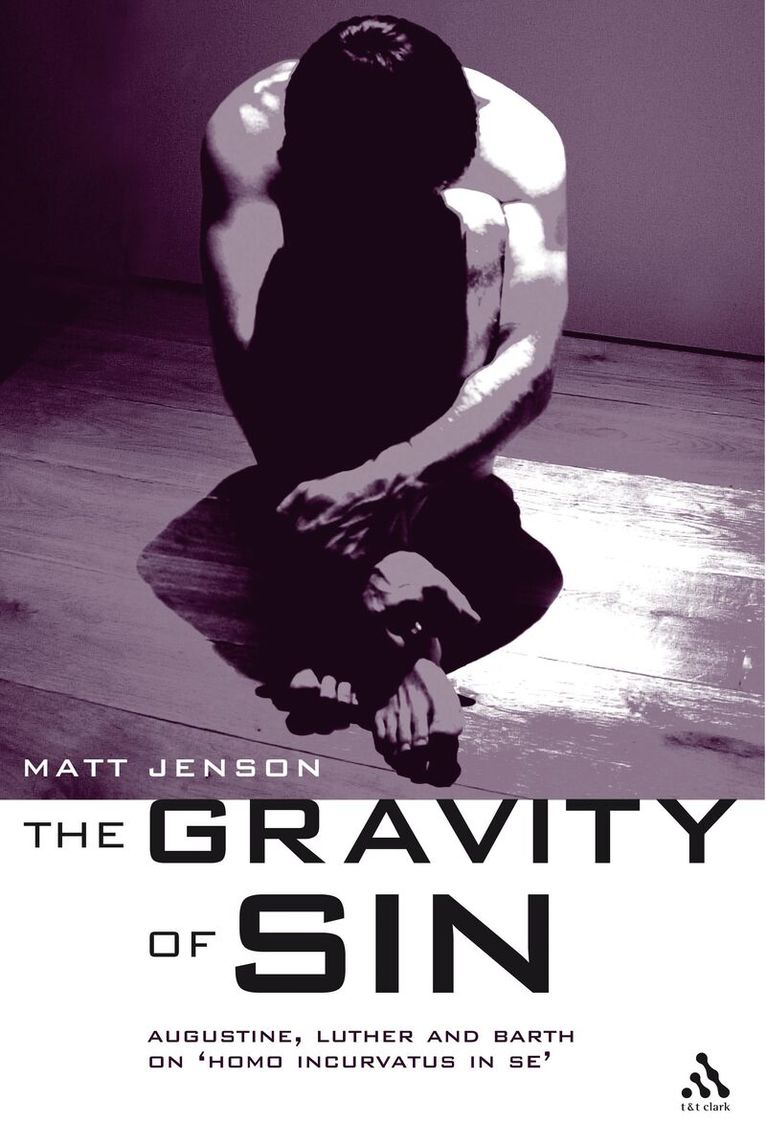
    Gravity of Sin

    Augustine, Luther and Barth on 'homo incurvatus in se'

    AvMatt Jenson

    Häftad, Engelska, 2007

    909 kr

    Beställningsvara. Skickas inom 10-15 vardagar. Fri frakt över 249 kr.

    Fler format och utgåvor

    E-bok

    981 kr

    Beskrivning

    This book looks at the influential metaphor of describing sin as 'homo incurvatus in se' (humanity being curved in on oneself) from its origins in Augustine to Luther, Barth and Feminist theology. Matt Jenson argues that the image of being 'curved in on oneself' is the best paradigm for understanding sin relationally, that it has sufficient explanatory breadth and depth to be of service to contemporary Christian theology. He looks to Augustine as the Christian source for this image in his various references to humanity's turn to itself, though the threads of a relational account of sin are not drawn together with any systematic consequence until Martin Luther's description of 'homo incurvatus in se' in his commentary on "Romans". Luther radicalizes Augustine's conception by applying this relational view of sin to the totus homo and by emphasizing its appearance, above all, in homo religiosus. The Western tradition of sin understood paradigmatically as pride has been recently called into question by feminist theologians. Daphne Hampson's critique of Luther on this front is considered and critiqued.Though she is right to call attention to the insufficiency of his and Augustine's myopic focus on pride, the question remains whether 'incurvatus in se' can operate paradigmatically as an umbrella concept covering a far wider range of sins. Karl Barth's extension of 'incurvatus in se' to apply more broadly to pride, sloth and falsehood suggests that incurvature can do just that.

    Produktinformation

    • Utgivningsdatum:2007-02-08
    • Mått:156 x 234 x 12 mm
    • Vikt:370 g
    • Format:Häftad
    • Språk:Engelska
    • Antal sidor:224
    • Förlag:Bloomsbury Publishing PLC
    • ISBN:9780567031389

    Utforska kategorier

    • Religion: allmänt inom Filosofi och religion
    • Kristendom inom Filosofi och religion

    Mer om författaren

    Matt Jenson is Assistant Professor of Theology in the Torrey Honors Institute at Biola University, USA.

    Recensioner i media

    'Jenson offers a lively and learned analysis of the theme of sin as introversion and loss of relation; he has a good eye for the place of Christian teaching about sin in the corpus of Christian doctrine, a wide knowledge of modern theology, and a sure touch in exposition and critique. This is an intelligent piece of constructive theology, and it deserves many readers.'   John Webster, Professor of Systematic Theology, King's College, University of Aberdeen

    Innehållsförteckning

    • Introduction; 1. Augustine's inward turn: An ambiguous beginning; Love makes the city; The goodness of the garden; Participation and relationality; Civic foundations; What happened? The beginning of sin; Falsehood; Pride; Isolation; Falling into slavery; The call to humility; Augustine's ambiguous inwardness in The Trinity; A conclusion; 2. Luther's radical and religious invurvature. Setting the task; Simus iustus et peccator; Fuel to the fire: The persistence of the fomes; Copernicux Redux; The logic of person and works; Totus homo? The postures of death and spirit; Incurvatus in se as ignorance: The critique of natural understanding; Using, enjoying: Incurvatus in se as egoism; Homo religiosus as Homo incurvatus in se; The violation of vocation: Transgressing the limits of calling; Conclusion: Augustine versus Luther?; 3. (How) Do women sin? Daphne Hampson and the Feminist critique of Luther; Introduction; Hampson's critique of Luther on sin, incurvatus in se and the self; Hampson's alternative; Transition: Key questions; Problems with a gendered approach to sin; Hampson's account of sin per se and the controlling factor of continuity; On the explanatory sufficiency of incurvatus in se; 4. Broadening the range of the metaphor: Barth's threefold description of sin; Introduction; A brief apology for paradigms; Sin Christologically defined; Humanity through a Christological lens: A closer look; Sin as pride; Sin as falsehood; Sin as sloth; Hampson and Barth: A tale of two sloths; Conclusion; Coda; Select Bibliography.