• Fri frakt över 249 kr
  • •
  • Snabba leveranser
  • •
  • Billiga böcker
Kundservice

Du är på sajten för privatpersoner.

Företag, bibliotek eller offentlig verksamhet?

Du handlar på classic.bokus.com, där alla dina funktioner finns intakta.
Till classic.bokus.com
Bokus logotyp. Gå till startsidan.
  • Erbjudanden
  • Nyheter
  • Student
  • Topplistor
  • Barn & ungdom
  • Bokus Play
  • E-böcker
  • Pocketböcker
  • Spel & pussel

10% rabatt på allt med kod NYSTART10 →

Sidfot

Mina sidor

    Hjälp

    • Kundservice
    • Vanliga frågor och svar
    • Frakt och leverans
    • Retur vid ångerrätt
    • Reklamera vara
    • Betalning
    • Köpvillkor
    • Allmänna villkor
    • Information om webbplatsens tillgänglighet

    Om Bokus

    • Om oss
    • Pressrum
    • För studenter
    • För företag
    • För bibliotek och offentlig verksamhet
    • För leverantörer
    • Hållbarhet

    Populärt

    • Aktuella erbjudanden
    • Presentkort
    • Studentlitteratur
    • Nya böcker
    • Topplistor
    • Signerade böcker
    • Engelska böcker

    Inspiration

    • Boktips
    • BookTok
    • Populära bokserier
    • Barnbokskaraktärer
    • Populära författare
    Logotyp för Bokus
    Följ oss på Facebook (extern länk)Följ oss på Instagram (extern länk)Följ oss på YouTube (extern länk)Följ oss på TikTok (extern länk)
    bokus @ CookiesAnpassa cookiesIntegritetspolicyKöpvillkor
    Till Citymail hemsida (extern länk)Till Budbee hemsida (extern länk)Till Postnord hemsida (extern länk)Till Schenker hemsida (extern länk)Till Early Bird hemsida (extern länk)Till Walleys hemsida (extern länk)
    1. Filosofi och religion
    2. Religion och tro
    3. Religion: allmänt

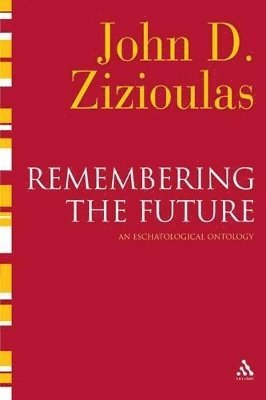
    Remembering the Future

    An Eschatological Ontology

    AvJohn D. Zizioulas

    Inbunden, Engelska, 2025

    1 337 kr

    Kommande

    Fler format och utgåvor

    Häftad

    Kommande

    Inbunden

    829 kr

    Beskrivning

    The predominating concept in theological ontology is that of a protological ontology which defines being itself as being defined by the past. The future of things in this perspective is defined by its origins and the "given" or the "factum". In this major new book John Zizioulas shows that eschatology can have important implications for ontology, i.e. for being itself. The world was created with a purpose and the end which would be greater than the beginning. This is the view of the Fathers, such as Irenaeus and Maximus, who made the end the "cause of all being". The implications of such an idea are revolutionary, both historically and experientially. It represents a reversal of the ancient philosophical idea of causality as well as of our common sense rationality, according to which the cause precedes chronologically as well as logically. It is the opposite of protological ontology, which makes the past decisive for the future. Eschatological ontology, therefore, is about the liberation of being from necessity, it is about the formation of being. Man and the world are no longer imprisoned in their past, in sin, decay and death. The past is ontologically affirmed only in so far as it contributes to the end, to the coming of the kingdom. The eschaton will 'judge' history with this criterion alone. The last judgment as part of the eschaton represents an ontological, not a moral event. Zizioulas shows how this eschatological ontology permeates Christian doctrine, particularly that of creation and ecclesiology. He also points out some of its ethical implications.

    Produktinformation

    • Utgivningsdatum:2025-01-09
    • Mått:156 x 234 x 28 mm
    • Vikt:503 g
    • Format:Inbunden
    • Språk:Engelska
    • Antal sidor:208
    • Förlag:Bloomsbury Publishing PLC
    • ISBN:9780567032348

    Utforska kategorier

    • Religion: allmänt inom Filosofi och religion
    • Kristendom inom Filosofi och religion

    Mer om författaren

    John D. Zizioulas, Metropolitan of Pergamon, was previously Professor of Systematic Theology at the University of Glasgow and Visiting Professor at King's College, London. He is the author of Communion and Otherness (2006), and has been a major Orthodox contributor to modern ecumenical discussion.

    Innehållsförteckning

    • Introduction1. Protological or Eschatological Ontology2. Reversing Causality: Eschatological Ontology in the Fathers3. Eschatological Ontology and Creation4. Eschatological Ontology and the Church5. Eschatological Ontology and Ethics