• Fri frakt över 249 kr
  • •
  • Snabba leveranser
  • •
  • Billiga böcker
Kundservice

Du är på sajten för privatpersoner.

Företag, bibliotek eller offentlig verksamhet?

Du handlar på classic.bokus.com, där alla dina funktioner finns intakta.
Till classic.bokus.com
Bokus logotyp. Gå till startsidan.
  • Erbjudanden
  • Nyheter
  • Student
  • Topplistor
  • Barn & ungdom
  • Bokus Play
  • E-böcker
  • Pocketböcker
  • Spel & pussel

10% rabatt på allt med kod: NYSTART10 →

Sidfot

Mina sidor

    Hjälp

    • Kundservice
    • Vanliga frågor och svar
    • Frakt och leverans
    • Retur vid ångerrätt
    • Reklamera vara
    • Betalning
    • Köpvillkor
    • Allmänna villkor
    • Information om webbplatsens tillgänglighet

    Om Bokus

    • Om oss
    • Pressrum
    • För studenter
    • För företag
    • För bibliotek och offentlig verksamhet
    • För leverantörer
    • Hållbarhet

    Populärt

    • Aktuella erbjudanden
    • Presentkort
    • Studentlitteratur
    • Nya böcker
    • Topplistor
    • Signerade böcker
    • Engelska böcker

    Inspiration

    • Boktips
    • BookTok
    • Populära bokserier
    • Barnbokskaraktärer
    • Populära författare
    Logotyp för Bokus
    Följ oss på Facebook (extern länk)Följ oss på Instagram (extern länk)Följ oss på YouTube (extern länk)Följ oss på TikTok (extern länk)
    bokus @ CookiesAnpassa cookiesIntegritetspolicyKöpvillkor
    Till Citymail hemsida (extern länk)Till Budbee hemsida (extern länk)Till Postnord hemsida (extern länk)Till Schenker hemsida (extern länk)Till Early Bird hemsida (extern länk)Till Walleys hemsida (extern länk)
    1. Filosofi och religion
    2. Religion och tro
    3. Religion: allmänt

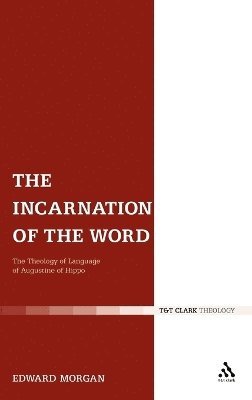
    Incarnation of the Word

    The Theology of Language of Augustine of Hippo

    AvEdward Morgan

    Inbunden, Engelska, 2010

    2 088 kr

    Beställningsvara. Skickas inom 10-15 vardagar. Fri frakt över 249 kr.

    Fler format och utgåvor

    E-bok

    604 kr

    Häftad

    562 kr

    Beskrivning

    An exploration of three of Augustine's central texts, the De Trinitate, the De Doctrina Christiana, and the Confessions elucidate the principles of Augustine's theology of language. This is done in a systematic manner, which previous scholarship on Augustine has lacked. Augustine's principles are revealed through a close reading of these three core texts. Beginning with the De Trinitate, the book demonstrates that Augustine's inquiry into the character of the human person is incomplete. For Augustine, there is a void without reference to the category of human speech, the very thing that enables him to communicate his theological inquiry into God and the human person in the De Trinitate. From here, the book examines a central work of Augustine that deals with the significance of divine and human speech, the De Doctrina Christiana. It expounds this text carefully, showing three chief facets of Augustinian thought about divine and human communication: human social relations; human self-interpretation using scripture; and preaching, the public communication of God's word. It accepts the De Doctrina Christiana as laying theoretical foundations for Augustine's understanding of the task of theology and language's meaning and centrality within it. The book then moves to Augustine's Confessions to see the principles of Augustine's theology of language enacted within its first nine books. Augustine's conversion narrative is analysed as a literary demonstration of Augustine's description of human identity before God, showing how speech and human social relations centrally mediate God's relationship to humanity. For Augustine, human identity properly speaking is 'confessional'. The book returns to the De Trinitate to complete its analysis of that text using the principles of the theology of language uncovered in the De Doctrina Christiana and the Confessions. It shows that the first seven books of that text, and its core structure, move around the principles of the theology of language that the investigation has uncovered. To this extent, theological inquiry for Augustine - the human task of looking for God - is bound up primarily within the act of human speech and the social relations it helps to compose. The book closes with reflection on the significance of these findings for Augustinian scholarship and theological research more generally.

    Produktinformation

    • Utgivningsdatum:2010-04-01
    • Mått:156 x 234 x 16 mm
    • Vikt:463 g
    • Format:Inbunden
    • Språk:Engelska
    • Antal sidor:208
    • Förlag:Bloomsbury Publishing PLC
    • ISBN:9780567033826

    Utforska kategorier

    • Religion: allmänt inom Filosofi och religion
    • Kristendom inom Filosofi och religion

    Mer om författaren

    Edward Morgan (MPhil., PhD. (Cantab.)) is Research Associate at the Centre for Early Christian Studies, Australian Catholic University; and tutor in philosophy at the same institution.

    Recensioner i media

    Morgan's writing is lucid; his arguments clear, succinct, and persuasive. His intended audience is already familiar with Augustine's works under investigation... theologians reflecting on the theology of language will find this monograph useful. Recommended for seminary and major university libraries.

    Innehållsförteckning

    • IntroductionChapter 1 - The problem of language in the De Trinitate1.1 Beginning at the end: the significance of Book 15 of the De Trinitate1.2 God and the ultimate difference between creation and Creator1.3 The Incarnation of the Word: the analogy between divine and human speech1.4 Language in the De Trinitate: the tool of transformation and its relationship to the mindChapter 2 - De Doctrina Christiana Book 1: God, speech and ethics2.1 De Doctrina Christiana Preface and Book 1: the mechanics of theological speechian mind.2.2 Things and signs: the possibility of speech about God2.3 Speech theory continued: the Word becomes flesh2.4 Uti/frui: use, enjoyment and sociality articulated 2.5 Conclusion Chapter 3 - De Doctrina Christiana Books 2 and 3: Learning to Read 3.1 Scripture and the task of 'self-reading': the transformative capacity of the written word3.2. Signs and things: words and their relationship to thought3.3. The pathway to wisdom: seven steps to God3.4 Signs and things: meaning, interpretation and eschatology3.5 Cupiditas and caritas: a transformative dialogue3.6. Cupiditas: the problem to be resolved3.7. Caritas and cupiditas: the continuity between inner and outer Augustinian being 3.8: Conclusion Chapter 4 - De Doctrina Christiana Book 4: The Importance and Character of Public Speech 4.1 Form and content: Augustinian theological anthropology4.2. Community and text: the priority of the spoken word4.3 Speech and Christian community: a dialogical relationship Chapter 5 - Confessions: Sociality, speech and Christian identity5.1. Confessional identity: the meaning of a text5.2 The Manichees and Ambrose: a search for linguistic resolution