• Fri frakt över 249 kr
  • •
  • Snabba leveranser
  • •
  • Billiga böcker
Kundservice

Du är på sajten för privatpersoner.

Företag, bibliotek eller offentlig verksamhet?

Du handlar på classic.bokus.com, där alla dina funktioner finns intakta.
Till classic.bokus.com
Bokus logotyp. Gå till startsidan.
  • Erbjudanden
  • Nyheter
  • Student
  • Topplistor
  • Barn & ungdom
  • Bokus Play
  • E-böcker
  • Pocketböcker
  • Spel & pussel

10% rabatt på allt med kod: NYSTART10 →

Sidfot

Mina sidor

    Hjälp

    • Kundservice
    • Vanliga frågor och svar
    • Frakt och leverans
    • Retur vid ångerrätt
    • Reklamera vara
    • Betalning
    • Köpvillkor
    • Allmänna villkor
    • Information om webbplatsens tillgänglighet

    Om Bokus

    • Om oss
    • Pressrum
    • För studenter
    • För företag
    • För bibliotek och offentlig verksamhet
    • För leverantörer
    • Hållbarhet

    Populärt

    • Aktuella erbjudanden
    • Presentkort
    • Studentlitteratur
    • Nya böcker
    • Topplistor
    • Signerade böcker
    • Engelska böcker

    Inspiration

    • Boktips
    • BookTok
    • Populära bokserier
    • Barnbokskaraktärer
    • Populära författare
    Logotyp för Bokus
    Följ oss på Facebook (extern länk)Följ oss på Instagram (extern länk)Följ oss på YouTube (extern länk)Följ oss på TikTok (extern länk)
    bokus @ CookiesAnpassa cookiesIntegritetspolicyKöpvillkor
    Till Citymail hemsida (extern länk)Till Budbee hemsida (extern länk)Till Postnord hemsida (extern länk)Till Schenker hemsida (extern länk)Till Early Bird hemsida (extern länk)Till Walleys hemsida (extern länk)
    1. Filosofi och religion
    2. Religion och tro
    3. Religion: allmänt

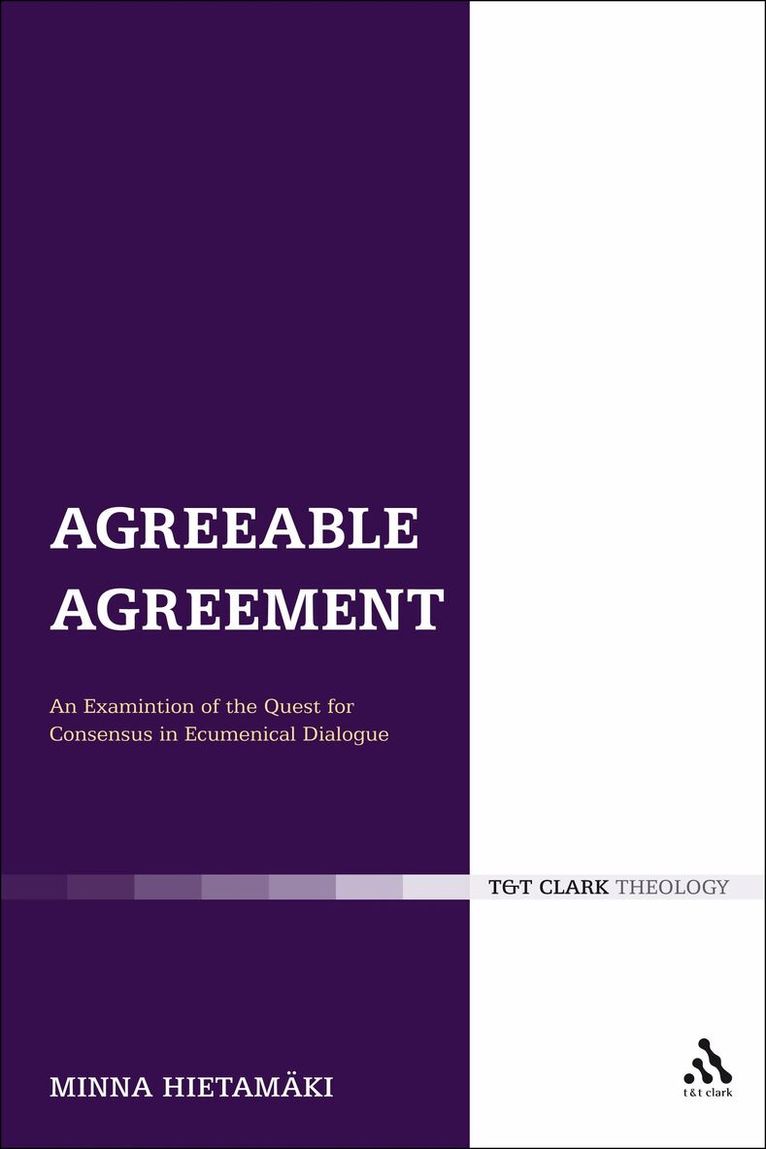
    Agreeable Agreement

    An Examination of the Quest for Consensus in Ecumenical Dialogue

    AvMinna Hietamäki

    Häftad, Engelska, 2011

    Del i serien Ecclesiological Investigations

    548 kr

    Beställningsvara. Skickas inom 10-15 vardagar. Fri frakt över 249 kr.

    Fler format och utgåvor

    E-bok

    590 kr

    E-bok

    589 kr

    Inbunden

    2 227 kr

    Beskrivning

    In recent bilateral ecumenical dialogue the aim of the dialogue has been to reach some form of doctrinal consensus. The three major chapters of the book discuss the variety of forms of doctrinal consensus found in ecumenical dialogues among Anglicans, Lutherans and Roman Catholics. In general, the dialogue documents argue for agreement/consensus based on commonality or compatibility. Each of the three dialogue processes has specific characteristics and formulates its argument in a unique way. The Lutheran-Roman Catholic dialogue has a particular interest in hermeneutical questions and proposes various forms of "differentiated" or perspectival forms of consensus. The Anglican-Roman Catholic dialogue emphasises the correctness of interpretations. The documents consciously look towards a "common future", not the separated past.

    Produktinformation

    • Utgivningsdatum:2011-10-20
    • Mått:156 x 234 x 15 mm
    • Vikt:406 g
    • Format:Häftad
    • Språk:Engelska
    • Serie:Ecclesiological Investigations
    • Antal sidor:272
    • Förlag:Bloomsbury Publishing PLC
    • ISBN:9780567232595

    Utforska kategorier

    • Religion: allmänt inom Filosofi och religion
    • Kristendom inom Filosofi och religion

    Mer om författaren

    Introduction; 1. Consensus as an Ecumenical Challenge: Scope of the Concept and Relevance of the Study; 2. Sources: Documents from Bilateral Dialogues; 3. The Context and Scope of the Study; II Lutheran-Roman Catholic Dialogue; 4. International Dialogue; 5. National Dialogues: North America, Germany; 6. Consensus with Difference; III. Anglican-Roman Catholic Dialogue; 7. International Dialogue ARCIC; IV. Anglican-Lutheran Dialogue; 8. International Dialogue; 9. Episcopal-Lutheran Dialogue in the USA; 10. Regional Dialogues: MeiBen Statement, Porvoo Statement; V. The Possibility of Consensuc: A Synthesis; 11. Harvesting the Results: Consensus in Bilateral Dialogue; 12. Consensus: An Unattainable Ideal or a Reachable Goal? The Continuing Debate; Conclusion; Bibliography.

    Recensioner i media

    'Minna Hietamaki provides a solid analysis of the ecumenical dialogues between Anglicans, Catholics and Lutherans, connecting it with the ongoing critical discussion on the value of the so-called "consensus ecumenism". While most ecumenical theologians are strong either in theological theory or ecclesial practice, Hietamaki masters both fields. She defends consensus ecumenism but considers that the arguments of its critics should be taken very seriously. Her work deserves, therefore, to be read by all parties involved in current ecumenism and systematic theology.' - Risto Saarinen, University of Helsinki, Finland. Risto Saarinen 'In her remarkable first book, Faith and Order Commissioner Dr Minna Hietamaki poses serious yet timely challenges to the churches and their theologians engaged in ecumenical dialogue. By her analysis of the current (and at times uncritical) uses of the word "consensus" and associated terms such as agreement, convergence, consonance, and the (con)sensus fidelium, Dr Hietamaki offers profound yet realistic insights into the nature and purpose ecumenical dialogue and consensus ecumenism. As such, I consider her book to be a "prequel" to recent work on Ecumenical Reception. Her insights into the tripartite dialogues between Lutherans, Anglicans, and Roman Catholics are applicable to any bilateral dialogue, as well as to multilateral forum of Faith and Order.' - John Gibaut, Director of Faith and Order, World Council of Churches, Geneva, Switzerland John Gibaut 'In her very informative and challenging study, Hietamaki brings together for the first time on the one hand a thorough analysis of three long-time bilateral dialogues asking how they understand "Consensus" or "agreement" and how they attempt to achieve them, and, on the other hand, an analysis of theoretical reflections on 'Consensus" in contemporary philosophy and theology. Thus she is able to raise important questions in a fresh way, to identify weaknesses and strengths, conceptual and methodological shortcomings or achievements in particular approaches. Ecumenical theology and work should take this study seriously, even if one does not agree with all of its findings.' - Theodor Dieter, Institute for Ecumenical Research, Strasbourg, France Theodor Dieter

    Innehållsförteckning

    • Introduction1. Consensus as an Ecumenical Challenge: Scope of the Concept and Relevance of the Study2. Sources: Documents from Bilateral Dialogues3. The Context and Scope of the StudyII Lutheran-Roman Catholic Dialogue4. International Dialogue5. National Dialogues: North America, Germany6. Consensus with DifferenceIII. Anglican-Roman Catholic Dialogue7. International Dialogue ARCICIV. Anglican-Lutheran Dialogue8. International Dialogue 9. Episcopal-Lutheran Dialogue in the USA10. Regional Dialogues: Meißen Statement, Porvoo StatementV. The Possibility of Consensuc: A Synthesis11. Harvesting the Results: Consensus in Bilateral Dialogue12. Consensus: An Unattainable Ideal or a Reachable Goal? The Continuing DebateConclusionBibliography