• Fri frakt över 249 kr
  • •
  • Snabba leveranser
  • •
  • Billiga böcker
Kundservice

Du är på sajten för privatpersoner.

Företag, bibliotek eller offentlig verksamhet?

Du handlar på classic.bokus.com, där alla dina funktioner finns intakta.
Till classic.bokus.com
Bokus logotyp. Gå till startsidan.
  • Erbjudanden
  • Nyheter
  • Student
  • Topplistor
  • Barn & ungdom
  • Bokus Play
  • E-böcker
  • Pocketböcker
  • Spel & pussel

10% rabatt på allt med kod: NYSTART10 →

Sidfot

Mina sidor

    Hjälp

    • Kundservice
    • Vanliga frågor och svar
    • Frakt och leverans
    • Retur vid ångerrätt
    • Reklamera vara
    • Betalning
    • Köpvillkor
    • Allmänna villkor
    • Information om webbplatsens tillgänglighet

    Om Bokus

    • Om oss
    • Pressrum
    • För studenter
    • För företag
    • För bibliotek och offentlig verksamhet
    • För leverantörer
    • Hållbarhet

    Populärt

    • Aktuella erbjudanden
    • Presentkort
    • Studentlitteratur
    • Nya böcker
    • Topplistor
    • Signerade böcker
    • Engelska böcker

    Inspiration

    • Boktips
    • BookTok
    • Populära bokserier
    • Barnbokskaraktärer
    • Populära författare
    Logotyp för Bokus
    Följ oss på Facebook (extern länk)Följ oss på Instagram (extern länk)Följ oss på YouTube (extern länk)Följ oss på TikTok (extern länk)
    bokus @ CookiesAnpassa cookiesIntegritetspolicyKöpvillkor
    Till Citymail hemsida (extern länk)Till Budbee hemsida (extern länk)Till Postnord hemsida (extern länk)Till Schenker hemsida (extern länk)Till Early Bird hemsida (extern länk)Till Walleys hemsida (extern länk)
    1. Filosofi och religion
    2. Religion och tro
    3. Religion: allmänt

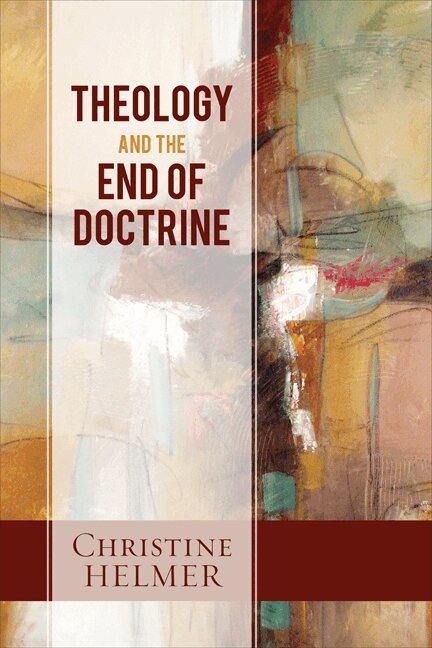
    Theology and the End of Doctrine

    AvChristine Helmer

    Häftad, Engelska, 2014

    413 kr

    Beställningsvara. Skickas inom 3-6 vardagar. Fri frakt över 249 kr.

    Fler format och utgåvor

    E-bok

    463 kr

    Beskrivning

    This book is about the crisis brought about by doctrine's estrangement from reality--that is from actual lives, experiences, histories, and from God. By invoking "the end of doctrine," Christine Helmer opens a new discussion of doctrinal production that is engaged with the challenges and possibilities of modernity. The end of doctrine refers on the one hand to unquestioning doctrinal reception, which Helmer critiques, and on the other, represents an invitation to a new way of understanding the aim of doctrine in deeper connection to the reality that it seeks.The book's first section offers an analysis of the current situation in theology by reconstructing a trajectory of Protestant theology from the turn of the twentieth century to today. This history focuses primarily on the status of the word in theology and explains how changes in theology in the context of the political and social crisis in Europe in the 1920s and 1930s led to a distancing of the word from reality. Helmer then turns to the constructive section of the book to propose a repositioning of theology to the world and to God. Helmer's powerful work will inspire revitalized interest in both doctrine and theological inquiry itself.

    Produktinformation

    • Utgivningsdatum:2014-09-01
    • Mått:152 x 229 x 12 mm
    • Vikt:321 g
    • Format:Häftad
    • Språk:Engelska
    • Antal sidor:216
    • Förlag:Westminster/John Knox Press,U.S.
    • ISBN:9780664239299

    Utforska kategorier

    • Religion: allmänt inom Filosofi och religion
    • Kristendom inom Filosofi och religion

    Mer om författaren

    Christine Helmeris Professor of German and Religious Studies at Northwestern University. She is the editor or coeditor of numerous volumes in the areas of biblical theology, Schleiermacher studies, and Luther scholarship, and is the main Christianity editor of the Encyclopedia of Bible and Its Reception. She is the author of The Trinity and Martin Luther and Theology and the End of Doctrine as well as instructor of the free massive open online course (MOOC): Luther and the West.

    Recensioner i media

    "The title is deliberately ambiguous: the true 'end' (purpose) of doctrine is to point beyond itself to the relation of the living God to human beings in this world. Where this 'end' is lost to view, we are threatened with the 'end' (demise) of doctrine. Christine Helmer wants to reinvigorate doctrine. To accomplish this goal, she takes us on a historical journey through twentieth-century theology: from the Ritschlian reaction against mysticism and metaphysics and Brunner's critique of Schleiermacher through Barth's theology of the Word to the creation of an epistemic model by the so-called Yale School in which doctrine has lost its referential status altogether and thus its connection to divine and historical reality. Helmer's constructive solution proceeds through a recovery of Schleiermacher's epistemology (exploding a few myths about the great Berliner along the way!) in order to advance an understanding of doctrine as the expression of a socially conceived interaction with the 'real.' What emerges from this fine study is a theological epistemology that expands and deepens Barth's concept of the Word in important ways and an understanding of doctrine that repairs the damage done to its reputation in recent decades." --Bruce L. McCormack, Charles Hodge Professor of Systematic Theology, Princeton Theological Seminary "Recent discussion on doctrine has often been critical of the theological insights of modernity. Christine Helmer undertakes a careful revision of this discussion, emphasizing the need to take history and religious studies seriously. She demonstrates that this emphasis does not downplay the language and reality of theological doctrine but gives them a new relevance." -Risto Saarinen, Professor of Ecumenics, University of Helsinki "Helmer's book is a groundbreaking revitalization of doctrine for Christian theology and faith but also for the academy. It critiques two prominent approaches: authoritarian views of doctrine that deny its constructed character and the reductionist tendencies of religious studies where 'theology' and doctrine are viewed as anti-intellectual. The crucial connection of doctrine to transcendence through human witness, Helmer argues, requires recognition of doctrine's socially constructed character and the necessity of change. Reappropriating the contributions of Martin Luther and Friedrich Schleiermacher in enormously enlightening ways, she even shows how the work of Karl Barth supports her case for combining social constructionism and the transcendent." --Mary McClintock Fulkerson, Professor of Theology, Duke Divinity School "This is a stimulating work in constructive theology that opens up fresh approaches to several problems at once: the dual responsibility of theology to church and academy, the tension between transhistorical truth and historical tradition, and, most of all, the relation of doctrinal language to a theological reality (i.e., God) that, precisely because it is living, invites us to say not only something faithful but also something new." --Kevin J. Vanhoozer, Research Professor of Systematic Theology, Trinity Evangelical Divinity School "Succinct and elegantly written, this book is an unflinching engagement with our contemporary suspicion that doctrine (or theology itself) has come to an end. Helmer sketches a compelling vision of a new end for doctrine--one that is designed to resonate across academy, culture, and church. That she manages to do this in conversation with theology, religious studies, and philosophy without ever losing the forest for the trees makes her book an excellent candidate for cross-disciplinary discussion." --Andrew Chignell, Associate Professor of Philosophy, Susan Linn Sage School of Philosophy, Cornell University

    Innehållsförteckning

    • Chapter 1: Theology and Doctrine I. Theology between Church and Academy II. Theology's Concern with Doctrine III. The Lure of Eternity IV. Historicist Shock V. Linguistic Turn VI. A Look Ahead Chapter 2: From Ritschl to Brunner: Neither Mysticismnor Metaphysics, but the Problem with Schleiermacher I. What Does Doctrine Mean? II. Ritschl and the Doctrine of Justification II.1. Righteousness and Justification II.2. A New Take on Justification II.3. Justification and the Problem with Schleiermacher III. Mysticism to Mediation III.1. Mediation in Relationship: Spirit III.2. Mysticism in Relationship: Nature IV. Brunner and the Word against Schleiermacher IV.1. The Problem of "Ground": Metaphysics IV.2. The Problem of ImmediateSelf-Consciousness: Mysticism IV.3. Theology of the Word V. The Problem with Schleiermacher Chapter 3: From Trinitarian Representationto the Epistemic-Advantage Model:Word, Doctrine, Theology PART 1I. From Word to Doctrine II. Theology and Trinitarian Representation II.1. Word in the Aftermath of War II.2. Word in the Crisis of National Socialism II.3. Word in the Prolegomena to Theological System II.3.1. Word and the Dialectics of Genre II.3.2. Word and Dogmatics II.3.3. Word, Trinity, and Dogmatics II.4. Doctrine and Ground of System? PART 2I. The Epistemic-Advantage Model of Doctrine I.1. Doctrine as Root Assertion I.2. Christian Beliefs, Communal Identity, God I.2.1. Christian Beliefs and the Harmonizing Hermeneutic I.2.2. Christian Beliefs and Communal Identity I.2.3. Christian Beliefs and God I.3. Luther's Contribution I.4. Christianity as a Worldview I.5. Conversion to a Worldview II. The End of Doctrine Chapter 4: Language and Reality: A TheologicalEpistemology with Some Help from Schleiermacher I. At the End, a (Tentative) Beginning I.1. Bible and Doctrine I.2. Reception and Production I.3. Qualifying the Help from Schleiermacher II. Language and Reality in the New Testament II.1. Jesus and the New Testament II.2. Mysticism Again II.3. Total Impression II.4. Acclamation II.4.1. Predication and Intensional Logic II.4.2. Predication in a Linguistic Milieu II.5. Consciousness, Language, and Doctrine III. Theological Epistemology and Doctrine III.1. The Origins of Doctrine III.2. The Development of Doctrine in Intersubjective Milieu III.3. Doctrine in a Global Context III.3.1. Categorization III.3.2. Construction IV. From Epistemology to Content Chapter 5: Acknowledging Social Constructionand Moving beyond Deconstruction: Doctrinefor Theology and Religious Studies I. Doctrine as Inevitable Social Construction II. Beyond Deconstruction III. Getting Clear on the Social Construction of Reality III.1. Conversation with Religious Studies III.2. The Return to History IV. Language, Doctrine, Reality