• Fri frakt över 249 kr
  • •
  • Snabba leveranser
  • •
  • Billiga böcker
Kundservice

Du är på sajten för privatpersoner.

Företag, bibliotek eller offentlig verksamhet?

Du handlar på classic.bokus.com, där alla dina funktioner finns intakta.
Till classic.bokus.com
Bokus logotyp. Gå till startsidan.
  • Erbjudanden
  • Nyheter
  • Student
  • Topplistor
  • Barn & ungdom
  • Bokus Play
  • E-böcker
  • Pocketböcker
  • Spel & pussel

10% rabatt på allt med kod: NYSTART10 →

Sidfot

Mina sidor

    Hjälp

    • Kundservice
    • Vanliga frågor och svar
    • Frakt och leverans
    • Retur vid ångerrätt
    • Reklamera vara
    • Betalning
    • Köpvillkor
    • Allmänna villkor
    • Information om webbplatsens tillgänglighet

    Om Bokus

    • Om oss
    • Pressrum
    • För studenter
    • För företag
    • För bibliotek och offentlig verksamhet
    • För leverantörer
    • Hållbarhet

    Populärt

    • Aktuella erbjudanden
    • Presentkort
    • Studentlitteratur
    • Nya böcker
    • Topplistor
    • Signerade böcker
    • Engelska böcker

    Inspiration

    • Boktips
    • BookTok
    • Populära bokserier
    • Barnbokskaraktärer
    • Populära författare
    Logotyp för Bokus
    Följ oss på Facebook (extern länk)Följ oss på Instagram (extern länk)Följ oss på YouTube (extern länk)Följ oss på TikTok (extern länk)
    bokus @ CookiesAnpassa cookiesIntegritetspolicyKöpvillkor
    Till Citymail hemsida (extern länk)Till Budbee hemsida (extern länk)Till Postnord hemsida (extern länk)Till Schenker hemsida (extern länk)Till Early Bird hemsida (extern länk)Till Walleys hemsida (extern länk)
    1. Filosofi och religion
    2. Filosofi
    3. Filosofiska discipliner

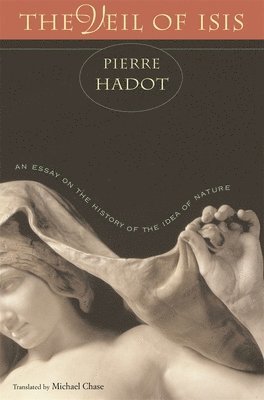
    Veil of Isis

    An Essay on the History of the Idea of Nature

    AvPierre Hadot

    Häftad, Engelska, 2008

    243 kr

    Tillfälligt slut

    Beskrivning

    Nearly twenty-five hundred years ago the Greek thinker Heraclitus supposedly uttered the cryptic words "Phusis kruptesthai philei." How the aphorism, usually translated as "Nature loves to hide," has haunted Western culture ever since is the subject of this engaging study by Pierre Hadot. Taking the allegorical figure of the veiled goddess Isis as a guide, and drawing on the work of both the ancients and later thinkers such as Goethe, Rilke, Wittgenstein, and Heidegger, Hadot traces successive interpretations of Heraclitus' words. Over time, Hadot finds, "Nature loves to hide" has meant that all that lives tends to die; that Nature wraps herself in myths; and (for Heidegger) that Being unveils as it veils itself. Meanwhile the pronouncement has been used to explain everything from the opacity of the natural world to our modern angst.From these kaleidoscopic exegeses and usages emerge two contradictory approaches to nature: the Promethean, or experimental-questing, approach, which embraces technology as a means of tearing the veil from Nature and revealing her secrets; and the Orphic, or contemplative-poetic, approach, according to which such a denuding of Nature is a grave trespass. In place of these two attitudes Hadot proposes one suggested by the Romantic vision of Rousseau, Goethe, and Schelling, who saw in the veiled Isis an allegorical expression of the sublime. "Nature is art and art is nature," Hadot writes, inviting us to embrace Isis and all she represents: art makes us intensely aware of how completely we ourselves are not merely surrounded by nature but also part of nature.

    Produktinformation

    • Utgivningsdatum:2008-09-01
    • Mått:137 x 206 x 30 mm
    • Vikt:522 g
    • Format:Häftad
    • Språk:Engelska, Franska
    • Antal sidor:432
    • Förlag:Harvard University Press
    • ISBN:9780674030497
    • Översättare:Michael Chase
    • Utmärkelser:Nominated for Lois Roth Award 2006

    Utforska kategorier

    • Filosofiska discipliner inom Filosofi och religion

    Mer om författaren

    Pierre Hadot was Professor Emeritus at the Collège de France. His books include Philosophy as a Way of Life and Plotinus.

    Recensioner i media

    The Veil of Isis is profoundly original in design. Pierre Hadot is both an eminent historian of philosophy and a philosopher himself. Both sides of his interest are evident in this outstanding study, in which the argument develops historically and analytically.

    Innehållsförteckning

    • Preface Prologue at Ephesus: An Enigmatic Saying Part I: The Veil of Death 1. Heraclitus' Aphorism: "What Is Born Tends to Disappear" Part II: The Veil of Nature 2. From Phusis to Nature 3. Secrets of the Gods and Secrets of Nature Part III: "Nature Loves to Hide" 4. Heraclitus' Aphorism and Allegorical Exegesis 5. "Nature Loves to Wrap Herself Up": Mythical Forms and Corporeal Forms 6. Calypso, or "Imagination with the Flowing Veil" 7. The Genius of Paganism 8. The "Gods of Greece": Pagan Myths in a Christian World Part IV: Unveiling Nature's Secrets 9. Prometheus and Orpheus Part V: The Promethean Attitude: Unveiling Secrets through Technology 10. Mechanics and Magic from Antiquity to the Renaissance 11. Experimental Science and the Mechanization of Nature 12. Criticism of the Promethean Attitude Part VI: The Orphic Attitude: Unveiling Secrets through Discourse, Poetry, and Art 13. Physics as a Conjectural Science 14. Truth as the Daughter of Time 15. The Study of Nature as a Spiritual Exercise 16. Nature's Behavior: Thrifty, Joyful, or Spendthrift? 17. The Poetic Model 18. Aesthetic Perception and the Genesis of Forms Part VII: The Veil of Isis 19. Artemis and Isis Part VIII: From the Secret of Nature to the Mystery of Existence: Terror and Wonder 20. Isis Has No Veils 21. The Sacred Shudder 22. Nature as Sphinx 23. From the Secret of Nature to the Mystery of Being Conclusion Notes Index